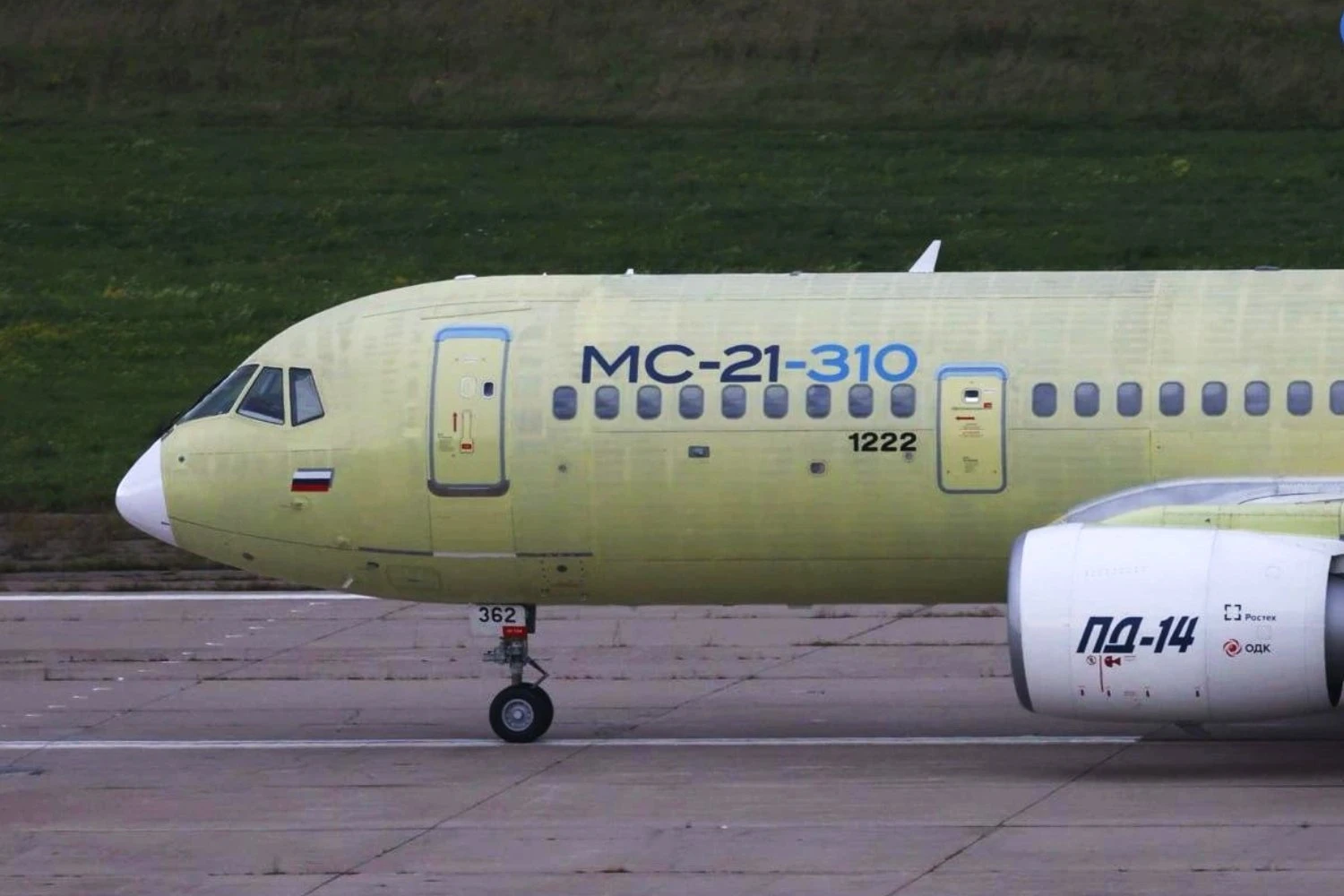
The first production MC-21-310 intended for delivery to an airline has flown from the Irkutsk Aviation Plant to Zhukovsky, near Moscow, where the aircraft will undergo further work before being handed over to its customer.
United Aircraft Corporation (UAC) said the aircraft completed the nonstop flight on August 13. It covered more than 4,000 km (2,485 miles) in 5 hours and 50 minutes, reached an altitude of 12,100 m (39,700 ft) and a maximum speed of 850 km/h (528 mph).
Follow Air Data News: WhatsApp | Instagram | LinkedIn | Twitter | Facebook
The aircraft departed the Yakovlev plant in Irkutsk and landed at the Gromov Flight Research Institute in Zhukovsky. Test pilots Roman Taskaev and Oleg Kononenko flew the MC-21, accompanied by flight-test engineer Alexander Popov.
UAC has not identified the customer. The manufacturer said specialists at Zhukovsky will inspect the aircraft after the long flight and then prepare it to receive the airline's paint scheme.
Rossiya Airlines, part of the Aeroflot Group, has long been associated with the introduction of the MC-21 into commercial service. Earlier plans called for Rossiya to become the initial operator, although repeated delays to the program and extensive changes to the aircraft have pushed its entry into service back several years. UAC's latest announcement does not confirm that Rossiya will receive this particular jet.

First serial-production MC-21 arrives at Zhukovsky to receive customer livery. | UAC 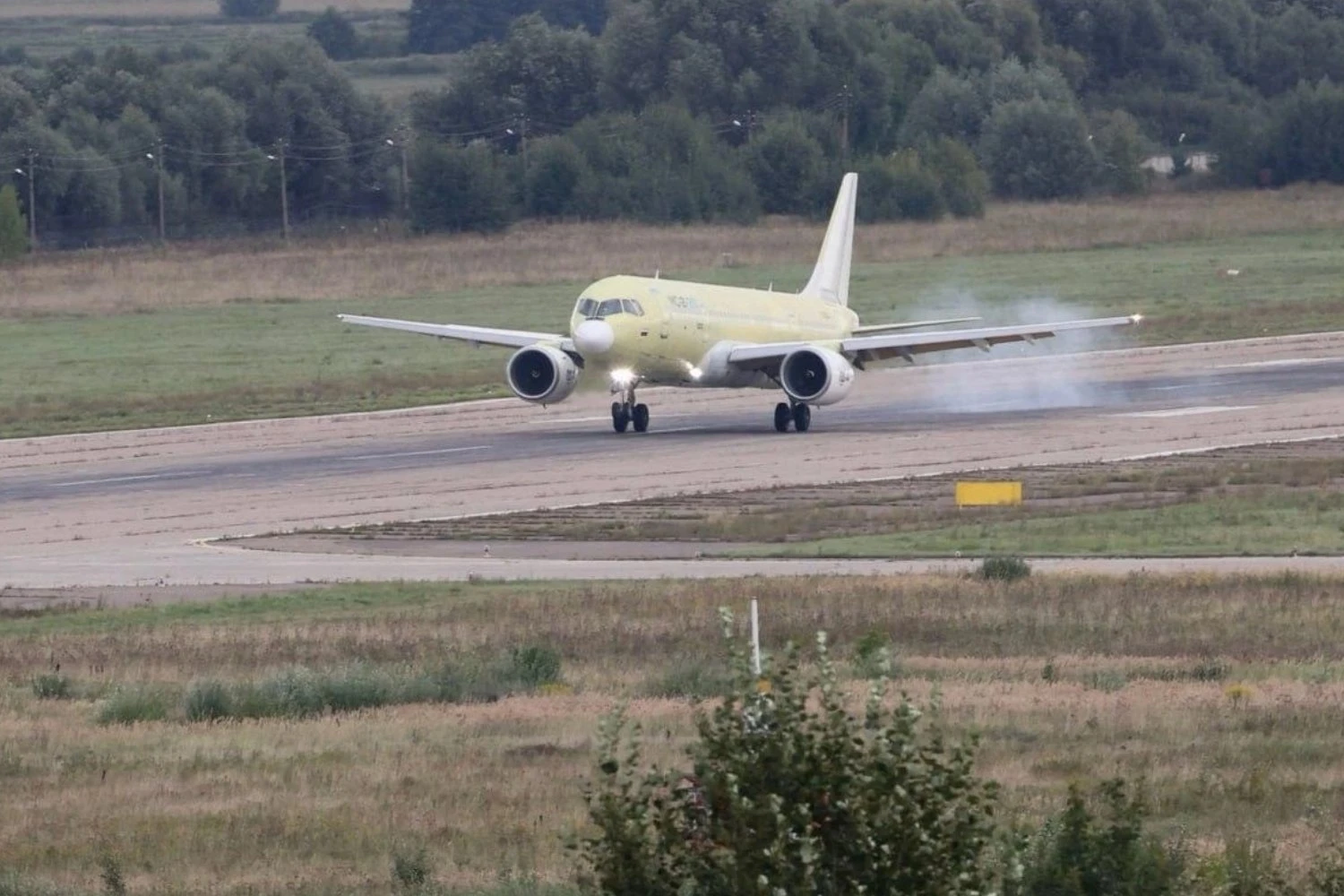
First serial-production MC-21 arrives at Zhukovsky to receive customer livery. | UAC 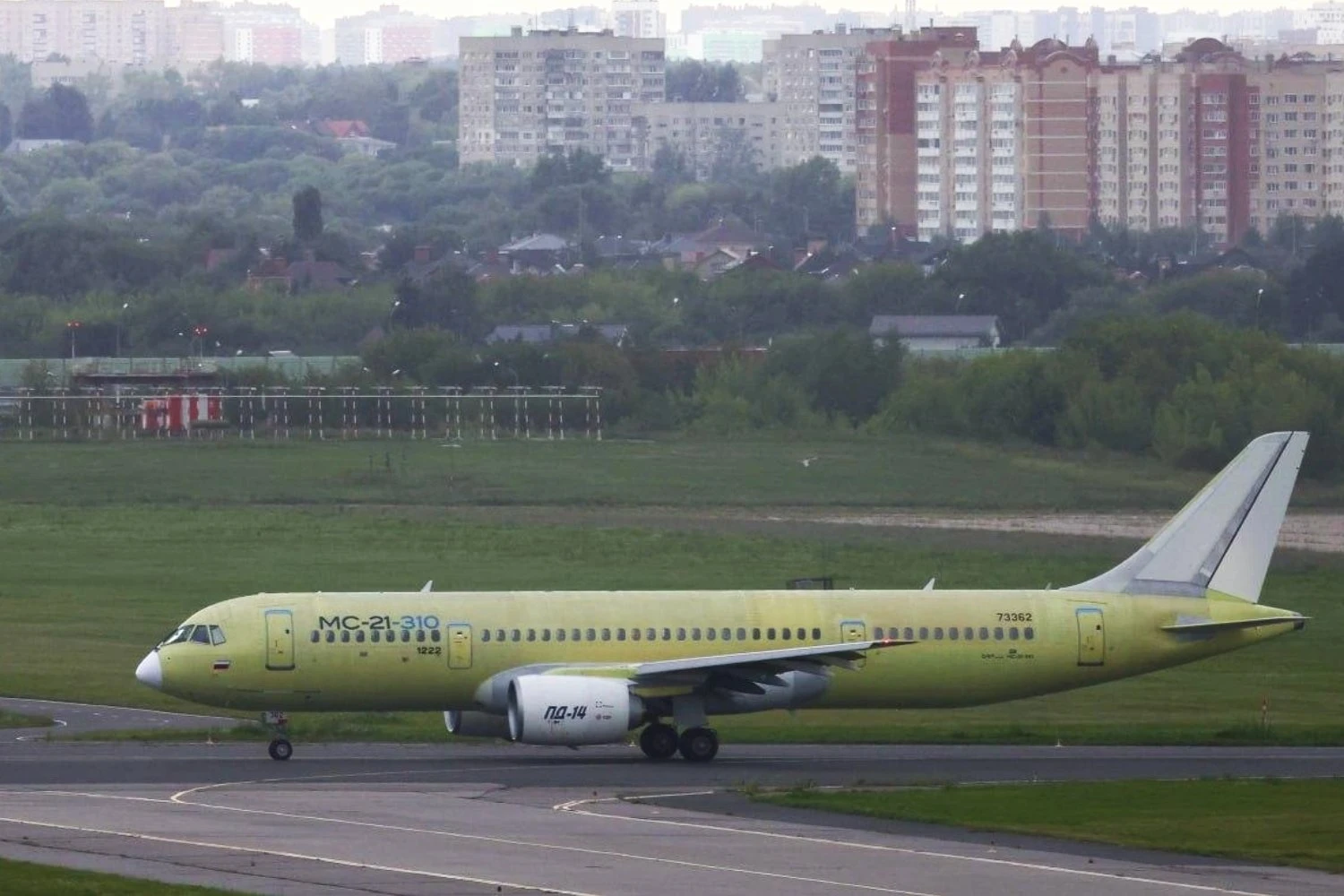
First serial-production MC-21 arrives at Zhukovsky to receive customer livery. | UAC



The aircraft is significant because it comes from the production line rather than the MC-21 test fleet. Its transfer to Zhukovsky brings the program closer to the long-delayed delivery phase, although certification work on the current configuration is still underway.
The MC-21 has changed considerably since its development began. Western sanctions forced Russia to replace imported equipment and materials across the aircraft, a process that resulted in the MC-21-310 configuration with Russian systems and components.
Related news

September 18, 2026
September 10, 2026
One of the most important changes was the replacement of the Pratt & Whitney PW1400G engine originally offered for the aircraft by the Russian Aviadvigatel PD-14. Other substitutions affected avionics, flight-control equipment and numerous onboard systems. Russia also had to develop domestic composite materials for the MC-21's high-aspect-ratio wing after access to Western raw materials was restricted.

These changes required additional development and certification work and contributed to repeated postponements of commercial service. Certification flights for the import-substituted configuration remain underway.
The MC-21 is Russia's new-generation narrowbody airliner and was conceived for the same market occupied by the Airbus A320neo and Boeing 737 MAX families. For Russia, however, its immediate importance has shifted toward replacing Western aircraft that domestic airlines can no longer acquire following sanctions imposed after the invasion of Ukraine.