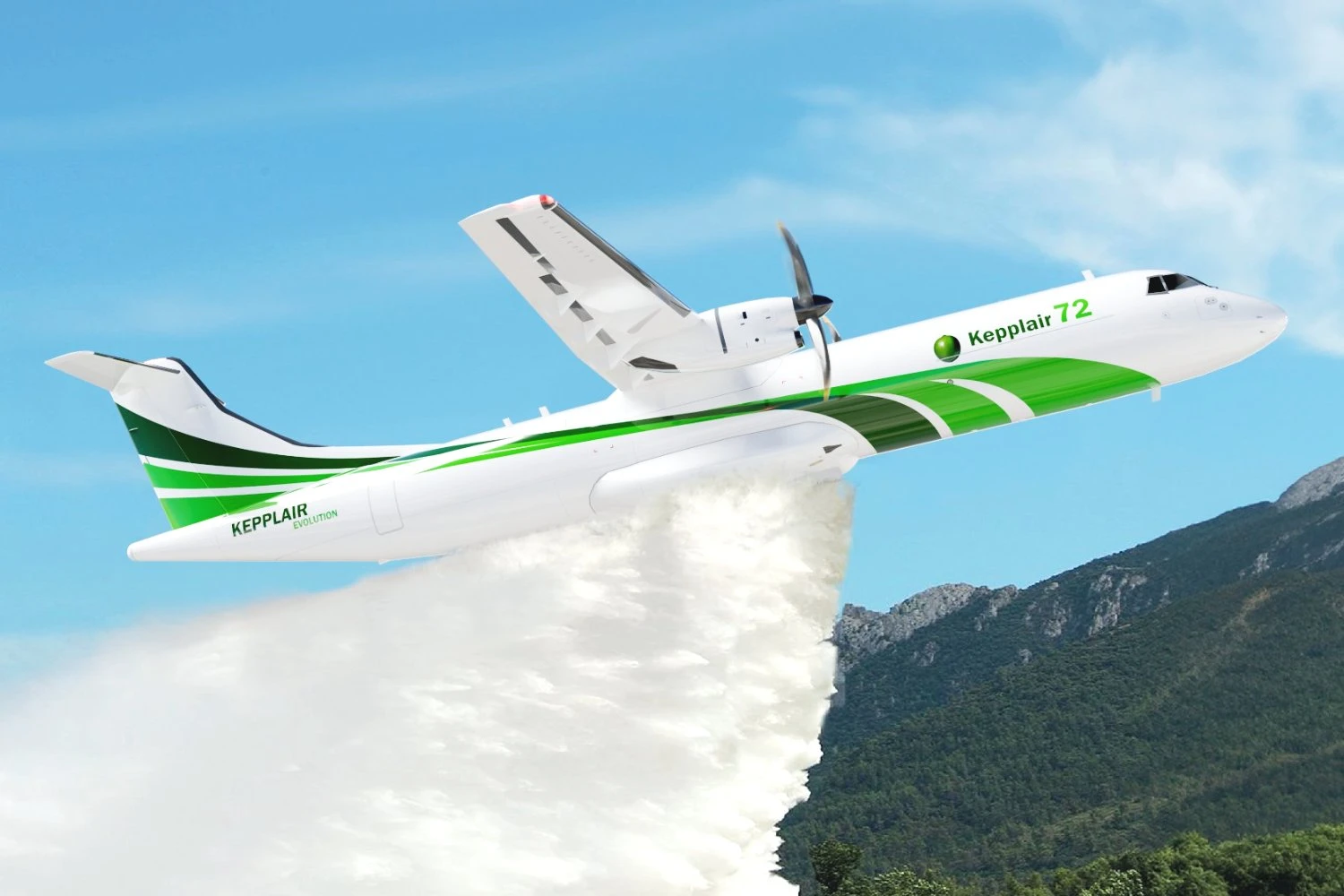
The first ATR 72 selected for conversion into Kepplair Evolution’s firefighting aircraft has entered the modification process in Toulouse, France, after completing preliminary calibration flights.
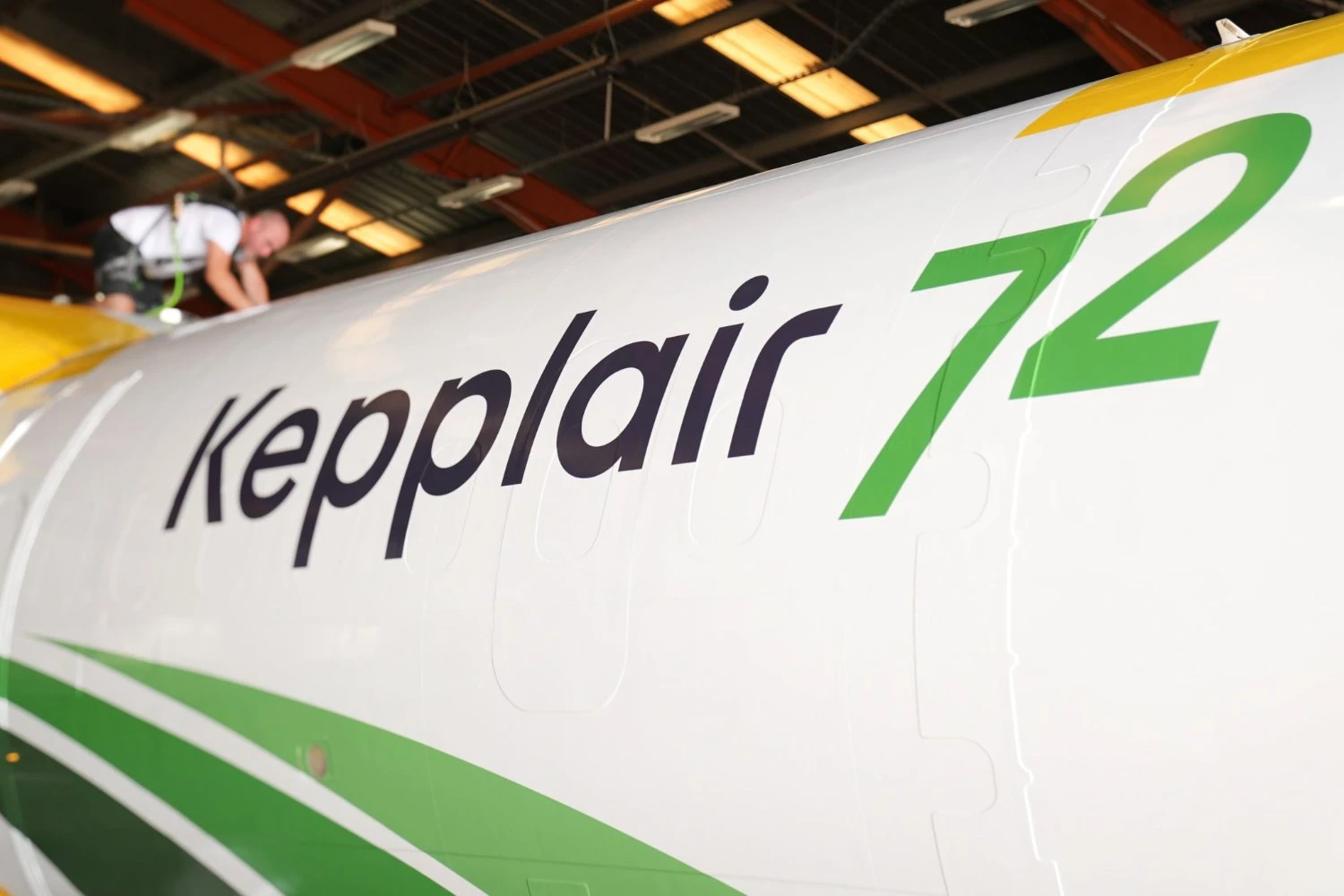
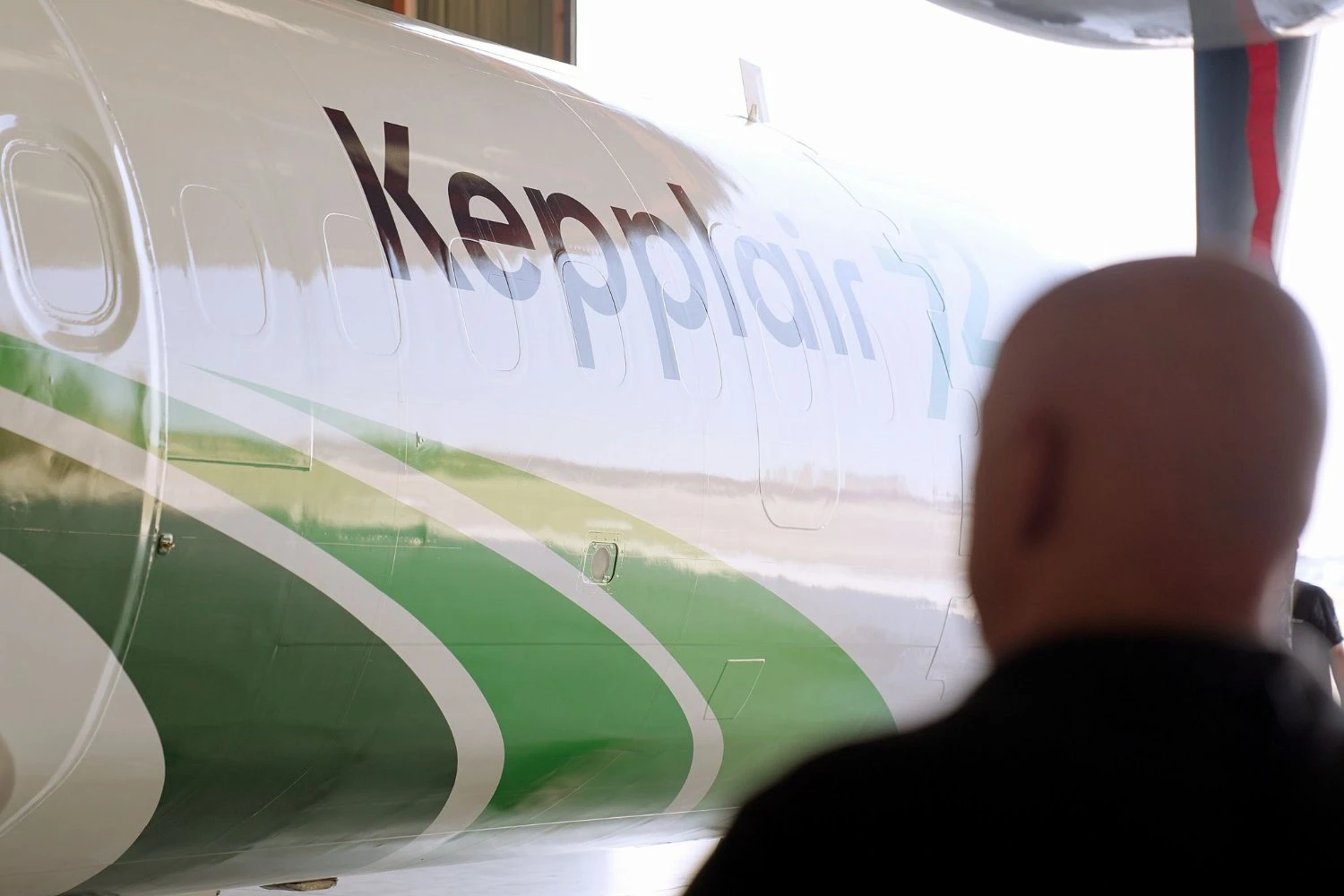
The aircraft arrived at Toulouse-Blagnac Airport in August and was initially presented in Kepplair’s green and white colors. Despite its new appearance, it had not yet received the structural modifications or firefighting equipment that will distinguish the Kepplair 72 from a conventional ATR 72 freighter.
Follow Air Data News: WhatsApp | Instagram | LinkedIn | Twitter | Facebook
Two calibration flights were conducted before the conversion work began, one with the aircraft loaded and another empty. Kepplair founder and president David Joubert told French newspaper La Dépêche that the flights were intended to validate numerical models developed for the program.
The conversion will take four to five months and will be carried out with Aerotec & Concept in Toulouse. Work will initially concentrate on reinforcing the lower fuselage to accommodate two tanks with a combined capacity of 7,500 liters (1,980 US gal).
Discharge doors will subsequently be installed beneath the aircraft between the main landing gear, together with the cockpit controls required to manage water or retardant drops.
The prototype is an ATR 72 freighter supplied by aircraft lessor ACIA Aero Capital. Kepplair intends to use secondhand ATRs as the basis for the conversion rather than manufacture new aircraft specifically for the firefighting role.
First flight in 2027
The company expects the aircraft to make its first flight in firefighting configuration in January 2027. A flight-test campaign will follow, including tests of the discharge system, with European certification targeted later that year.
Entry into commercial service is currently planned for early 2028.
Unlike amphibious firefighting aircraft such as the De Havilland Canada CL-415, the Kepplair 72 will not scoop water from lakes or the sea. Its tanks will instead be replenished on the ground before each mission.
Kepplair is developing different discharge modes for direct firefighting with water and for the controlled application of retardant. The ATR platform could also retain flexibility for other missions, including cargo transport and medical evacuation.
The company sees the availability of secondhand ATR 72s as one of the advantages of the project. The twin-engine turboprop has been produced in large numbers and has an established maintenance and support network in several regions where wildfires are a growing concern.
No firm orders yet
Kepplair has not yet secured firm orders for the converted aircraft, although it says it has received 22 letters of intent. The French government has also shown interest in the program as France considers the future of its aerial firefighting fleet.
The company recently raised another €6 million (US$7 million) for the project, taking public and private investment in the program to €17.5 million (US$20.4 million).
Kepplair estimates that each conversion will cost between €9 million and €12 million (US$10.5 million to US$14 million). Its industrial plans call for two conversion lines at a new Aerotec facility in Toulouse, with capacity eventually reaching as many as 12 aircraft per year by 2030.