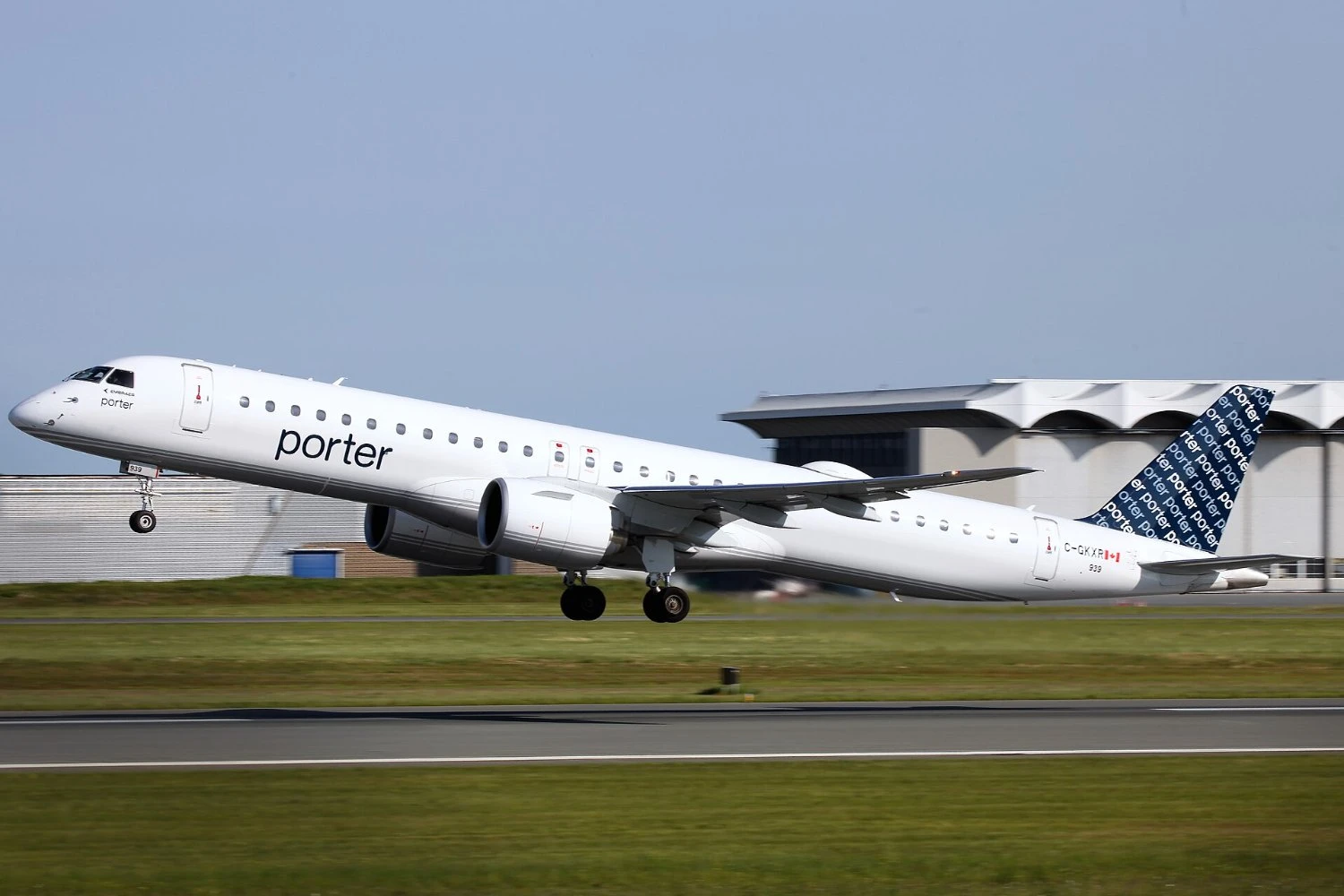
The Federal Aviation Administration (FAA) has proposed special certification conditions for an automatic takeoff system developed by Embraer for the E195-E2, providing new details about how the technology will operate.
Known as the Embraer Enhanced Takeoff System, or E2TS, the function can automatically control the aircraft's pitch and bank during takeoff, including rotating the E195-E2 from the runway and managing the initial climb.
The FAA published the proposed special conditions on October 27. They apply specifically to the ERJ 190-400, the certification designation used for the E195-E2.
The agency said existing airworthiness regulations do not contain adequate safety standards for the system because they were developed around conventional takeoffs in which pilots directly control the aircraft's rotation and initial climb.
Comments on the FAA proposal are open until November 27.
Automatic rotation after takeoff begins
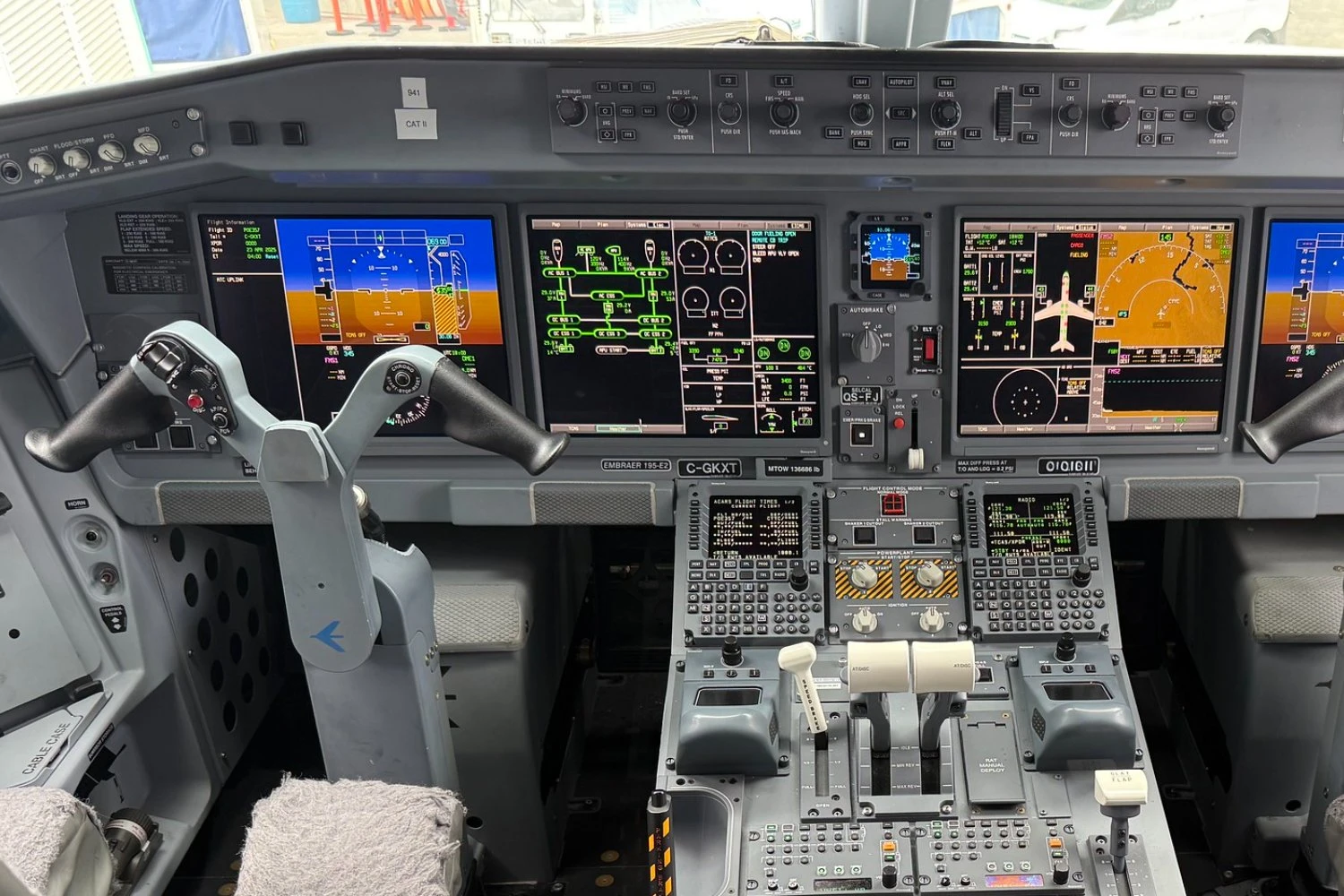
E2TS becomes active when pilots move the thrust levers to the TOGA — takeoff/go-around — position at the beginning of the takeoff roll.
TOGA is a predefined thrust setting used for takeoff and for abandoning a landing to climb away again. On the E195-E2, selecting this position with E2TS available allows the automated system to take over specific flight-control tasks as the aircraft accelerates.
Follow Air Data News: WhatsApp | Instagram | LinkedIn | Twitter | Facebook
Pilots remain responsible for directional control while the E195-E2 is still on the runway, keeping the aircraft aligned with the runway centerline.
As the aircraft reaches the appropriate speed, however, E2TS commands the rotation — raising the nose to initiate flight — without the pilot pulling back on the flight controls. The system then controls pitch and bank during the initial climb.
According to the FAA, E2TS is designed to perform these functions during both normal takeoffs and certain takeoff scenarios involving an engine failure.
Existing rules assume pilot-controlled takeoffs
The unusual level of automation is why the FAA needs additional certification requirements.
Current Part 25 regulations governing transport-category aircraft establish requirements for takeoff performance and handling, but the FAA concluded that they do not adequately address the "novel or unusual design feature" introduced by E2TS.
The agency is therefore proposing special conditions that would become part of the E195-E2's certification basis if adopted.
Among the issues addressed are how closely the automated system must achieve the expected rotation speed, known as VR, and how its operation affects takeoff distance.
VR is the calculated speed at which rotation should begin. Because E2TS rather than the pilot initiates that maneuver, the FAA wants the certification process to demonstrate that variations in the actual rotation speed remain within defined limits and do not compromise takeoff performance.
The proposed conditions also require Embraer to demonstrate that E2TS does not create unsafe flight characteristics during takeoff.
E195-E2 first
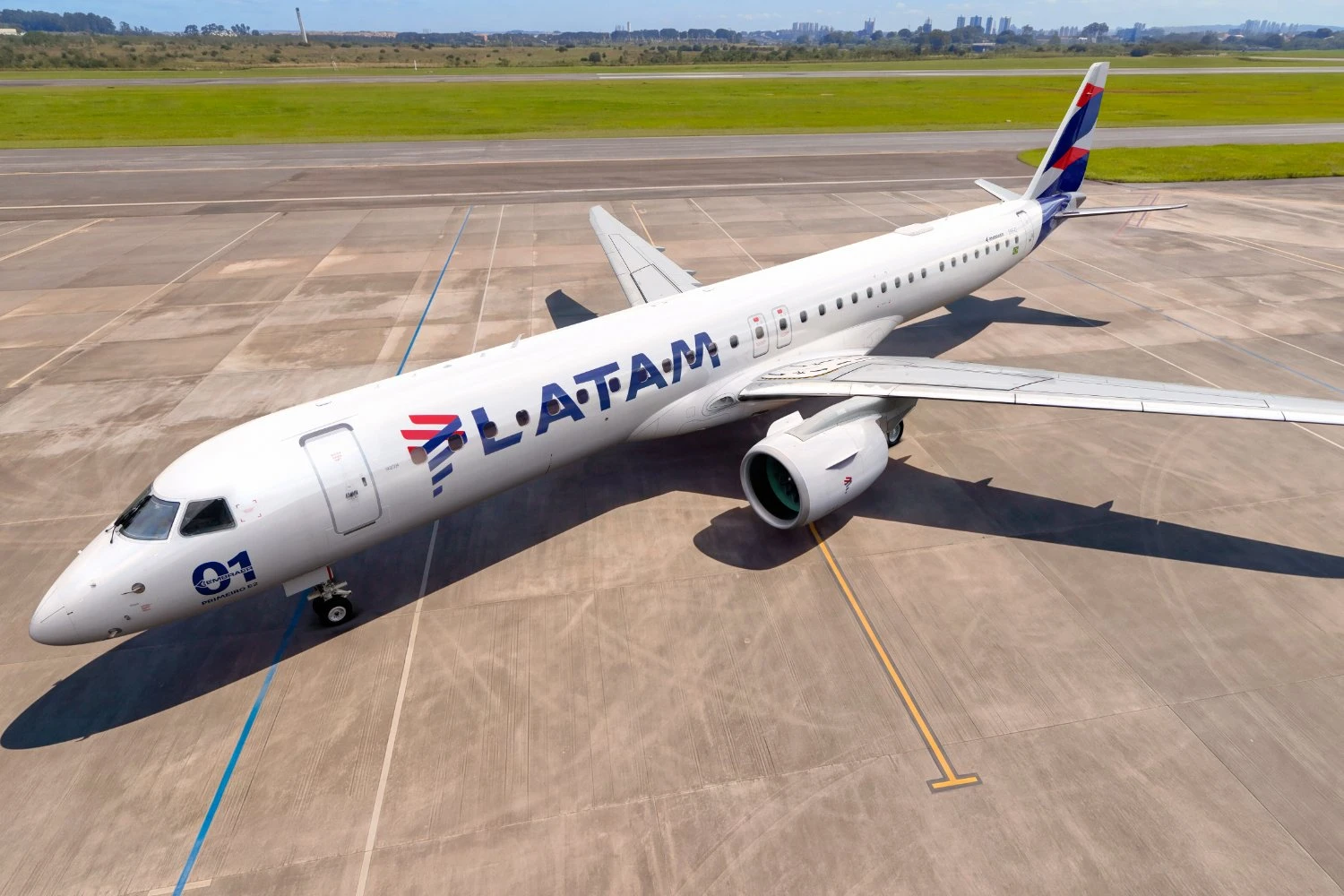
The FAA document concerns only the E195-E2 and does not establish special conditions for the smaller E190-E2.
Embraer has presented E2TS as a way of improving takeoff performance consistency by automating a phase of flight in which small differences in pilot inputs can affect the aircraft's trajectory and performance.
The manufacturer expects E2TS to reduce the runway distance required for takeoff, allowing the E195-E2 to carry more payload or fuel from airports with runway limitations. Depending on operating conditions, the manufacturer estimates the technology could increase range by up to 500 nm (926 km).