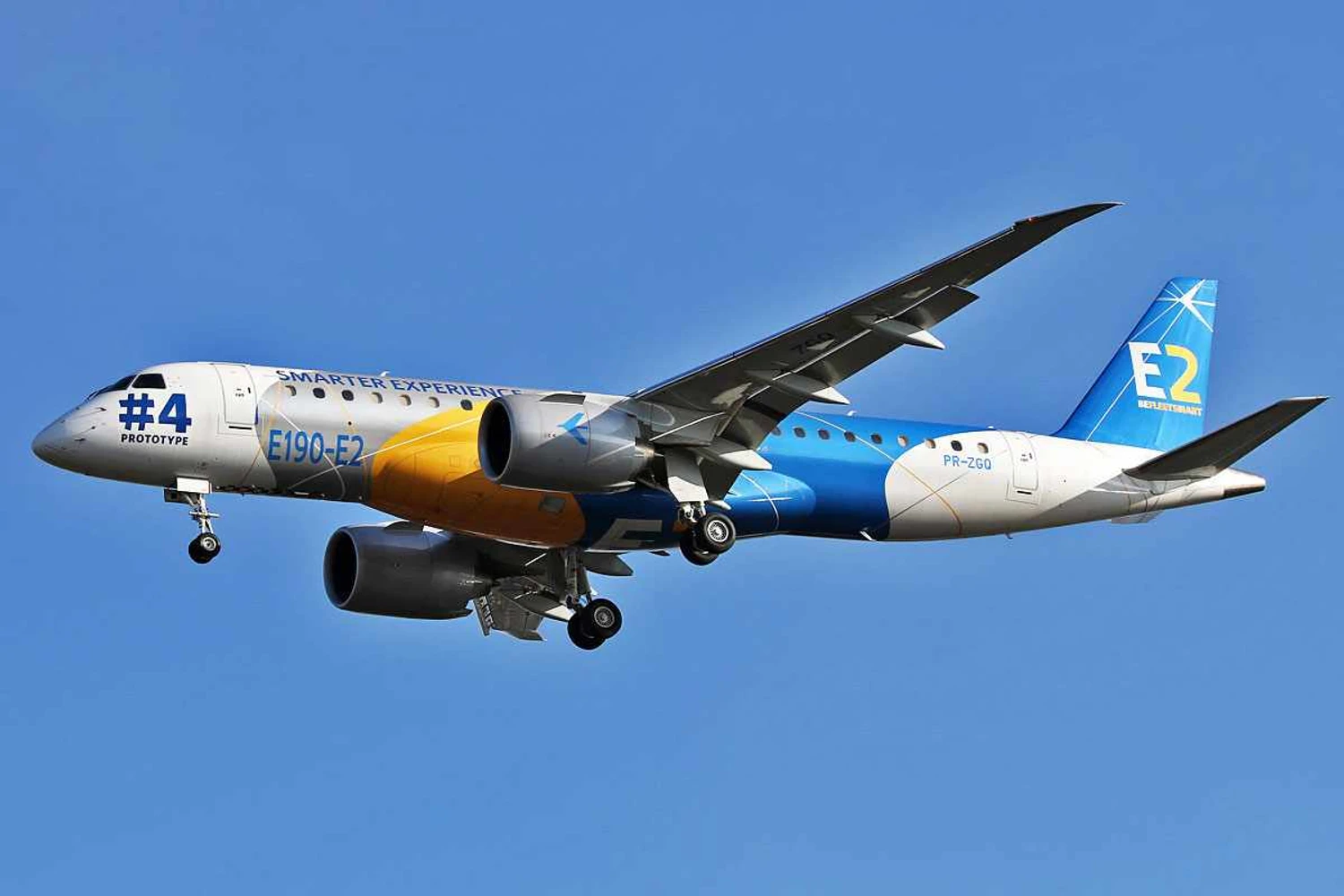
A decade has passed since Embraer achieved a pivotal moment in its commercial aviation history. On May 23, 2016, the E190-E2, the first model of the new E-Jet E2 family, lifted off from São José dos Campos, in Brazil, for its maiden flight.
The three-hour-and-twenty-minute inaugural flight marked the beginning of a new chapter for the company. Launched at the Paris Air Show in June 2013 with a US$1.7 billion program, the E2 family was designed as an incremental but highly advanced development of the original E-Jet.
The aircraft features Pratt & Whitney PW1000G geared turbofan engines, with improvements in fuel efficiency. The E2 also introduced new redesigned wings, a closed-loop fly-by-wire flight control system, and the Honeywell Primus Epic 2 avionics suite, which reduces pilot transition time to just 2.5 days.
Flight testing and entry into service
Flight testing proceeded with few challenges. By January 2018, the test campaign had logged 2,000 hours, revealing fuel burn 17.3% lower than the original E190—better than the 16% initially predicted. On February 28, 2018, the E190-E2 received type certification from ANAC, the FAA, and EASA simultaneously.
https://x.com/embraer/status/2058194237288784341
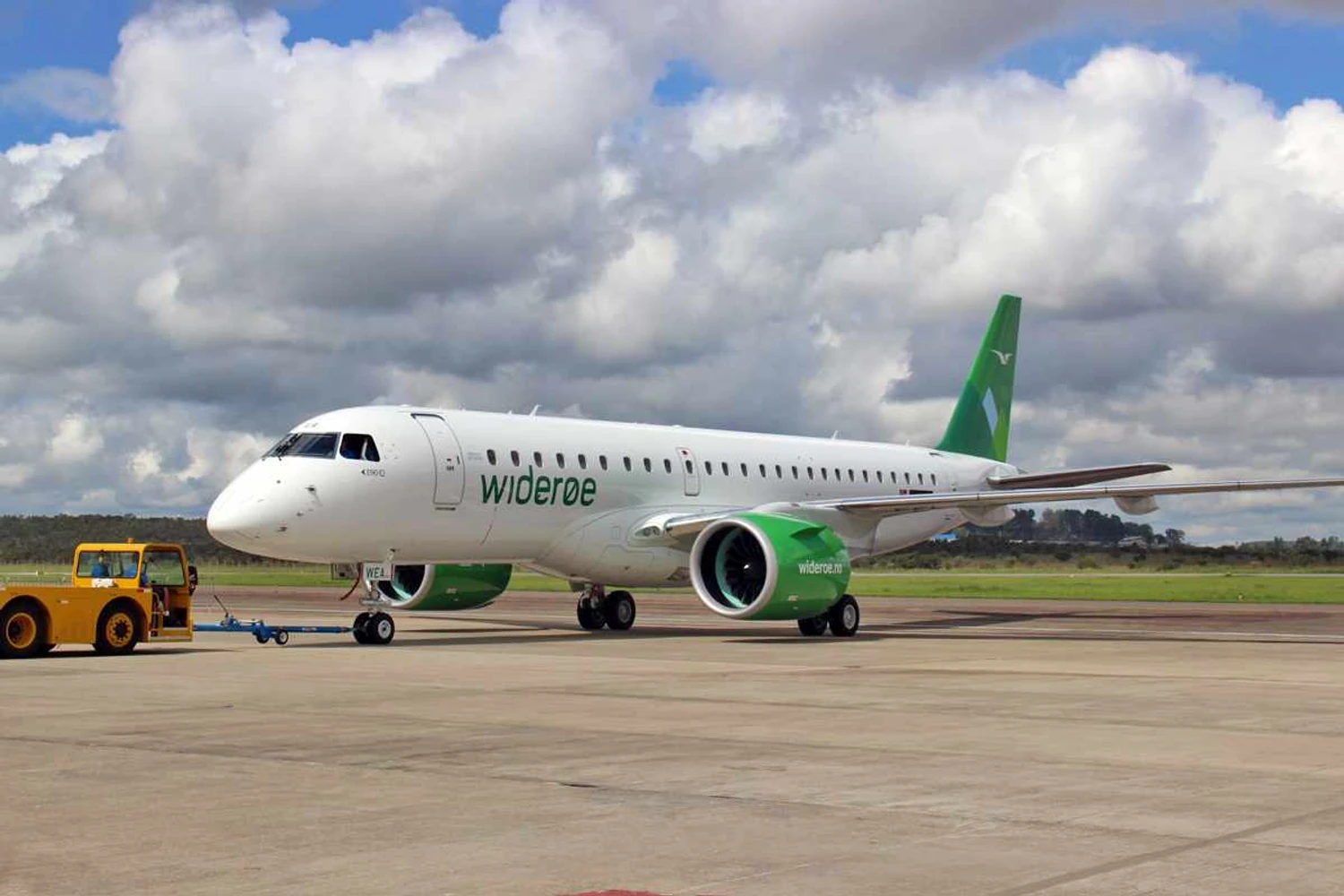
The aircraft entered service on April 24, 2018, with Norwegian launch operator Widerøe, which deployed the 114-seat jet on routes between Bergen and Tromsø. Within its first year, Widerøe achieved a dispatch reliability of 98.5%.
The larger E195-E2, which competes directly with the Airbus A220-300, followed, gaining certification in April 2019. Azul became its first operator.
However, the smallest family member, the E175-E2, has faced delays. Its weight makes it non-compliant with U.S. scope clause agreements limiting maximum takeoff weight to 39,000 kg (86,000 lb). Embraer halted development in February 2022, and since then the type has its schedule freezed.
Strong E2 orders in Embraer's 1T26 backlog
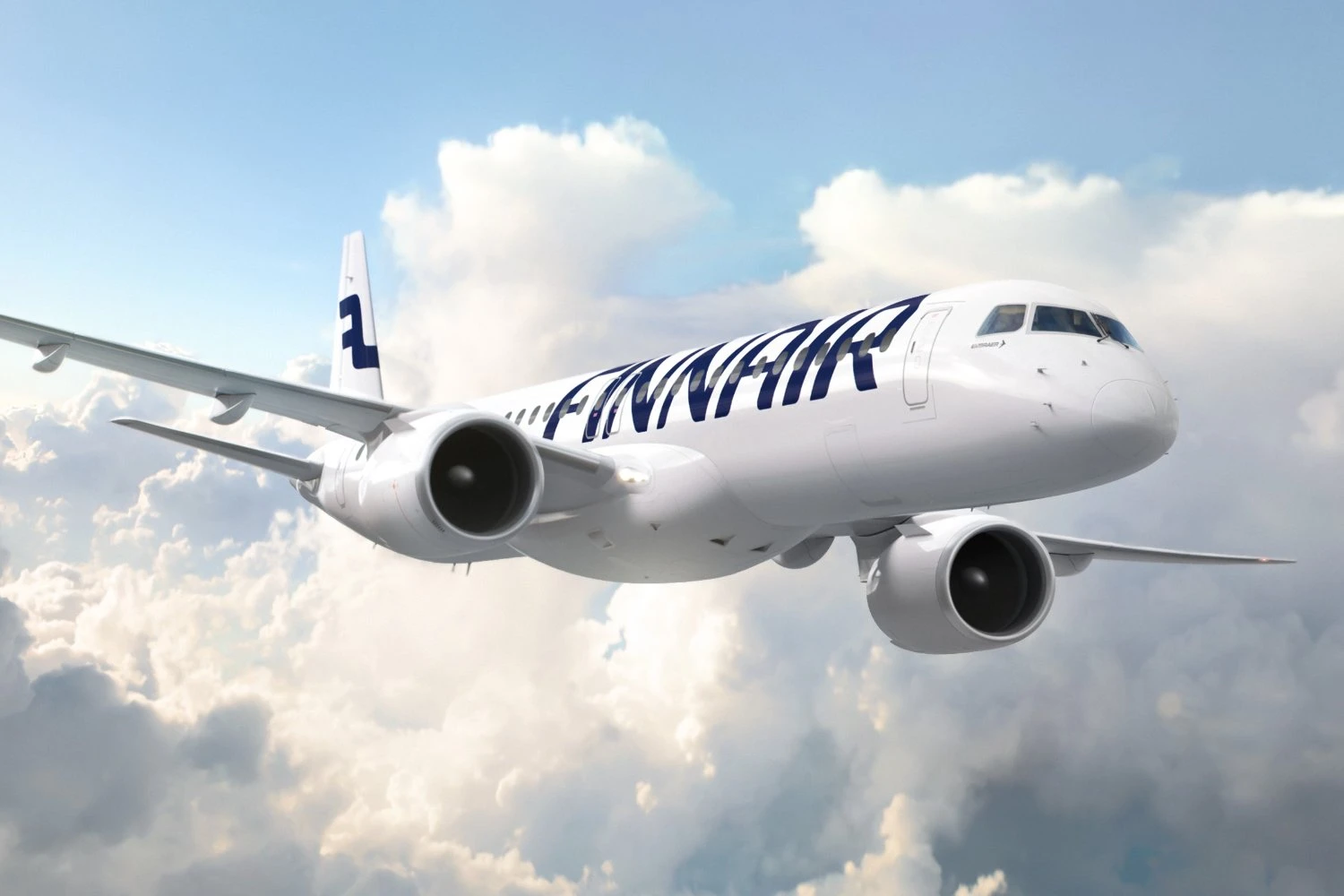
As the E190-E2 celebrates its tenth flight anniversary, Embraer's latest backlog figures show healthy demand for the E2 family, particularly for the larger E195-E2.
According to the company's first-quarter 2026 report (1T26), Embraer's total firm order backlog for the Commercial Aviation unit stands at US$15.0 billion, a 50% increase compared to 1T25.
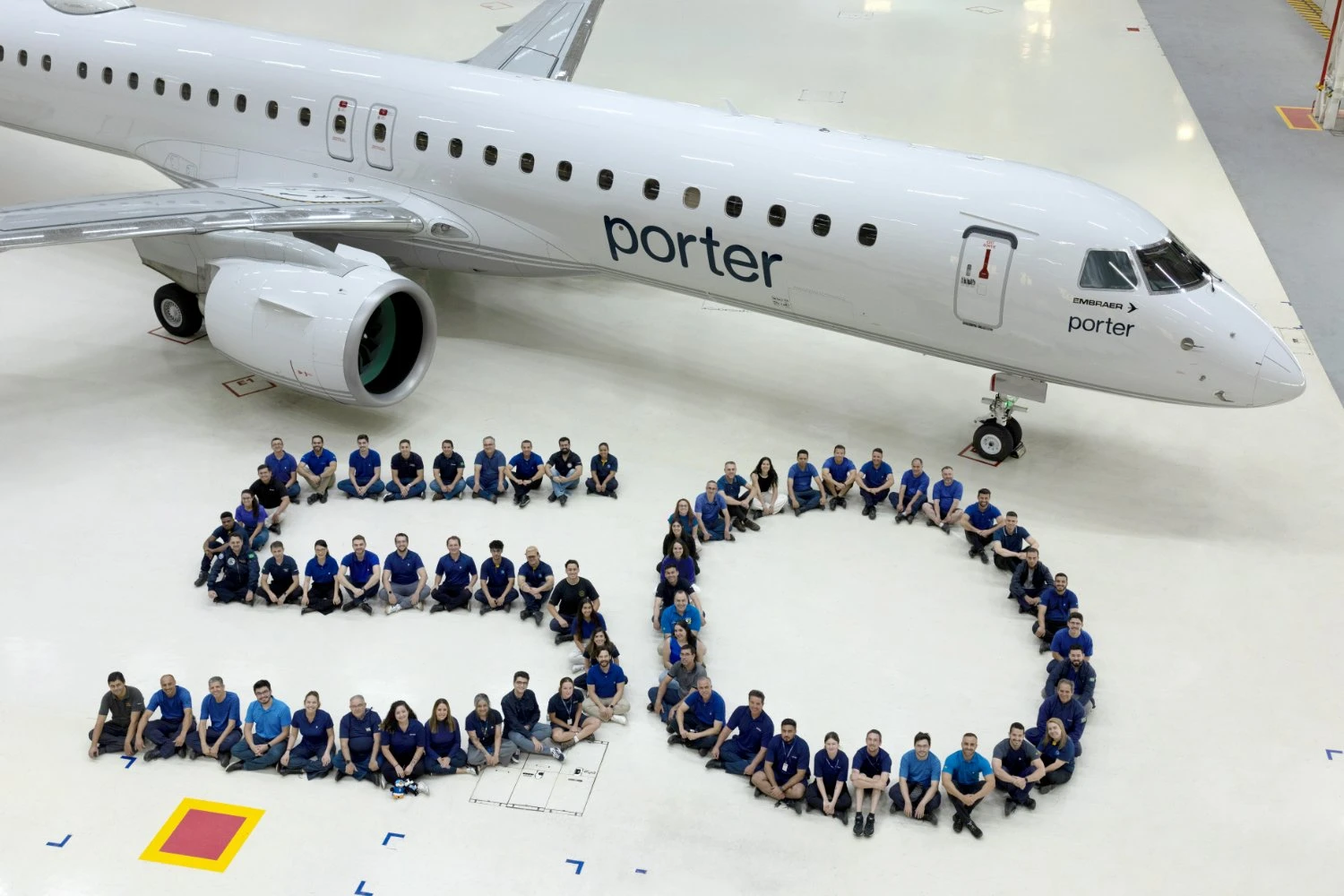
Within the E2 lineup, the numbers reveal the following firm order status:
<table class=table"> <thead> <tr> <th>Model</th> <th>Firm Orders</th> <th>Deliveries (Cumulative)</th> <th>Firm Orders to Deliver</th> </tr> </thead> <tbody> <tr> <td><strong>E190-E2</strong></td> <td>65</td> <td>34</td> <td>31</td> </tr> <tr> <td><strong>E195-E2</strong></td> <td>424</td> <td>169</td> <td><strong>255</strong></td> </tr> <tr> <td><strong>E2-Jet Family</strong></td> <td><strong>489</strong></td> <td><strong>203</strong></td> <td><strong>286</strong></td> </tr> </tbody> </table> <p><em>Data source: Embraer 1T26 order backlog (April 27, 2026)</em></p> <p>The backlog for the E195-E2 is particularly robust, with 255 aircraft awaiting delivery. This is driven by recent major orders, including the selection by Finnair for up to 46 E195-E2s (with 18 firm orders added to the backlog in 1T26) and a 50-aircraft firm order from U.S. carrier Avelo Airlines in September 2025.</p> <p>Since its first flight a decade ago, the E2 family has secured 489 firm orders, with 203 aircraft already delivered and in commercial service worldwide. Key operators now include Porter Airlines (52 E195-E2s), Azul (43), KLM Cityhopper (25), and Binter Canarias (16).</p> <p>As the program enters its second decade, Embraer continues to refine the type. In July 2024, the company announced performance upgrades for the E195-E2, improving fuel burn by 2.5% and increasing range to 3,000 nautical miles.</p>