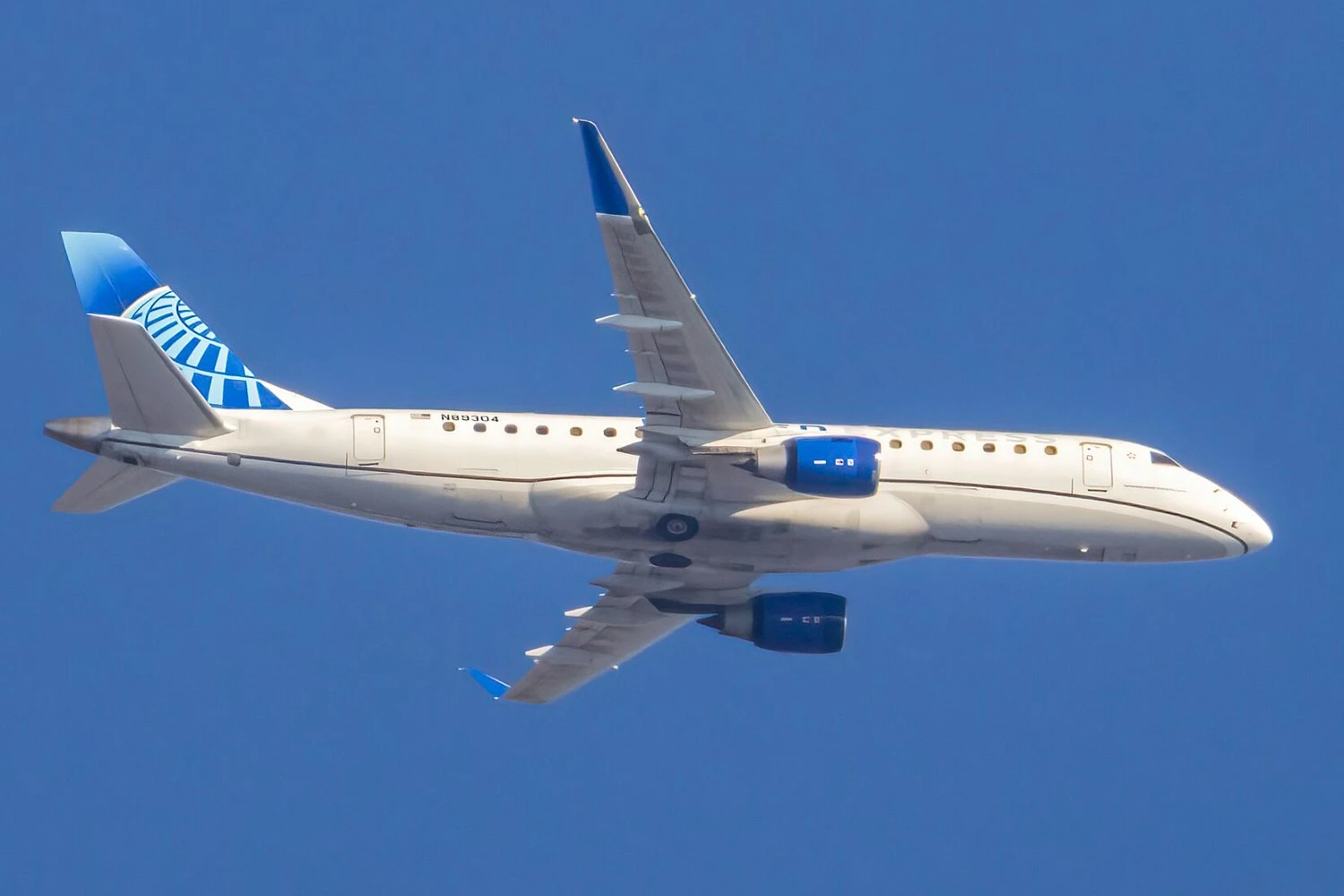
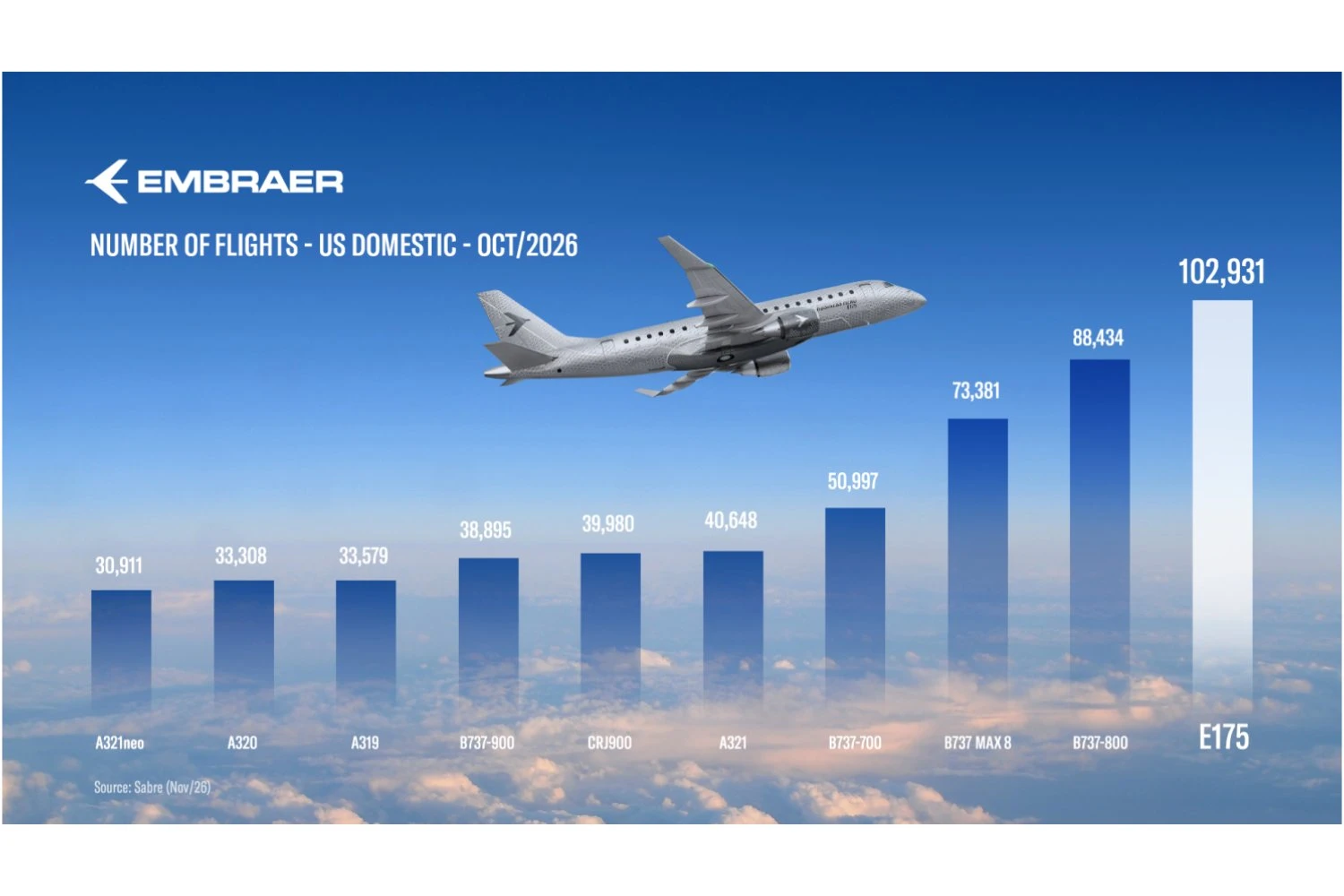
The Embraer E175 was scheduled to operate more domestic flights in the United States than any other commercial aircraft model in October 2026, according to figures shared by Embraer Commercial Aviation CEO Arjan Meijer. Citing data from Sabre, the executive reported 102,931 E175 flights during the month, ahead of the Boeing 737-800 and 737 MAX 8.
Meijer disclosed the figures in an article published on LinkedIn on November 18, arguing that the Brazilian-built regional jet has become an essential part of the US air transport network. He also stated that 723 passenger E175s are currently in service in the country, making it the most widely operated individual commercial aircraft model in the US market.
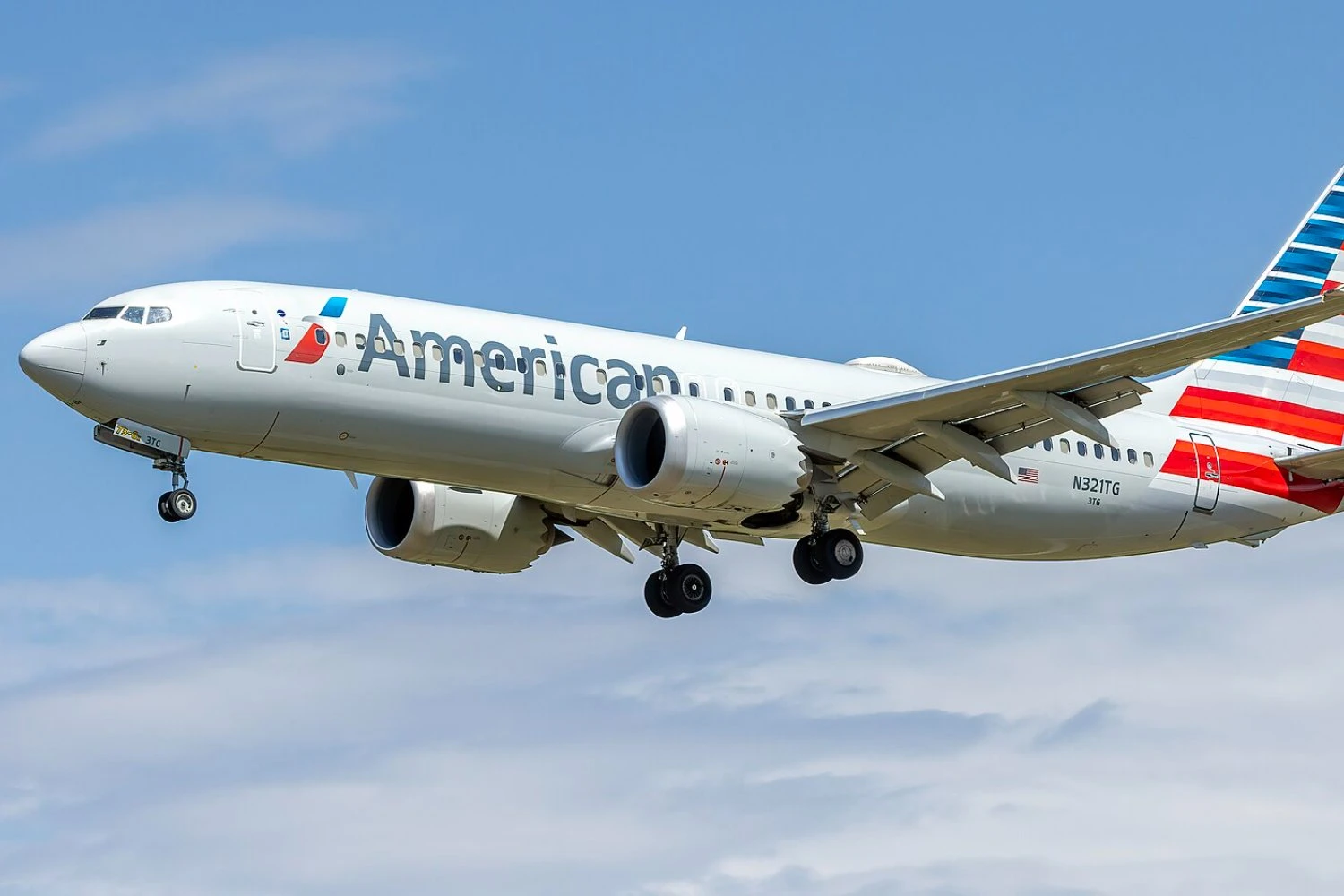
The October figures place the E175 approximately 16.4% ahead of the Boeing 737-800, which ranked second with 88,434 scheduled flights. The 737 MAX 8 followed with 73,381, ahead of the 737-700 with 50,997. The Airbus A321 recorded 40,648 flights, according to the chart released by Embraer.
The E175's total represents an average of 3,320 scheduled flights per day, equivalent to one departure every 26 seconds. The figures refer to flight frequency rather than passengers carried or available seats, categories in which larger narrowbody aircraft have a substantial capacity advantage.
Why regional jets dominate flight frequency
The E175's position reflects the structure of the US regional airline industry, where smaller aircraft operate frequent services between major airline hubs and communities that cannot consistently support larger jets.
Follow Air Data News: WhatsApp | Instagram | LinkedIn | Twitter | Facebook
According to the Regional Airline Association's 2026 industry report, 63.8% of US airports with scheduled passenger service depend exclusively on regional airlines. These carriers accounted for 34.2% of scheduled passenger departures in 2025.
Meijer cited the importance of these connections in explaining the E175's continued commercial success. The aircraft allows airlines to maintain multiple daily departures on routes where a larger Boeing 737 or Airbus A320 might offer more capacity than local demand requires.
The E175 also occupies a particular position under the scope clauses negotiated between major US airlines and their pilots. These agreements restrict the size, weight and number of aircraft that regional partners can operate on behalf of the mainline carriers.
In its typical US configuration, the E175 accommodates up to 76 passengers and meets the weight restrictions imposed by these agreements. Its larger successor exceeds the limits established by major US scope clauses, which has prevented it from replacing the original model in the country's regional fleets.
The contractual restrictions have helped preserve demand for the first-generation E175 even as newer aircraft have entered service elsewhere.
A fleet of more than 700 aircraft
Meijer's figure of 723 E175 passenger aircraft in US service illustrates the scale the model has reached since entering commercial operation in 2005.
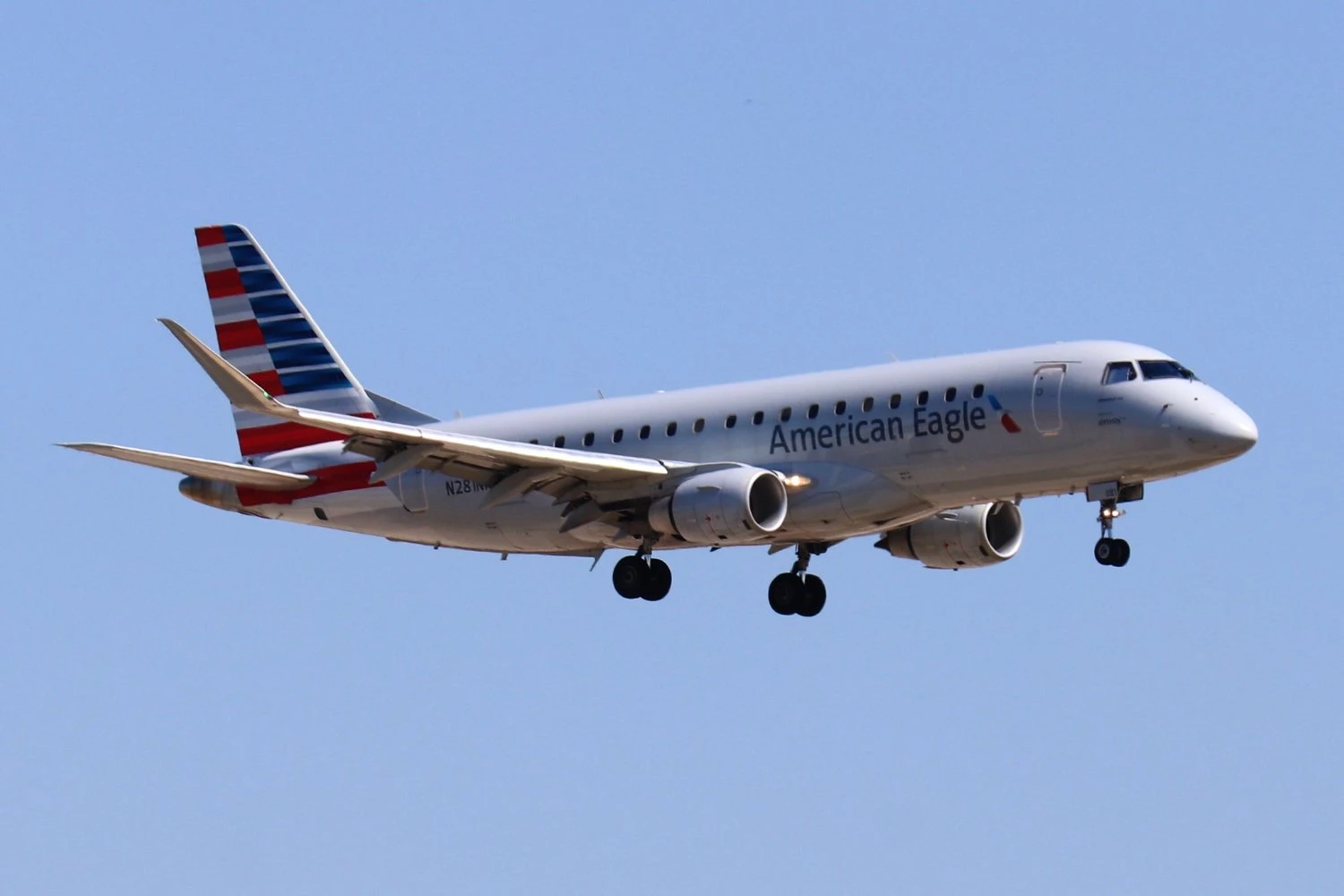
Much of the fleet is operated by regional airlines flying under the brands of American Airlines, Delta Air Lines and United Airlines. SkyWest Airlines and Republic Airways are among the largest operators, with hundreds of E175s assigned to services for these major carriers.
Unlike the larger narrowbody aircraft operated directly by mainline airlines, regional jets frequently perform several short flights per day. This helps explain why the E175 can lead the market in scheduled departures without approaching the passenger capacity of the 737 or A320 families.
Meijer also emphasized the aircraft's passenger cabin, which has four-abreast seating without middle seats. US operators can offer three cabin classes, including first-class sections with a 2-1 seating arrangement and up to 12 premium seats.
Related news

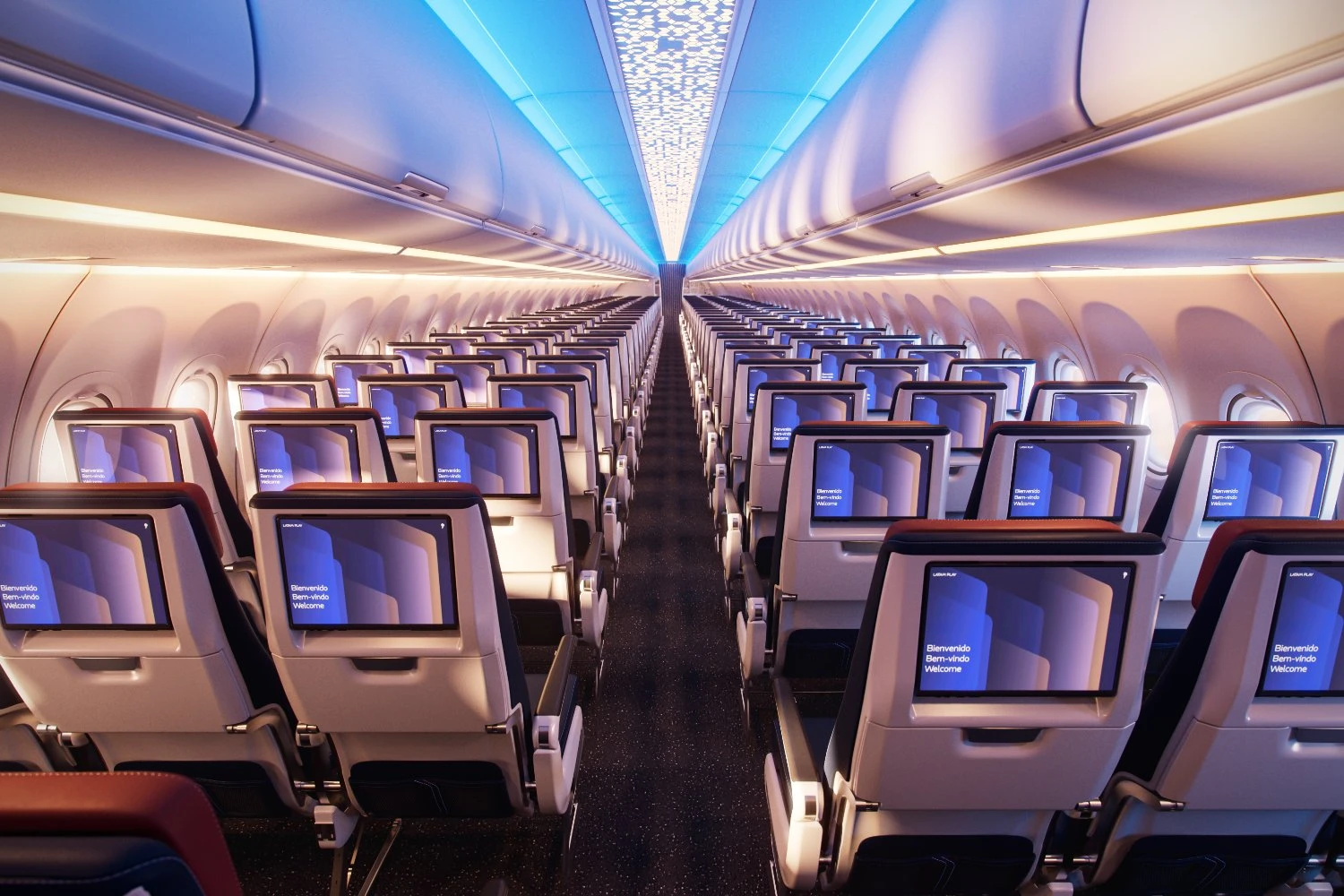
According to the executive, Embraer continues to update the E175 with new RECARO seats, cabin lighting and avionics improvements. He also cited dispatch reliability exceeding 99.3%, a manufacturer-reported performance figure.
Aging regional fleets could sustain demand
The next challenge for US regional aviation is replacing an aging fleet without violating the contractual restrictions that determine which aircraft regional operators can use.

Meijer said more than 580 large regional jets currently serving the North American market are over 15 years old. Although this figure has not been independently verified, it indicates the scale of the replacement opportunity identified by Embraer.
Many of these aircraft belong to earlier generations of regional jets, including the Bombardier CRJ family and older Embraer models. Their eventual retirement could create additional demand for aircraft capable of maintaining existing route frequencies.
The E175 remains one of the few available options that can accommodate up to 76 passengers while meeting the operating limits imposed by major US pilot agreements.
For Embraer, this creates an unusual situation: an aircraft introduced more than two decades ago continues to occupy a commercially valuable position in the world's largest domestic aviation market, even though the company has already developed a newer generation of regional jets.

Report an error