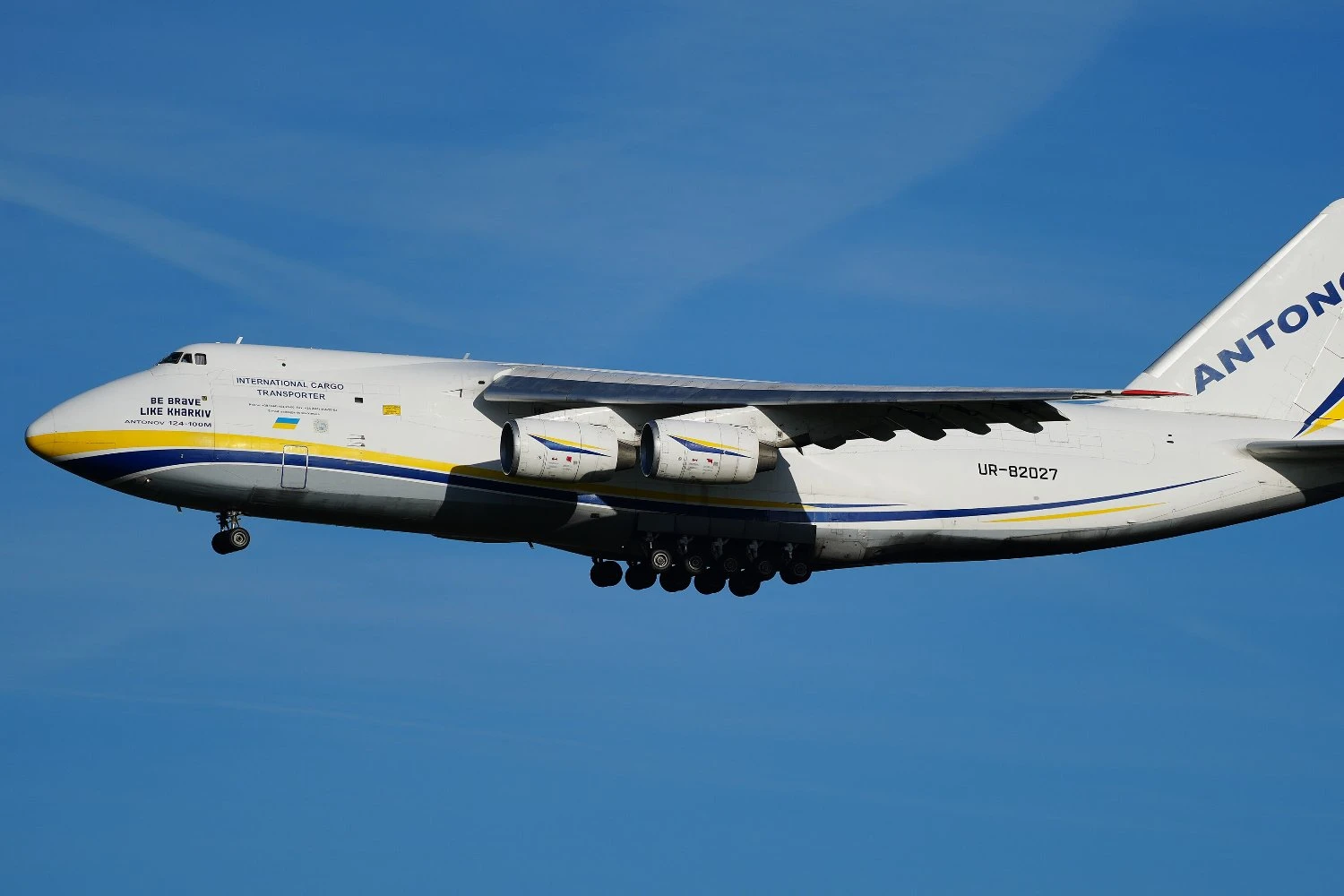
Germany has formally accused Russia of carrying out an explosive drone attack that targeted a Ukrainian Antonov An-124 cargo aircraft at Leipzig/Halle Airport in August, adding the incident to a growing list of suspected Russian sabotage operations in Europe.
The German government announced the attribution on September 1, almost a month after the incident. According to Reuters, Berlin said its investigation had established that the people controlling the drone acted on behalf of Russian state agencies. Moscow has rejected the accusation.
The attack occurred during the night of August 4, when a first-person-view (FPV) drone carrying an explosive charge flew toward an An-124 operated by Ukraine's Antonov Airlines and struck one of its wings while the aircraft was parked at Leipzig/Halle.
The explosive device did not detonate and was subsequently recovered on the ground. Surveillance footage examined during the investigation indicated that the drone had deliberately approached the aircraft rather than accidentally entering the airport area.
Follow Air Data News: WhatsApp | Instagram | LinkedIn | Twitter | Facebook
The failure of the explosive charge prevented what could have caused considerably more serious damage to one of the world's largest operational cargo aircraft.
Germany summoned the Russian ambassador following the investigation and announced diplomatic measures against Russian institutions in the country. German authorities have characterized the incident as part of a campaign of hybrid operations attributed to Moscow.

Another aircraft involved
Investigators have also examined other drone activity around Leipzig/Halle during the same night.
A second drone is suspected of having collided with a DHL Boeing 757 freighter that was subsequently diverted to Hannover. Damage was found on the aircraft's tail, while investigators reportedly ruled out a bird strike as the cause.
German media also reported that a third drone was later recovered as investigators attempted to reconstruct the operation.
The circumstances have made the incident considerably more significant than the initial reports in August, when authorities were investigating the discovery of drones and explosives near aircraft at the airport. Subsequent evidence indicated that at least one of the devices had actually reached its intended target.
Antonov's base outside Ukraine
The choice of an Antonov Airlines aircraft as a target is particularly significant because Leipzig/Halle has become the Ukrainian cargo carrier's main operational base outside its home country.
Antonov moved much of its operation to Germany following Russia's full-scale invasion of Ukraine in February 2022 and the destruction of its base at Hostomel Airport, near Kyiv.
The company operates its surviving An-124-100 heavy cargo aircraft from Leipzig/Halle, which was already an important European cargo hub before the war. The four-engine aircraft are capable of transporting exceptionally large and heavy loads and have been used extensively for commercial and government missions.

An-124s have also performed strategic airlift missions for NATO countries under the Strategic Airlift International Solution program, known as SALIS, which provides access to outsized cargo capacity that is otherwise scarce among European operators.
Reports that the An-124 targeted in August was carrying weapons or ammunition for Ukraine have not been confirmed. German authorities have disputed claims that the Antonov aircraft at Leipzig/Halle were loaded with military cargo at the time of the incident.
The An-124 fleet has become particularly difficult to replace. Antonov lost the sole An-225 Mriya during fighting at Hostomel in 2022, while several Ukrainian An-124s were stranded outside the company's control following the Russian invasion.
The remaining Ukrainian aircraft are among a small number of An-124s available for international commercial operations, giving the fleet an important role in transporting cargo that cannot fit aboard conventional freighters.