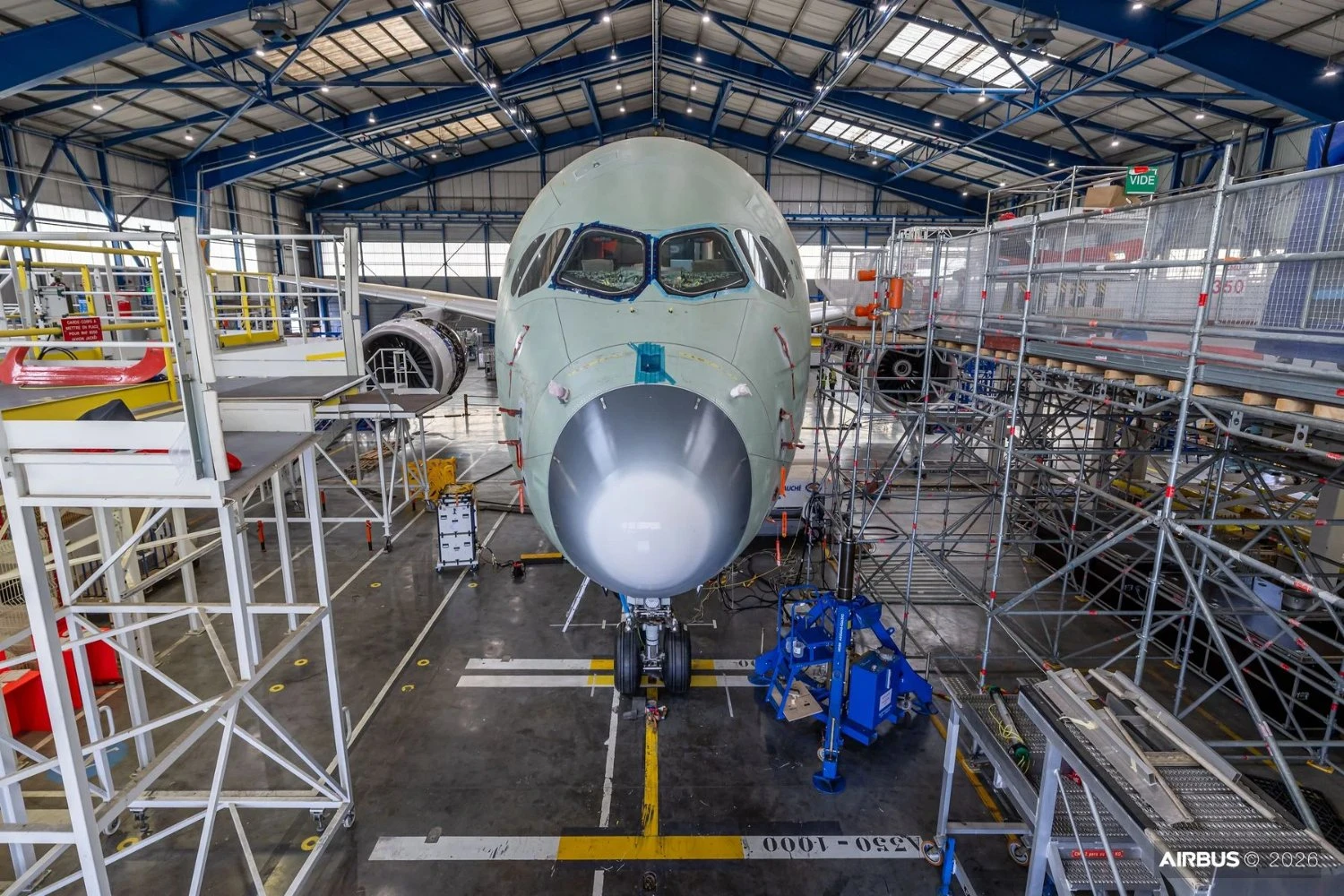
Airbus has validated the A350F's aeroelastic model through ground vibration testing, a mandatory certification exercise that supports the aircraft's subsequent flight-test program.
The three-day campaign took place in June at Airbus' final assembly line in Toulouse using the first flight-test aircraft. Engineers evaluated how the airframe responds to controlled vibrations in order to validate structural and aeroelastic models that will support the opening of the aircraft's flight envelope.
Related news

September 16, 2026
September 15, 2026
During the tests, the aircraft was excited through a combination of external shakers attached to the airframe and movements of its own flight-control surfaces. Hundreds of sensors measured the resulting structural response, allowing engineers to compare the aircraft's behavior with theoretical models.
According to Airbus, the company also introduced a new testing approach by combining data collected from the aircraft's flight-test instrumentation with additional autonomous sensors installed specifically for the campaign.
The manufacturer said the results closely matched the predicted structural behavior, allowing engineers to continue refining the models that will be used during the flight-test program.
Ground vibration testing is a standard certification step for new aircraft. It provides the data required before the subsequent flight vibration, or flutter, tests, which intentionally explore the aircraft's behavior at progressively higher speeds and will be conducted during the first months of the A350F flight-test campaign.
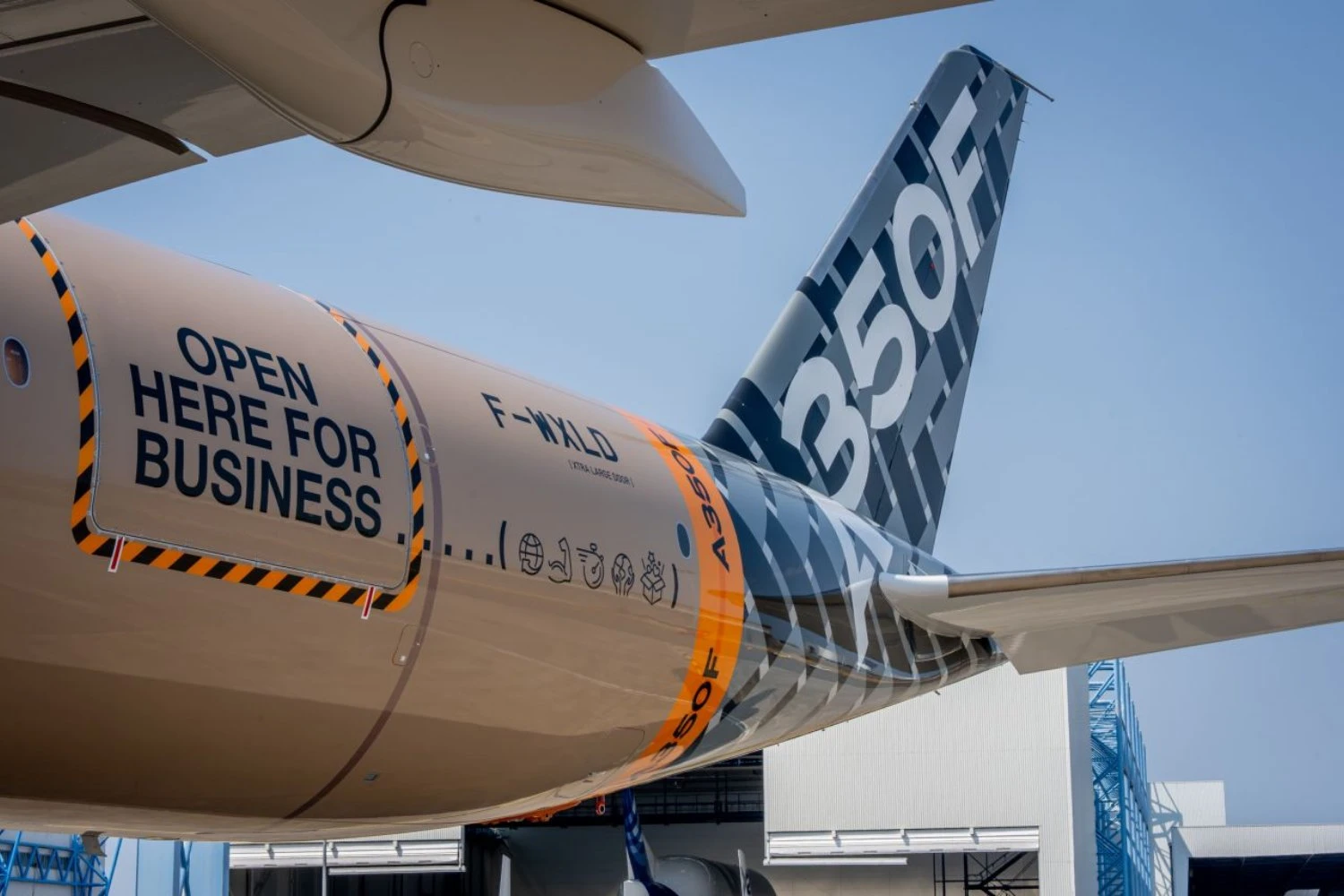
The A350F is Airbus' next-generation freighter designed to carry more than 110 tonnes of payload. The aircraft is expected to enter service in 2027, slightly ahead of Boeing's competing 777-8 Freighter, replacing older cargo aircraft that will no longer meet ICAO emissions requirements after 2027.