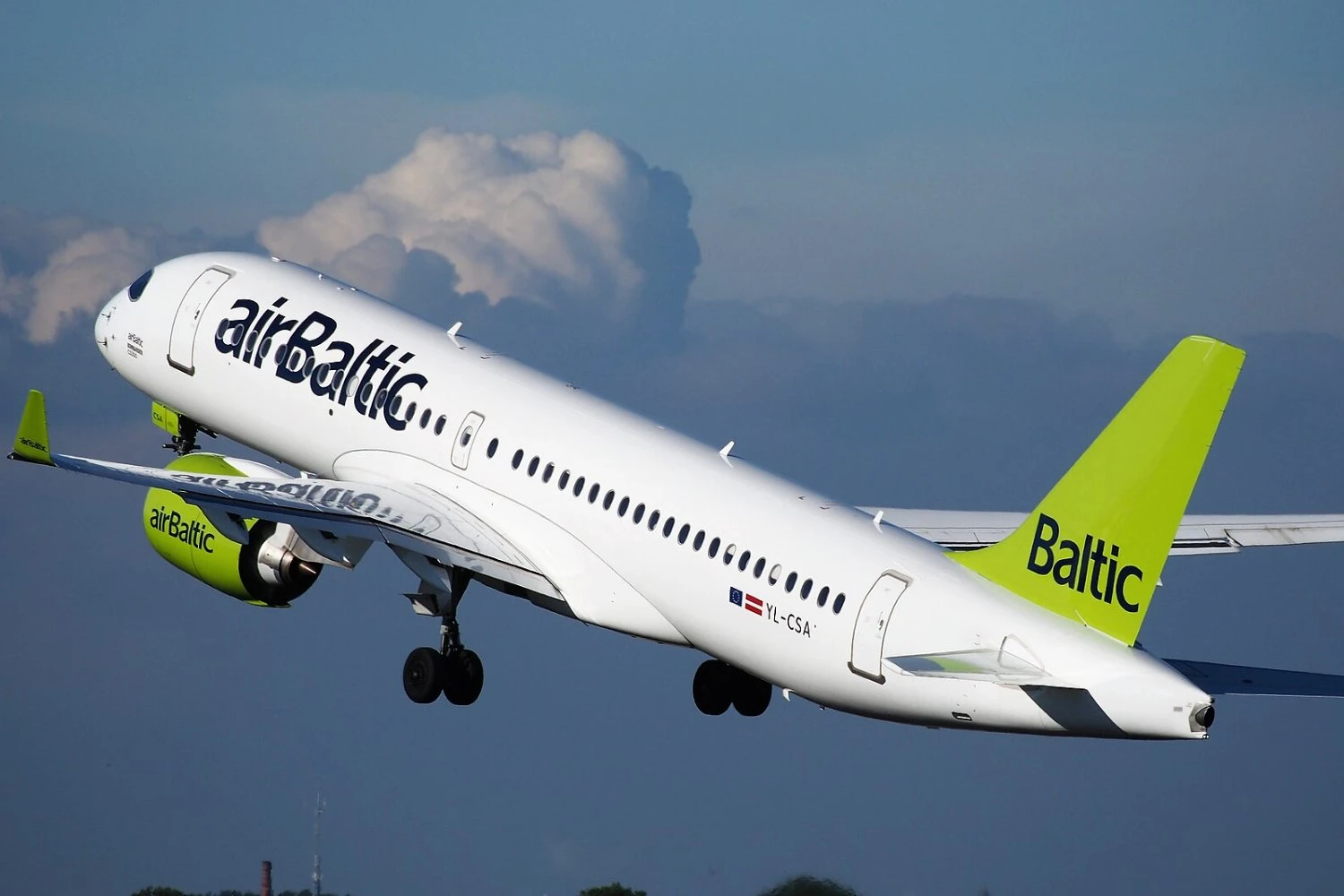
airBaltic is seeking approval for up to €257 million (US$ 300 million) in emergency financing carrying an annual interest rate of 25%, as the Latvian carrier struggles to secure the liquidity needed to implement a major restructuring of its operations.
The proposed bridge financing would be raised through new super-senior bonds maturing on February 26, 2027, leaving airBaltic less than six months before the new debt has to be repaid or refinanced. Holders of the airline's existing bonds are scheduled to vote on the proposal on September 11.
Under the agreement reached with investors, €180 million would become available shortly after the necessary approvals and other conditions are met. Another €77 million would be released after additional conditions are fulfilled.
The financing is backed by London-based Polus Capital Management and Israel's Klirmark Capital, with Polus committed to subscribing to at least half of the new bonds. Existing bondholders, including the Latvian government, would also be able to participate proportionally in the new issue.
Follow Air Data News: WhatsApp | Instagram | LinkedIn | Twitter | Facebook
The 25% annual rate illustrates the financial pressure facing airBaltic. Andrejs Martinovs, chairman of the airline's supervisory board, has said it was the best financing the company was able to obtain under the current circumstances.
Because the bonds mature in February rather than remaining outstanding for a full year, airBaltic would not pay 25% of €257 million in interest. Latvian financial specialist Raitis Logins, managing partner at Grant Thornton Baltic, estimated that a fully drawn €257 million facility would generate interest costs equivalent to about €5.3 million per month while outstanding. He described the rate as abnormally high and the financing as a costly way of buying time.
Existing creditors would lose priority
The interest rate is only one of the unusual aspects of the financing. The new bonds would be super-senior debt, giving their holders priority over investors in airBaltic's existing €380 million bonds due in 2029.
According to Reuters, collateral affected by the arrangement includes eight aircraft and seven engines. The existing 2029 bonds would fall to third priority over those assets.
That change requires approval from existing creditors. More than 75% of the bondholders participating in the September 11 meeting must support the proposal. airBaltic lowered the quorum requirement to more than 25% after an earlier meeting in August failed because of insufficient participation.
The market value of the existing debt has fallen sharply ahead of the vote. Prices of the €380 million 2029 bonds reached record lows on September 9, pushing their yield as high as 176%, according to LSEG data cited by Reuters.
The 176% yield is not the interest rate airBaltic pays on the existing bonds. It reflects the return implied by their sharply reduced market price and the risk investors attach to holding the debt.
Alternative proposal targets lower financing cost
The terms of the bridge financing have prompted criticism and proposals for alternatives ahead of the bondholder vote.
Lithuanian aviation strategist Oleg Evdokimov has developed a restructuring proposal that he says could allow airBaltic to obtain new financing at approximately 8%. He told Air Data News that he has shared the plan with the Latvian government, members of Parliament and other stakeholders involved in the airline's restructuring.
His proposal would transfer 76% of airBaltic's shares into a trust for three years. Existing bonds would be placed under a separate trust arrangement, with bondholders retaining their rights but suspending coupon payments until 2029.
Evdokimov argues that placing the shares in a trust would temporarily insulate the company from political and governance instability, reducing what he considers the main factor behind the risk premium currently demanded by lenders.
He told ADN that financing at around 8% would be achievable if 76% of the shares were transferred to such a structure.
The 8% figure is Evdokimov's assessment rather than the terms of a financing offer currently available to airBaltic. There is no indication that the airline or the Latvian government has adopted his proposal.
Evdokimov is also lobbying creditors ahead of the September 11 meeting. He told ADN that he has contacted several bondholders and urged them to reject the super-senior financing, arguing that allowing the new debt to take priority would further erode the value of their existing bonds.
Fleet contraction replaces expansion
The financing comes as airBaltic reverses much of the expansion strategy that previously underpinned plans for an initial public offering.
Under its revised business plan, the airline intends to reduce its Airbus A220-300 fleet from 54 aircraft to approximately 36 by the end of 2026, a sharp departure from its previous ambition to eventually operate as many as 100 A220s.
The airline plans to concentrate more of its operation around Riga, reduce capacity and lower its exposure to the ACMI market. After the initial contraction, the fleet is expected to grow only gradually, reaching around 40 aircraft by 2031.
The €257 million financing would provide liquidity while those measures are implemented, but it is itself an interim instrument. airBaltic subsequently plans a broader recapitalization involving up to €225 million in longer-term debt and €100 million in new equity.
The planned recapitalization could also convert part of the existing 2029 bonds into equity, while the remainder would be replaced by a smaller debt instrument of up to €125 million.