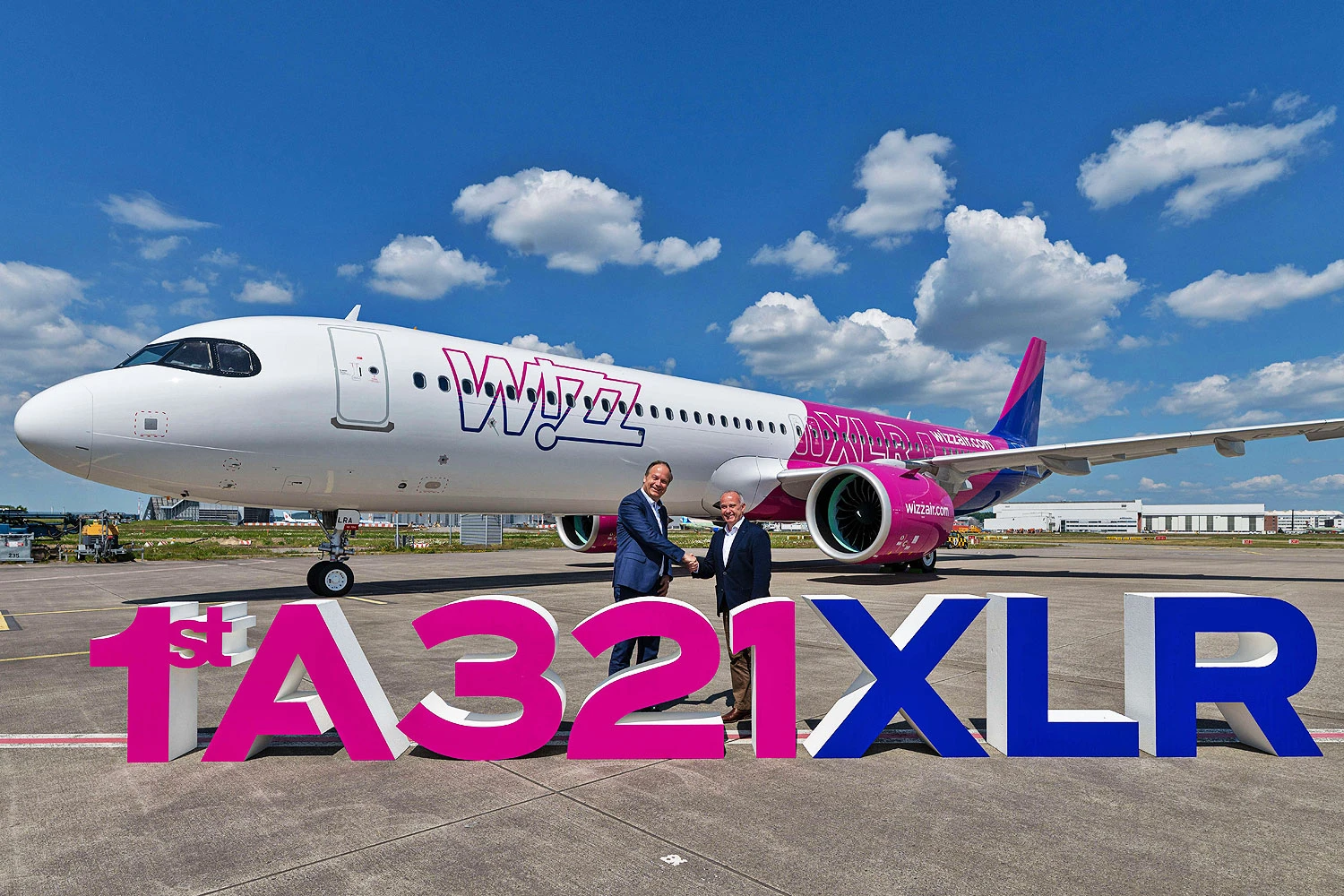
Wizz Air once planned to operate 47 Airbus A321XLRs and use their additional range to extend its ultra-low-cost model into markets six to eight hours away. Less than two years after receiving its first example, the airline has cut that commitment to just 11 aircraft and says most will now be operated much like its conventional A321neos.
The change followed the closure of Wizz Air Abu Dhabi in September 2025. The United Arab Emirates operation had been expected to become one of the main platforms for the XLR, whose range would have allowed Wizz to reach new markets while retaining the 239-seat, all-Economy configuration used across its A321neo fleet.
Without Abu Dhabi, Wizz sees considerably fewer opportunities where that additional range justifies operating longer sectors. Group chief commercial officer Ian Malin said earlier this year that the XLR no longer fits the airline’s business model in the way originally envisaged and that Wizz intends to operate the remaining aircraft “like a neo.”
The change does not mean the additional range has become useless. An A321XLR carrying 239 passengers can still operate sectors beyond the practical reach of a standard A321neo, even if the high-density configuration makes it harder to exploit the aircraft’s advertised maximum range of 4,700 nautical miles.
Follow Air Data News: WhatsApp | Instagram | LinkedIn | Twitter | Facebook
Routes such as London Gatwick-Jeddah and London Gatwick-Medina illustrate that intermediate role. They take advantage of some of the XLR’s additional capability without requiring the lower-density cabins adopted by airlines using the aircraft on much longer missions.

Very different XLR
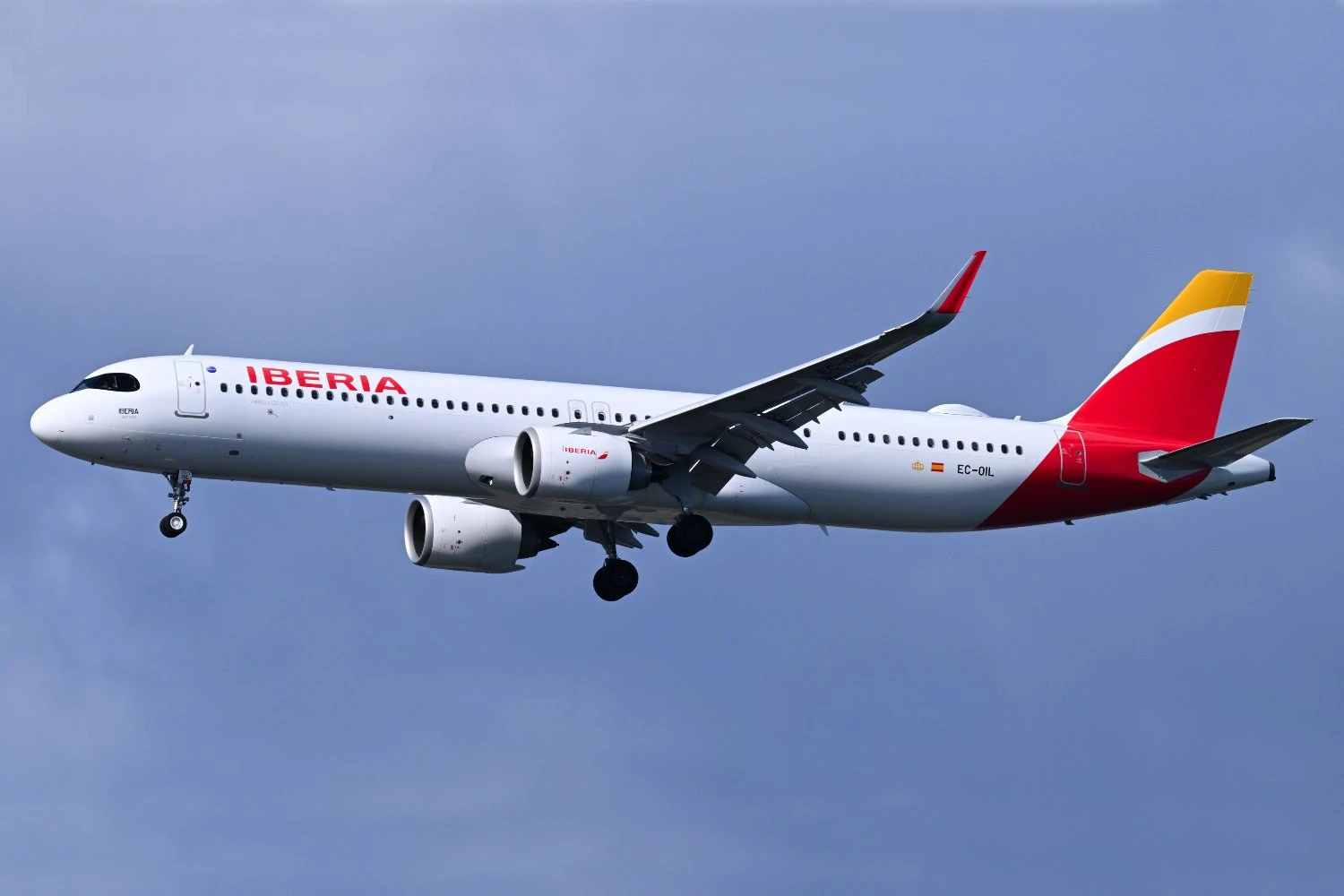
Wizz’s approach contrasts sharply with most of the A321XLR operations introduced so far. Airlines such as Iberia and Aer Lingus have configured the aircraft more like small widebodies, with multiple cabin classes and considerably fewer passengers. The lower payload also provides more margin for fuel on very long sectors.
Wizz instead installed 239 seats, the same capacity as its A321neos. There is no Business or Premium Economy cabin, allowing the airline to preserve the high-density model on which its economics are based.
That configuration also changes the economics of flying longer. A six- or seven-hour sector occupies an aircraft for much of the day while carrying 239 passengers. The same aircraft can perform several shorter sectors during that period, carrying multiple groups of passengers and generating ancillary revenue from each flight.
Malin has said Wizz’s core market remains flights of roughly one to four hours. Potential longer-range markets from Europe present other difficulties: North Africa is already largely accessible with the A321neo, while expansion farther into the Middle East, India, Pakistan or sub-Saharan Africa would add operational complexity that the airline no longer wants to pursue on a large scale.

XLRs already flying short routes
The way Wizz is deploying the aircraft already reflects that strategy. Recent operations by 9H-XLE from Milan Malpensa have included Warsaw, Valencia, Naples, Budapest, London, Larnaca and Sharm el-Sheikh, with sectors ranging from little more than one hour to around four hours.
The airline is also adding another XLR at Gatwick this month, but not solely to expand longer routes. Its planned flying includes additional capacity to Jeddah alongside services to Valencia and Prague, the latter a sector of less than two hours.
Wizz executives have indicated that the additional weight of the XLR is small enough that using it on ordinary A321neo missions does not fundamentally undermine its economics. The aircraft can therefore remain interchangeable with the rest of the A321 fleet while providing additional range when a particular route requires it.
47 become 11
Following the Abu Dhabi withdrawal and a revision of its growth plans, it reached an agreement with Airbus to convert 36 of those aircraft to conventional A321neos, leaving 11 XLRs in its future fleet.
Nine of those 11 have already been delivered. Three Malta-registered aircraft, 9H-XLA, 9H-XLB and 9H-XLC, have been stored at Bydgoszcz in Poland, with engines removed from two of them for use on other Wizz A321neos as the airline continues to deal with shortages related to Pratt & Whitney GTF inspections and maintenance.
A fourth aircraft, Wizz Air UK’s G-XLRA, has been out of service for a different reason. It has remained in Prague since suffering substantial damage in a tail strike during landing on September 11, 2025.
The first Wizz A321XLR was delivered in May 2025, when the airline was still publicly planning a fleet of 47 examples. It was also the first A321XLR delivered with Pratt & Whitney GTF engines, rather than the CFM International LEAP-1A used by the type’s earlier operators.