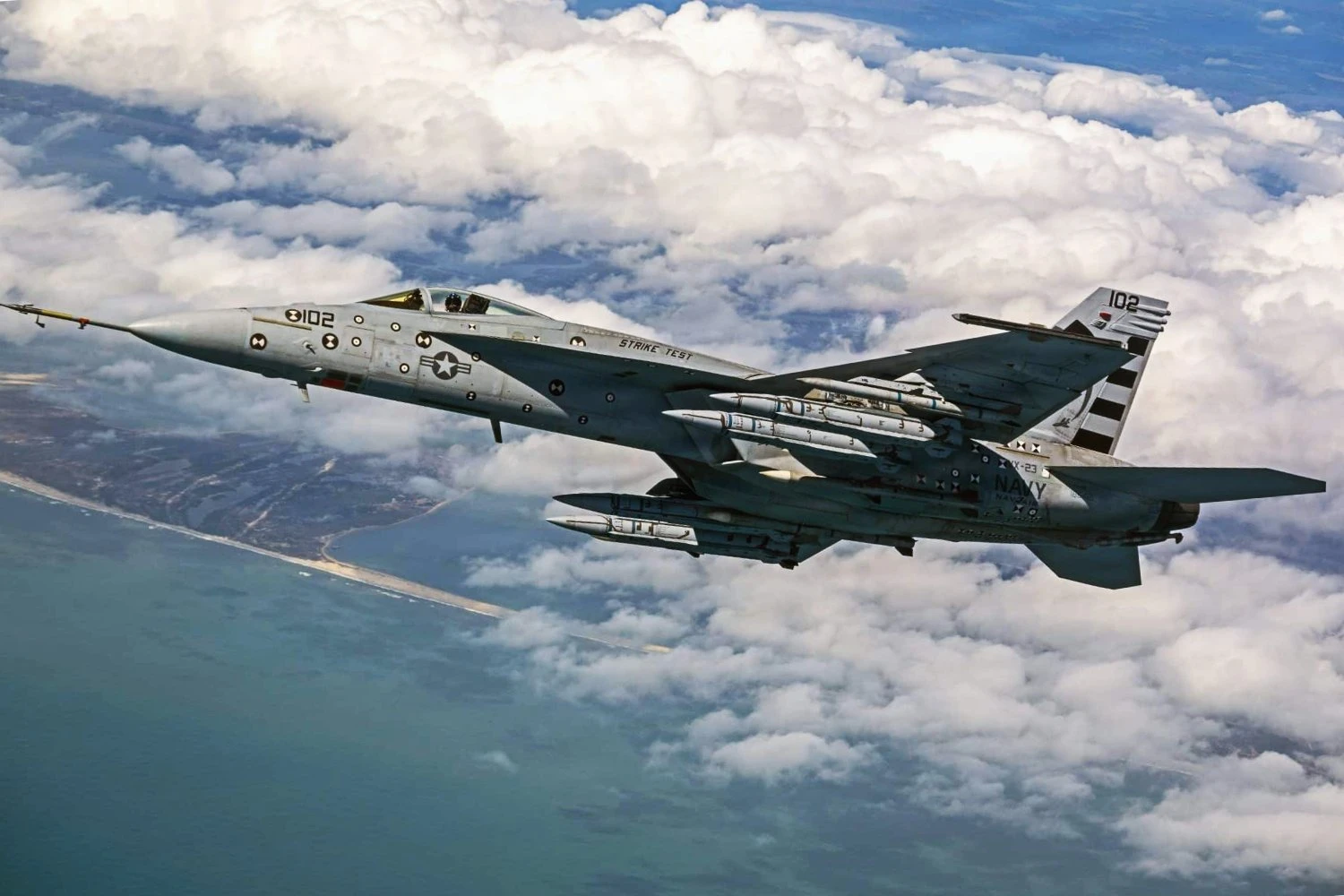
The US Navy has publicly revealed a new very-long-range air-to-air missile capable of engaging targets at distances exceeding 250 nm (463 km), adding another weapon to the rapidly evolving long-range arsenal of US carrier aviation.
Designated AIM-424 LRAAM and nicknamed Malice, the Raytheon-developed missile was disclosed during the Tailhook Symposium in Reno, Nevada, United States, on August 22. The Navy subsequently published a fact file providing unusually detailed specifications for a weapon that had previously remained largely out of public view. More significantly, the AIM-424 is already undergoing flight testing.
Follow Air Data News: WhatsApp | Instagram | LinkedIn | Twitter | Facebook
US Navy imagery shows four test missiles carried externally by an F/A-18E Super Hornet assigned to Air Test and Evaluation Squadron 23 (VX-23). Another image shows an AIM-424 installed inside the weapons bay of an F-35C alongside an AIM-120 AMRAAM.
The latter is particularly significant because it allows the stealth fighter to carry the much longer-range weapon without sacrificing its low-observable configuration.
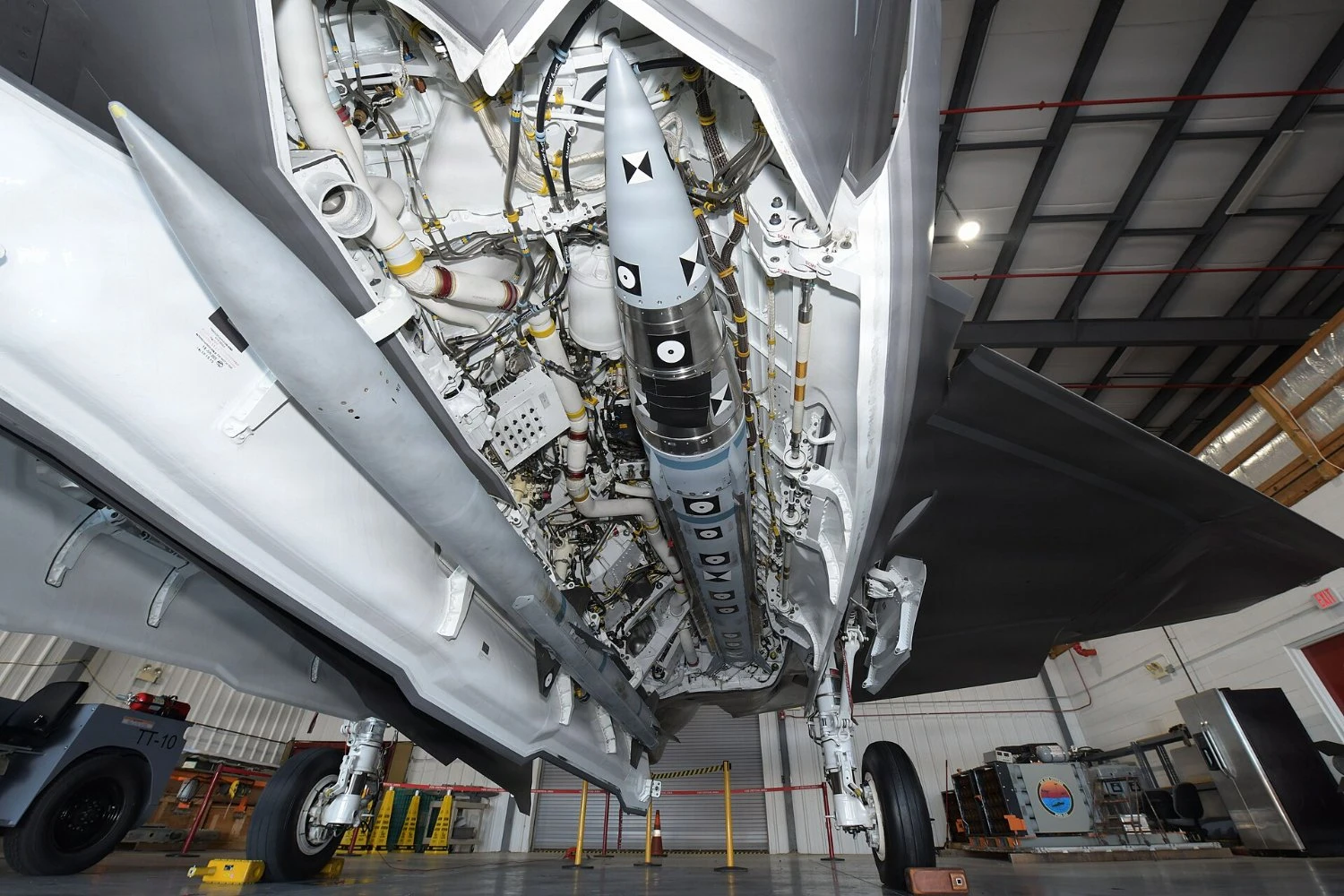
According to the Navy, the AIM-424 measures 13.5 ft (4.11 m) in length and 13.5 in (34 cm) in diameter, with a wingspan of 26.2 in (67 cm). It weighs approximately 1,500 lb (680 kg), uses solid-propellant rocket propulsion and carries a blast-fragmentation warhead.
Its officially stated range is “in excess of 250 nm,” already placing it well beyond conventional air-to-air weapons such as the AIM-120 AMRAAM.
New generation of long-range weapons
The Navy says Malice is intended for fourth-, fifth- and sixth-generation aircraft. Current plans include integration with the F/A-18E/F Super Hornet and F-35C, while the weapon is also being developed with the future F/A-XX carrier fighter in mind.
Its appearance adds another layer to a rapidly expanding US inventory of long-range air-to-air missiles.
The AIM-120 remains the principal beyond-visual-range weapon used by US fighters, while the classified AIM-260 JATM is being developed as its next-generation successor. The Navy also recently introduced the AIM-174B, an air-launched derivative of the SM-6 surface-to-air missile whose large size provides considerably greater engagement distances.
Malice appears to address the same increasing requirement to engage threats at very long distances but combines that reach with internal carriage aboard the F-35C.
Reports from the Tailhook Symposium describe the AIM-424 as a two-stage missile, although the Navy's public specifications only identify its propulsion as a solid-propellant rocket motor and do not provide details of its internal architecture.
The service has also not disclosed what types of targets will receive priority for Malice. Very-long-range air-to-air weapons can potentially allow fighters to attack high-value aircraft such as airborne early-warning platforms and tankers from much greater distances, in addition to extending engagements against combat aircraft.
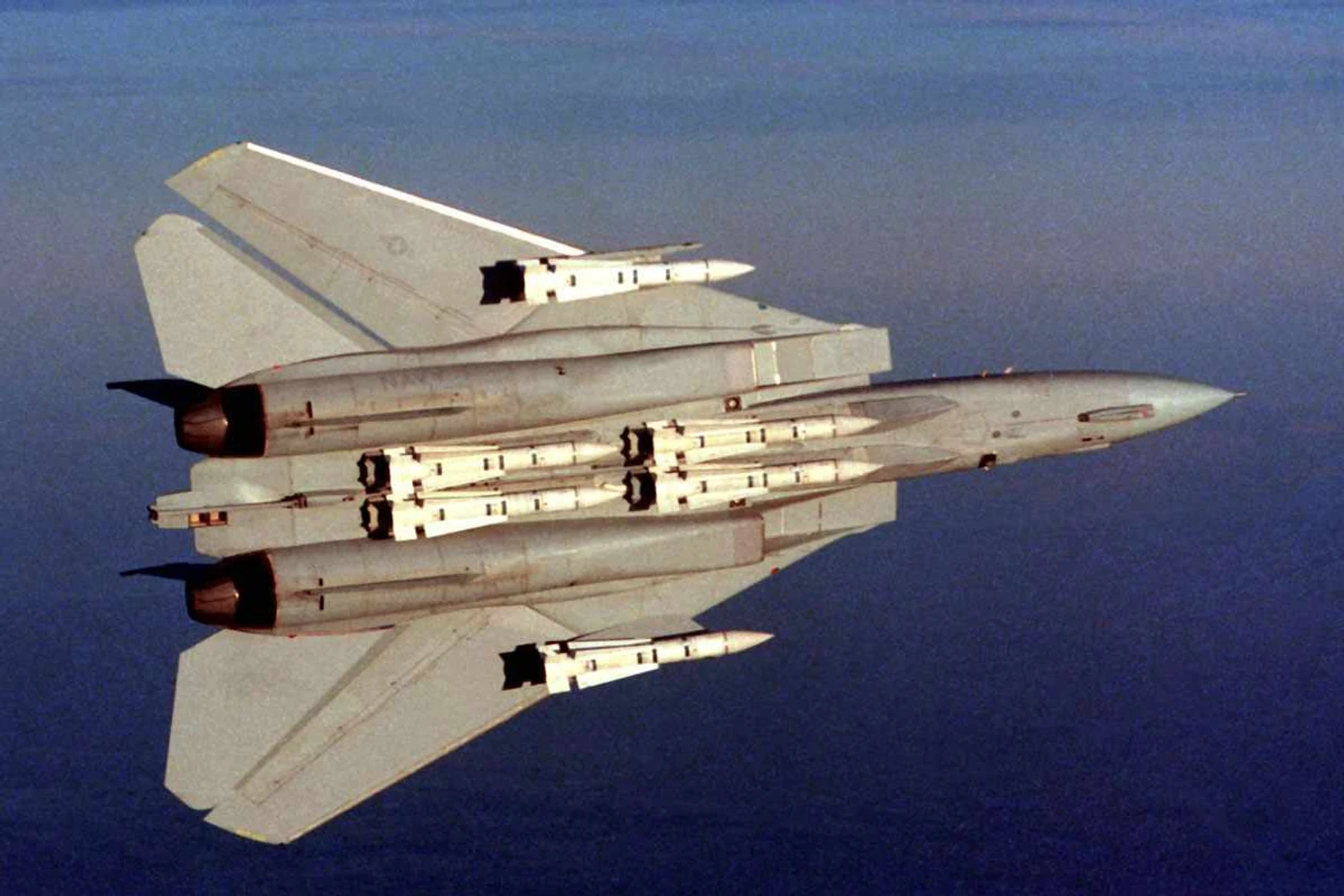
The AIM-424 also restores a capability that US carrier aviation lost two decades ago. The Navy retired theAIM-54 Phoenix alongside the F-14 Tomcat in 2006, leaving it without a purpose-built very-long-range air-to-air missile until the recent arrival of weapons such as the AIM-174B.
The comparison with the Phoenix is striking. The AIM-54C had a range of roughly 100 nm (185 km), weighed about 1,000 lb (454 kg) and measured 13 ft (4 m) long. The 1,500-lb (680-kg) Malice is only slightly longer at 13.5 ft (4.11 m), but the Navy credits it with a range exceeding 250 nm (463 km) — more than twice that of the weapon once carried by the F-14.
Unlike a conceptual weapon, the AIM-424 has already reached flight testing. Its integration with the F/A-18E/F and internal carriage by the F-35C show that the Navy's new very-long-range air-to-air capability is already moving beyond the development-model stage.