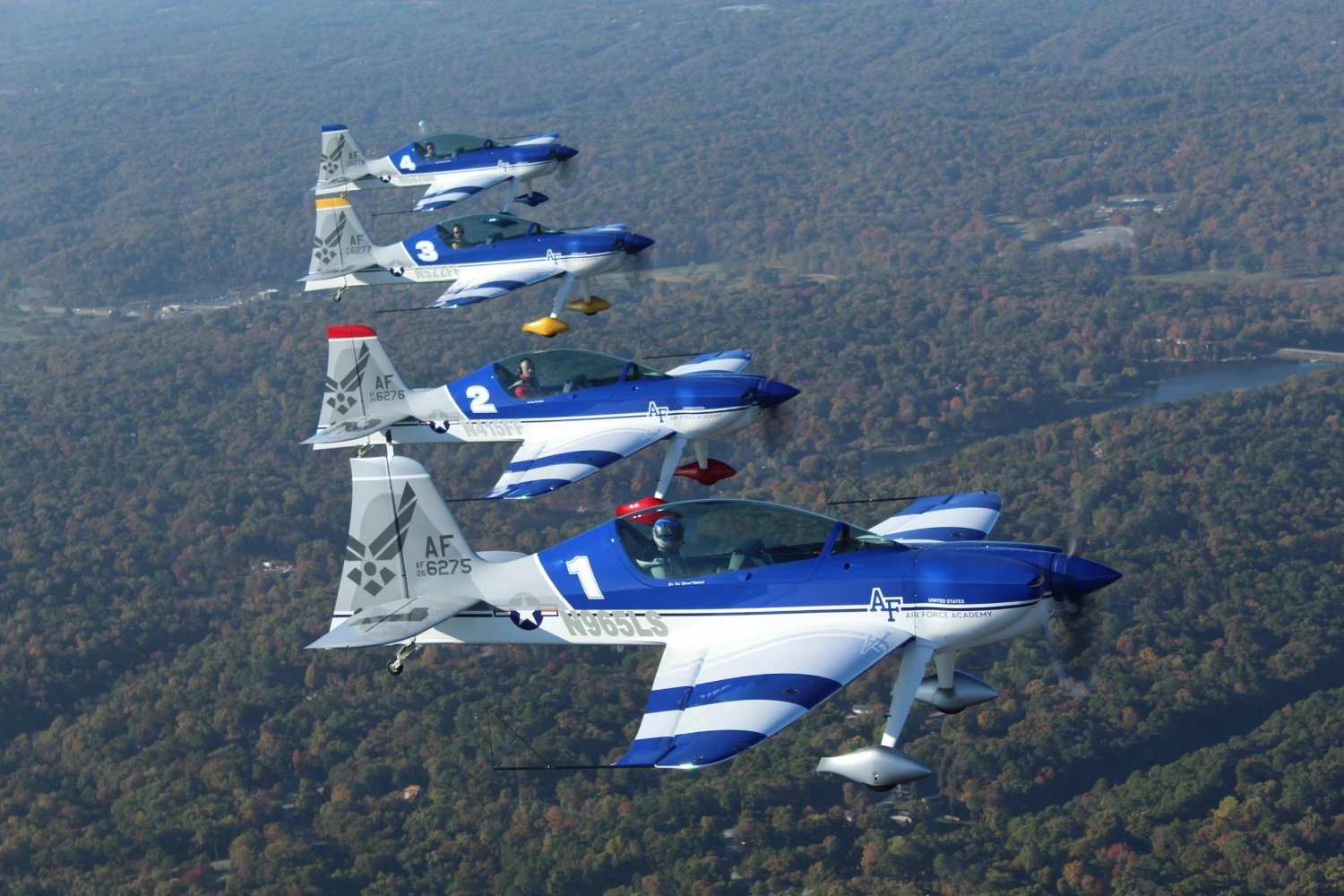
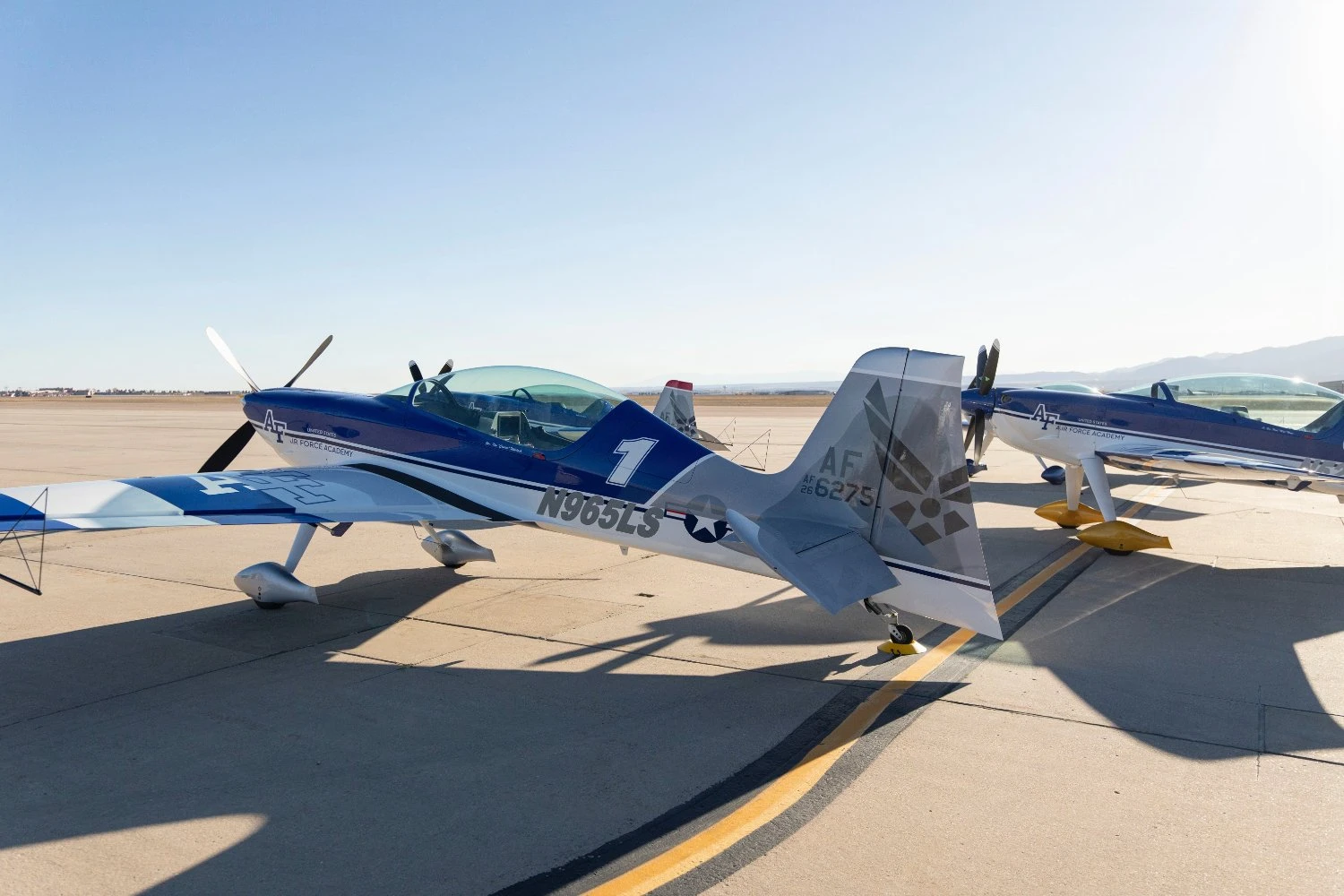
The US Air Force has introduced an unusual addition to its aircraft fleet: the T-19A Kestrel, a small, single-engine aerobatic airplane derived from the civilian GB1 GameBird. Four examples have been delivered to the US Air Force Academy in Colorado, where they will be used to develop flying skills among future military pilots.
Unlike the service's advanced jet trainers, the T-19A is a two-seat piston-powered aircraft originally designed for civilian aerobatics and recreational flying. Its arrival gives the Academy its first powered aircraft dedicated specifically to aerobatic training.
The four aircraft made their public debut on November 12, flying over the Academy before landing at Davis Airfield. Their introduction followed the completion of military certification flights, clearing them for operations at the institution.
The program moved from initial concept to delivery in just ten months, according to Air Force Chief of Staff Gen. Ken Wilsbach. Rather than commissioning a new military design, the service adopted an existing aircraft already capable of demanding aerobatic maneuvers.
From civilian GameBird to military Kestrel
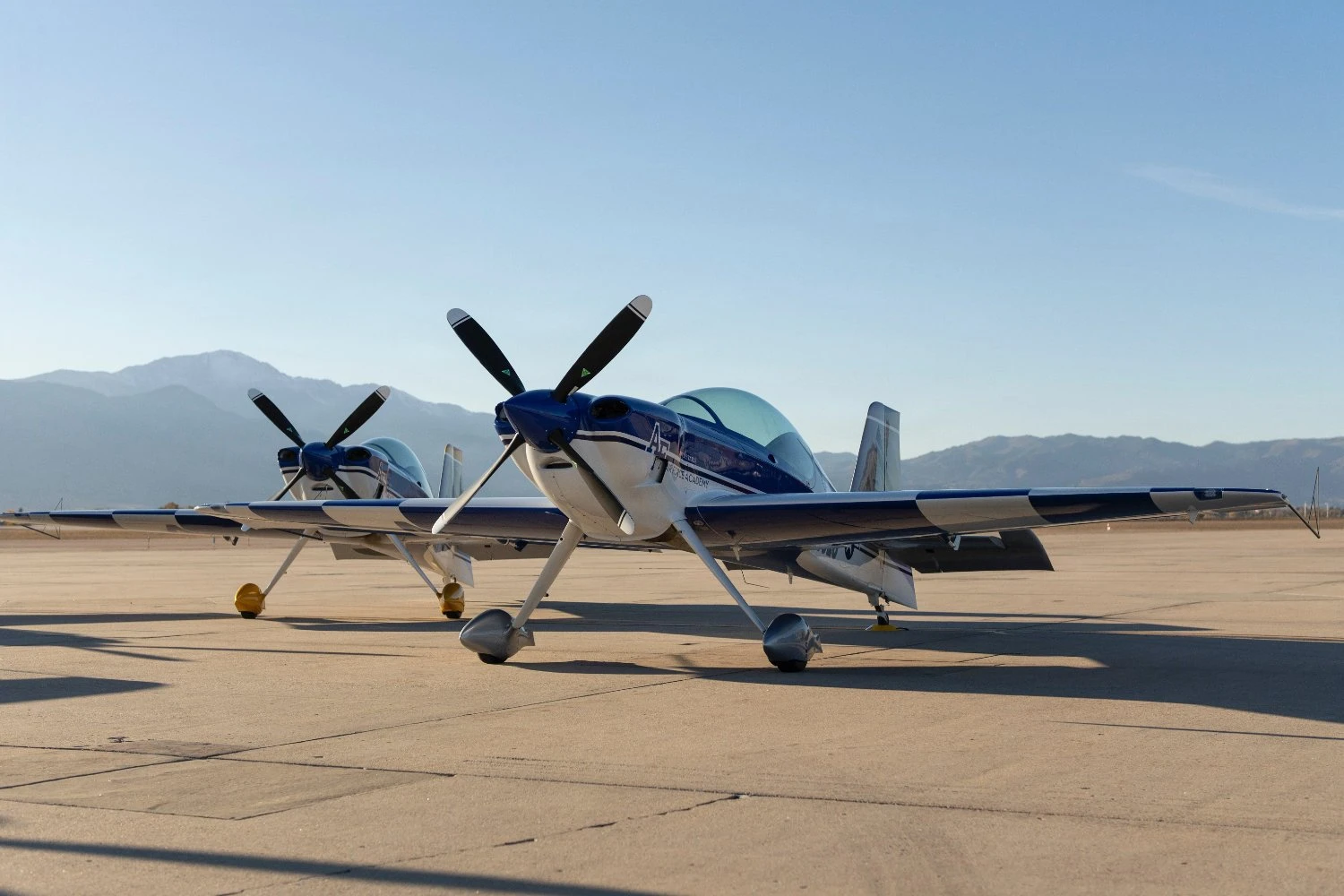
The T-19A is based on the GB1 GameBird, developed by German aircraft designer Philipp Steinbach in partnership with American entrepreneur Steuart Walton, a member of the family behind Walmart.
The aircraft was initially developed in the United Kingdom before production was established in Bentonville, Arkansas, by Game Aerospace Composites. The GB1 made its first flight in July 2015 and was designed to combine high-performance aerobatics with the ability to undertake longer cross-country flights.
Follow Air Data News: WhatsApp | Instagram | LinkedIn | Twitter | Facebook
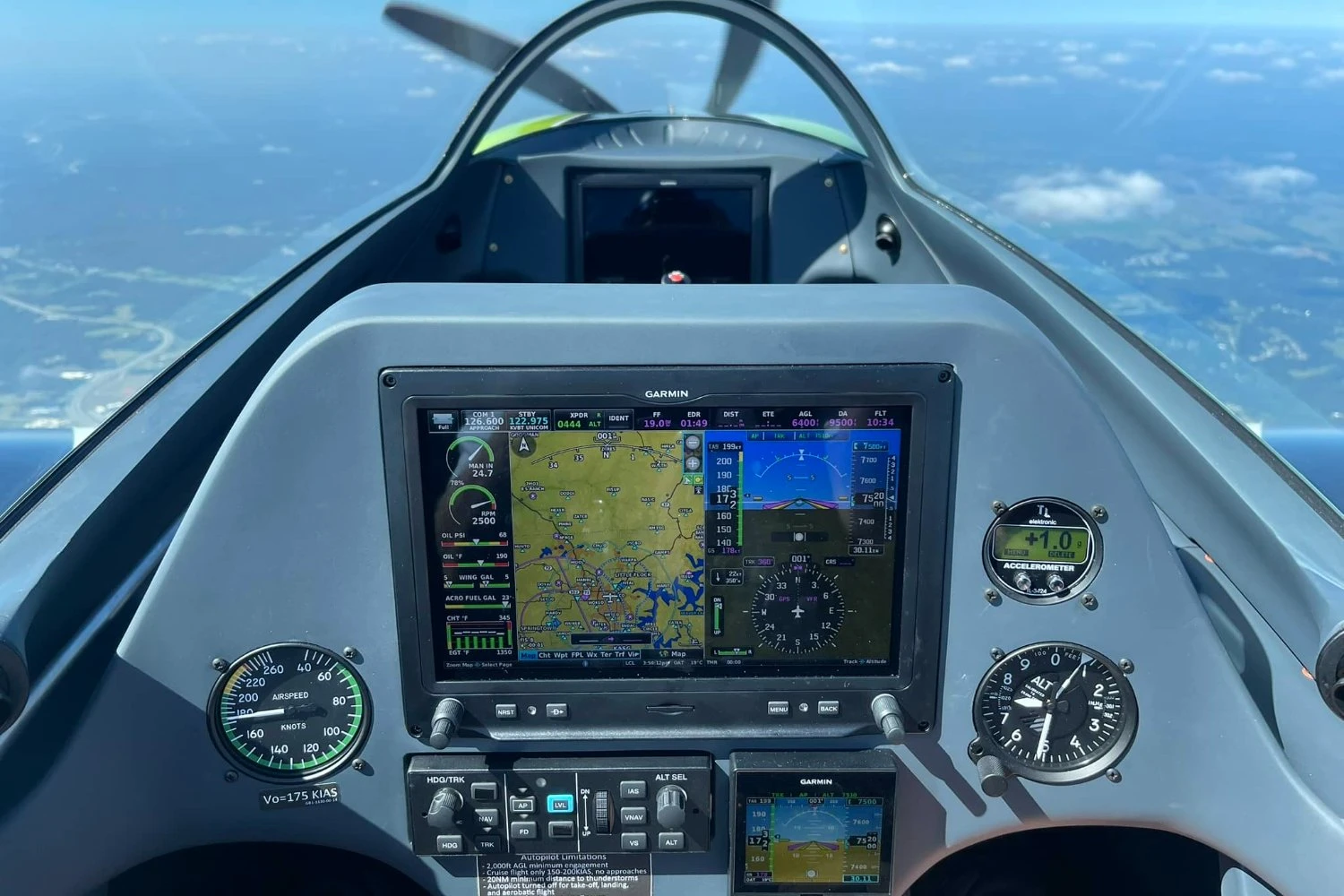
Its airframe is constructed primarily from carbon-fiber composite materials, with a low-wing configuration and two seats arranged in tandem. Power comes from a Lycoming AEIO-580 six-cylinder piston engine producing approximately 303 horsepower, driving a four-bladed propeller.
Despite its modest size, the GameBird is a high-performance aircraft. The civilian version has a cruising speed of approximately 200 knots (370 km/h), a wingspan of 25.3 feet (7.7 meters) and a length of about 23 feet (7 meters).
Depending on operating weight, the aircraft is designed to withstand aerobatic loads of up to positive and negative 10 g. Its published maximum roll rate reaches 400 degrees per second, allowing rapid rotations around its longitudinal axis.
The GameBird can also be used for conventional flights, with a published maximum range of approximately 1,000 nautical miles (1,850 kilometers). These figures refer to the civilian GB1; the Air Force has not published a separate performance specification for the T-19A.
The military designation was accompanied by a new name chosen by Academy cadets. Kestrel refers to a small falcon known for its agility, sharp eyesight and precise movements when hunting.
Four aircraft donated to the Air Force
The T-19A entered military service through an unusual acquisition arrangement. The four aircraft were funded entirely by corporate and private donations, rather than a conventional Air Force procurement contract.
According to information provided by the service to The War Zone, the donation was valued at approximately $3 million. The Air Force contributed another $400,000 for spare parts, support equipment and flight gear needed to establish the program.
Related news
Annual operating and maintenance expenses are expected to exceed $1 million, covering the four aircraft, their support requirements and participation in aerobatic competitions.
The rapid delivery was made possible by the decision to use an existing commercial design. The Air Force has not disclosed significant structural modifications to the aircraft beyond the certification and equipment requirements associated with military operations.
The Kestrel also serves a different purpose from the T-7A Red Hawk, the jet trainer being introduced to replace the aging T-38 Talon. The T-19A will not prepare pilots directly for operating fighter jets or replace the Air Force's undergraduate pilot training aircraft.
Instead, it will give selected Academy cadets experience in precise aircraft control, aerobatic maneuvers and the management of demanding flight conditions before they enter military pilot training.
New aerobatic team at the Academy
Six active-duty pilots from the Academy staff and the 306th Flying Training Group have been selected to establish the initial training curriculum. They will operate the aircraft and develop procedures for integrating aerobatic instruction into the Academy's existing aviation programs.
The initial pilots will also perform demonstrations at air shows and recruiting events across the United States. Eventually, the Air Force intends to establish a competitive aerobatic team involving cadets, including participation in International Aerobatic Club competitions.
Recent news
The Academy plans to increase student participation gradually, allowing selected cadets to progress from basic aircraft handling to advanced aerobatic maneuvers under military supervision.
All four Kestrels will operate from Davis Airfield at the Air Force Academy in Colorado. Their flights will follow military and Federal Aviation Administration safety requirements, with particular attention to the risks associated with low-altitude aerobatics.
Related coverage: US Air Force training aircraft and jet trainer program.
