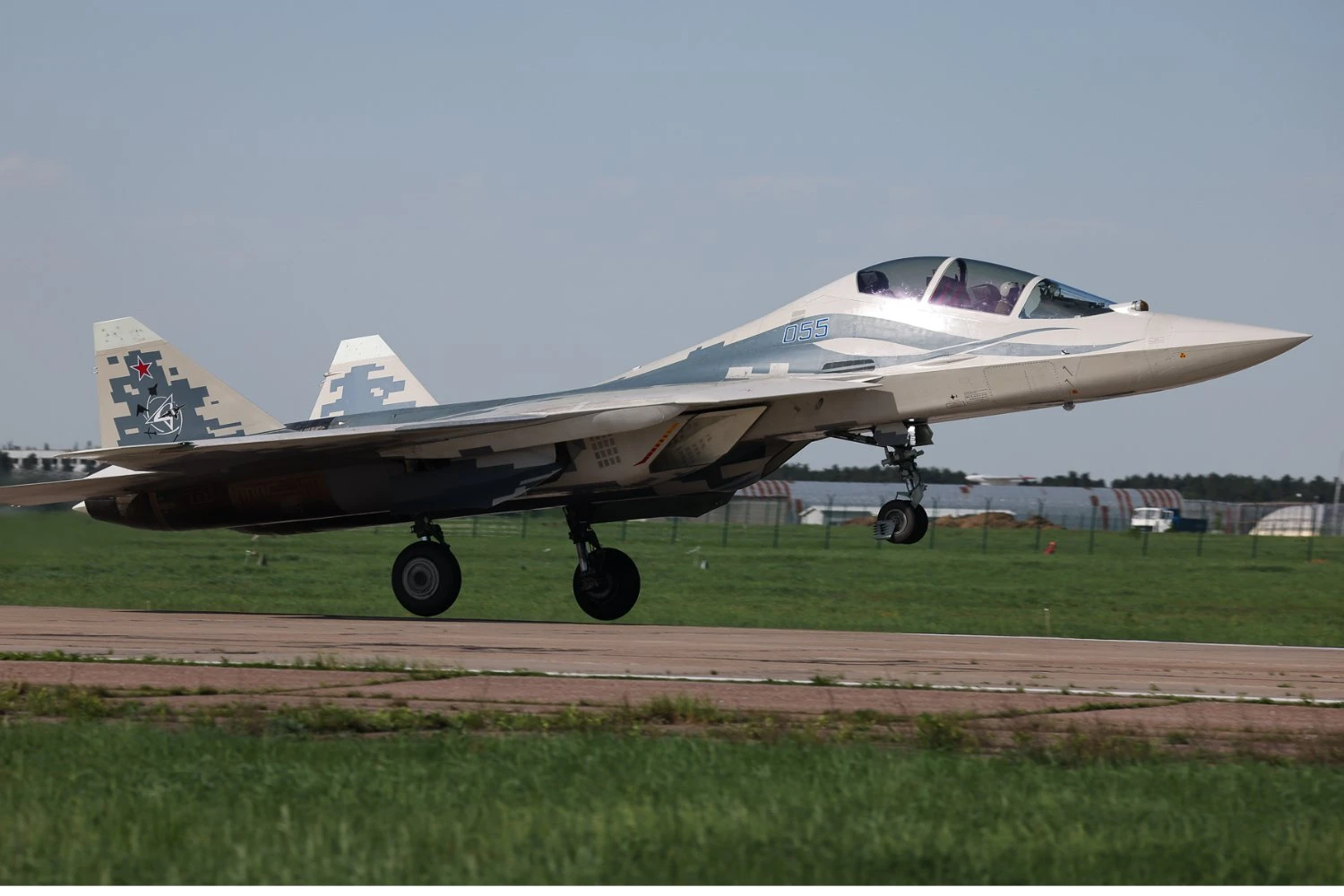
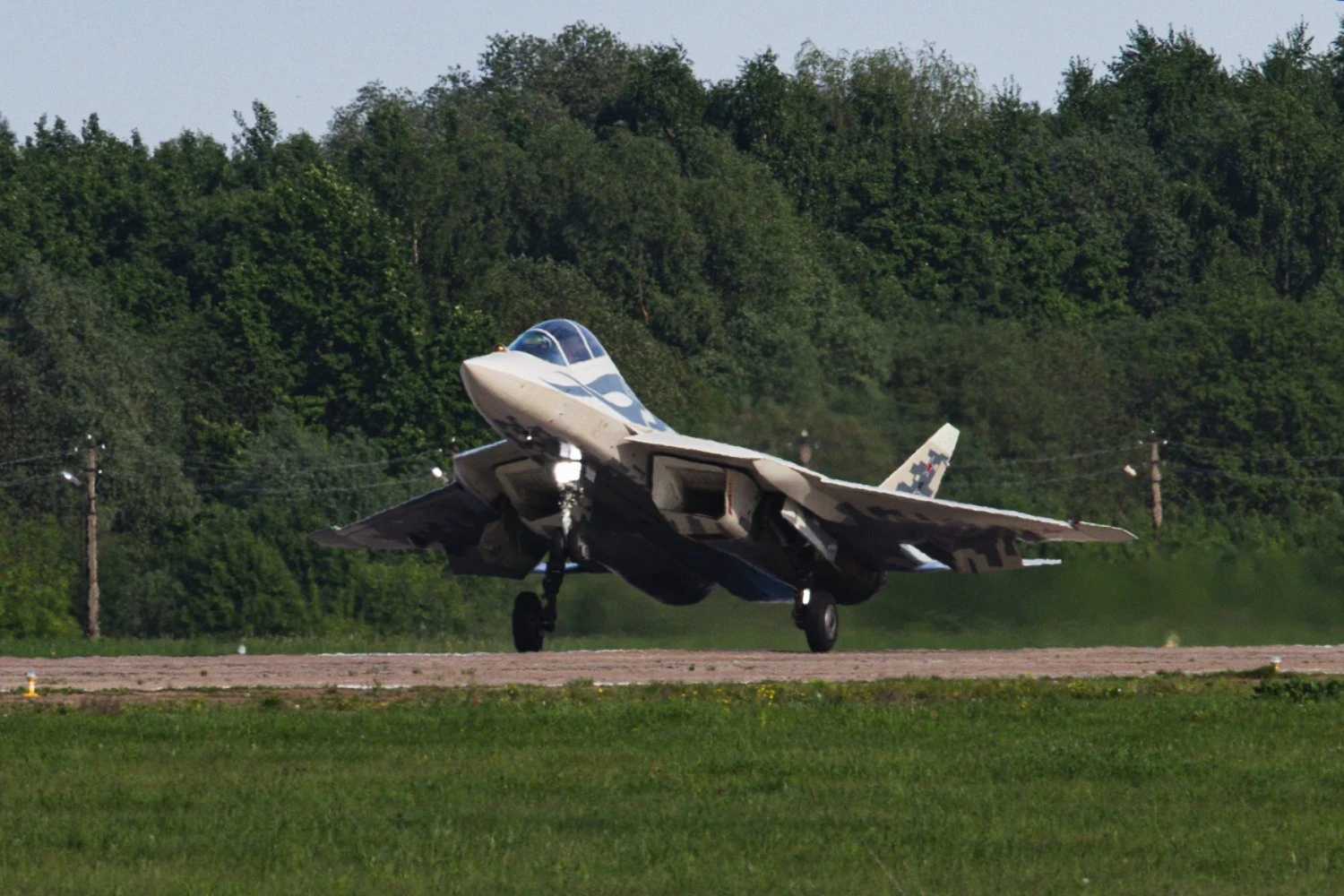
Russia intends to use the two-seat Su-57D to test technologies associated with a future sixth generation of combat aircraft, according to Mikhail Strelets, director of the Sukhoi Design Bureau.
The aircraft would serve as a development platform for capabilities that go beyond those incorporated into the current Su-57, including combat artificial intelligence and the coordination of increasingly autonomous unmanned aircraft.
Follow Air Data News: WhatsApp | Instagram | LinkedIn | Twitter | Facebook
According to Strelets, the addition of a second crew member is particularly important for this role. One pilot could concentrate on flying the fighter and conducting its primary mission, while the second would manage unmanned aircraft operating alongside it.
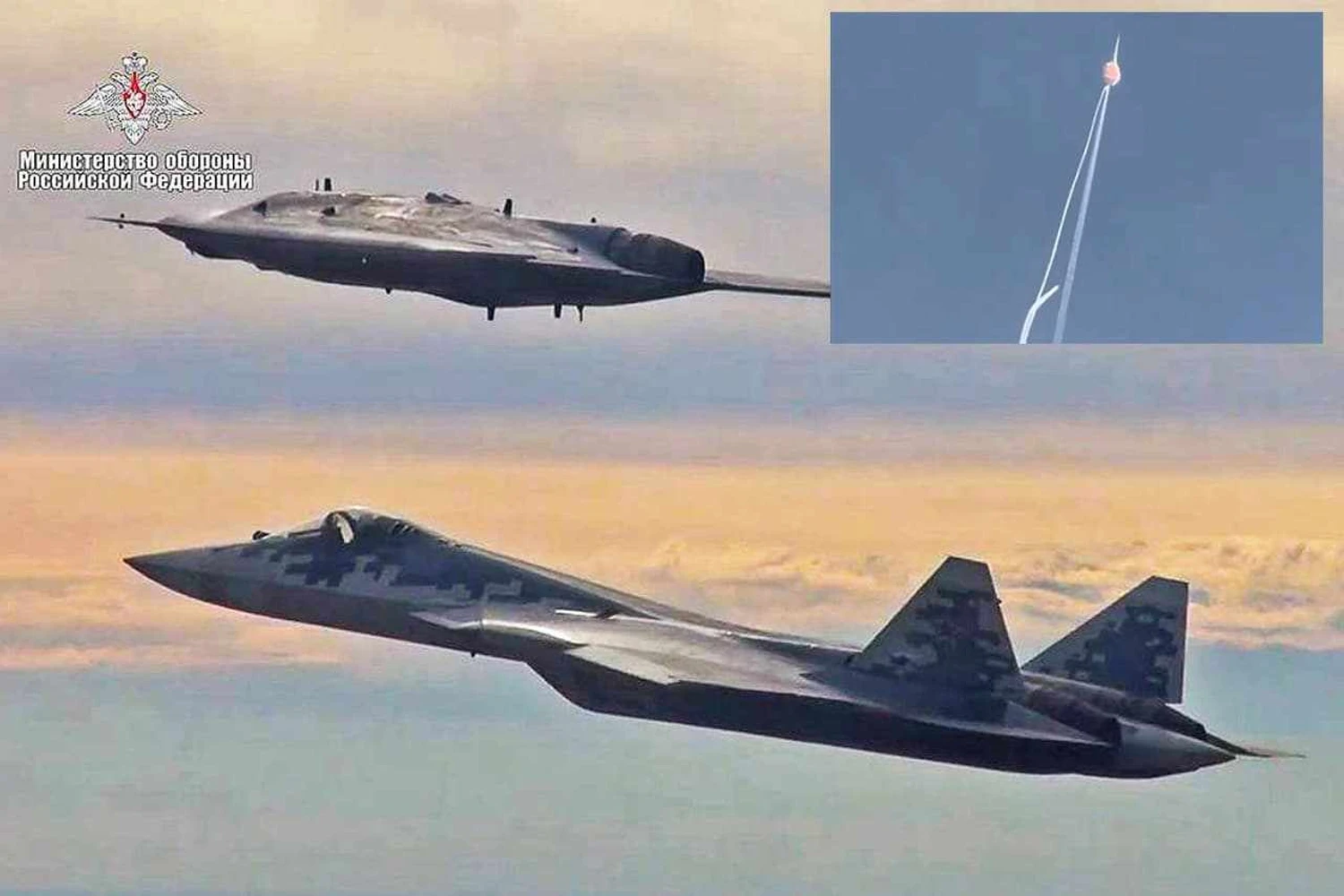
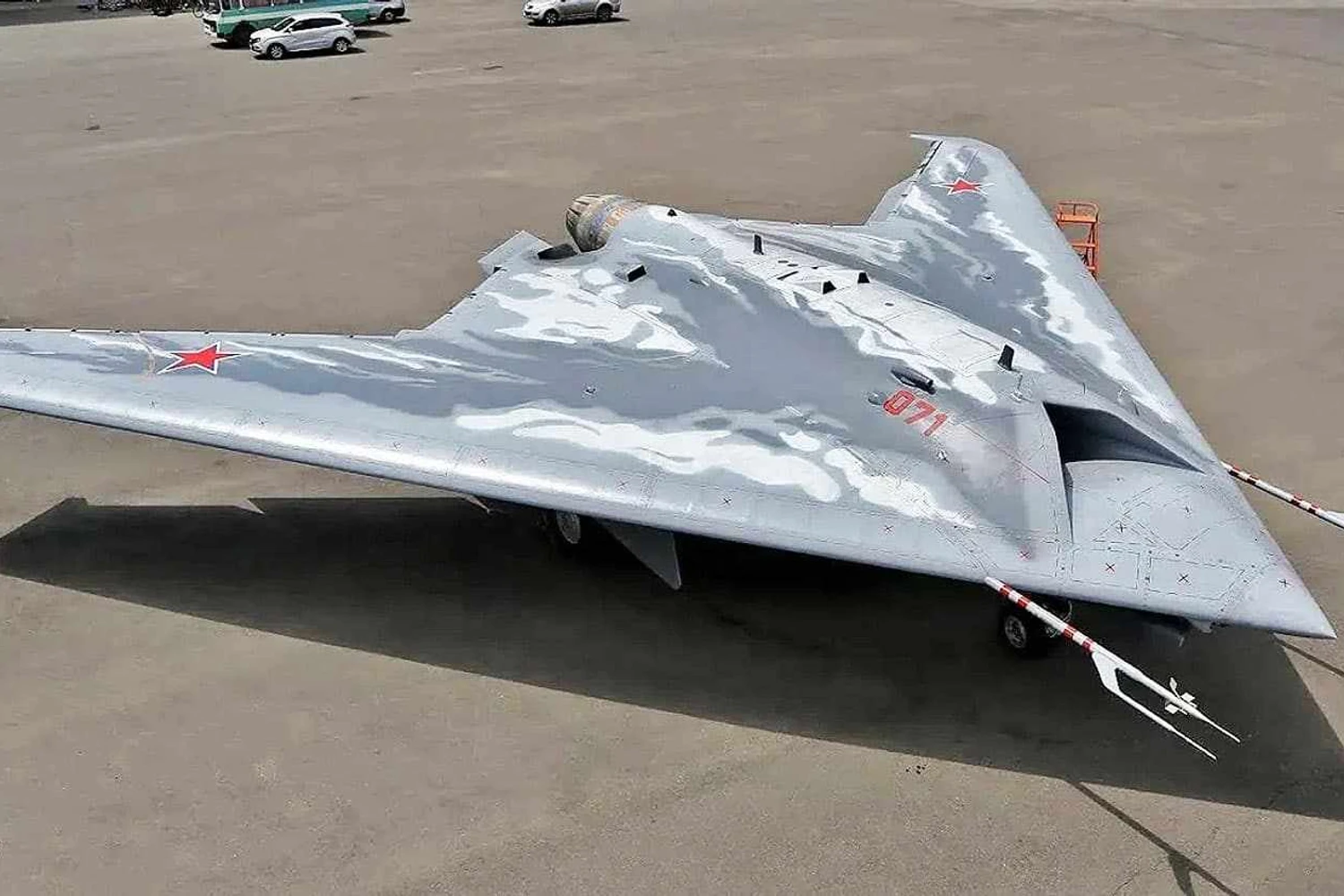
The concept includes cooperation with highly automated systems such as the S-70 Okhotnik heavy unmanned combat aircraft as well as groups and eventually swarms of drones.
Sukhoi does not suggest that this would turn the Su-57D itself into a sixth-generation fighter. Instead, Strelets sees the Felon as a platform that can gradually absorb technologies associated with the next generation, creating what the company describes as a “5+” aircraft.
It is an idea the Russian manufacturer has discussed before. In 2025, Strelets said the Su-57 had been conceived with an operational life of at least 50 years, during which new technologies could progressively be incorporated into the platform.
Drone control is not new to the Su-57
The connection between the Felon and unmanned combat aircraft predates the Su-57D.
Russia has worked on cooperation between the Su-57 and the S-70 Okhotnik for years. In September 2019, the Russian Ministry of Defense released footage of the two aircraft flying together during a test lasting more than 30 minutes.
At the time, Moscow said the Okhotnik operated automatically and interacted with the Su-57 to extend the fighter’s radar coverage and provide target designation for long-range weapons.
The two-seat aircraft therefore expands an existing concept rather than introducing it. Its main difference is the possibility of assigning an operator specifically to the management of other assets, potentially allowing a much more complex form of manned-unmanned teaming than could reasonably be handled by the pilot of a single-seat fighter.
This also explains Sukhoi’s interest in combat AI. Greater autonomy aboard the unmanned aircraft would reduce the amount of direct control required from the Su-57D crew. Instead of remotely flying individual drones, the operator could assign missions or objectives while automated systems determine how to execute them.
Such an architecture is one of the concepts commonly associated with the next generation of air combat, in which a crewed fighter operates as part of a distributed network of sensors, weapons and unmanned aircraft rather than as an isolated platform.
Where Russian claims become harder to assess
What cannot yet be established is how far Sukhoi has progressed toward actually fielding these capabilities.
That distinction is particularly relevant in the case of Russian combat aircraft. Moscow frequently announces advanced capabilities while releasing little technical information that would allow their actual performance or maturity to be independently assessed.
The Su-57 itself illustrates the problem.
The Felon is officially described by Russia as a fifth-generation fighter and incorporates several features associated with this category, including internal weapons bays, radar-absorbent materials and an airframe shaped to reduce radar reflections.
But its approach to low observability has generated debate since the aircraft first appeared.
Unlike designs optimized more comprehensively around very low observability, the Su-57 retains characteristics that suggest different engineering compromises. Its engine installation, rear fuselage and exhaust area have attracted particular attention, while the aircraft’s inlet arrangement does not use the deeply curved ducts found on some Western stealth fighters.
Sukhoi has taken measures to reduce the radar contribution of the engine faces, including inlet treatments and blockers, and later aircraft appear more refined than some of the early prototypes frequently photographed in public. Even so, the design appears to place greater emphasis on reducing signature from the forward hemisphere than from other aspects.
That does not mean the Su-57 is not a low-observable aircraft. It means its actual degree of stealth remains difficult to quantify.
Radar cross-section figures frequently attributed to the Felon — and to Western fighters — are particularly problematic. Reliable measurements under comparable frequencies, aspects and configurations are classified, making the precise numbers commonly repeated online of little value.
The same caution applies to the new capabilities now being discussed for the Su-57D.
Controlling an S-70 during a test flight, developing software for autonomous aircraft and operating a formation of combat drones under electronic attack are very different levels of capability. The last requires secure communications, sensor fusion, considerable onboard processing, resilient datalinks and enough autonomy for unmanned aircraft to continue operating when communications are degraded or lost.
Sukhoi has provided no public evidence so far that would allow the maturity of such a system to be independently determined.
The Su-57 program offers another reason for caution about timelines. The fighter first flew in prototype form in 2010, yet development of major elements continues more than 16 years later.
None of this makes Sukhoi’s ambitions for the Su-57D technically implausible. Using an existing fighter as a flying laboratory for AI, autonomous systems and more advanced manned-unmanned teaming is a logical development path.
The more significant question is how much of what Russia calls “sixth-generation technology” currently exists as functional hardware and software, how much remains under development, and how much is still an objective for the future.
For the Su-57, the distinction is particularly relevant: some of the characteristics Russia attributes to its fifth-generation fighter remain difficult to independently evaluate even as Sukhoi begins talking about technologies belonging to the generation beyond it.