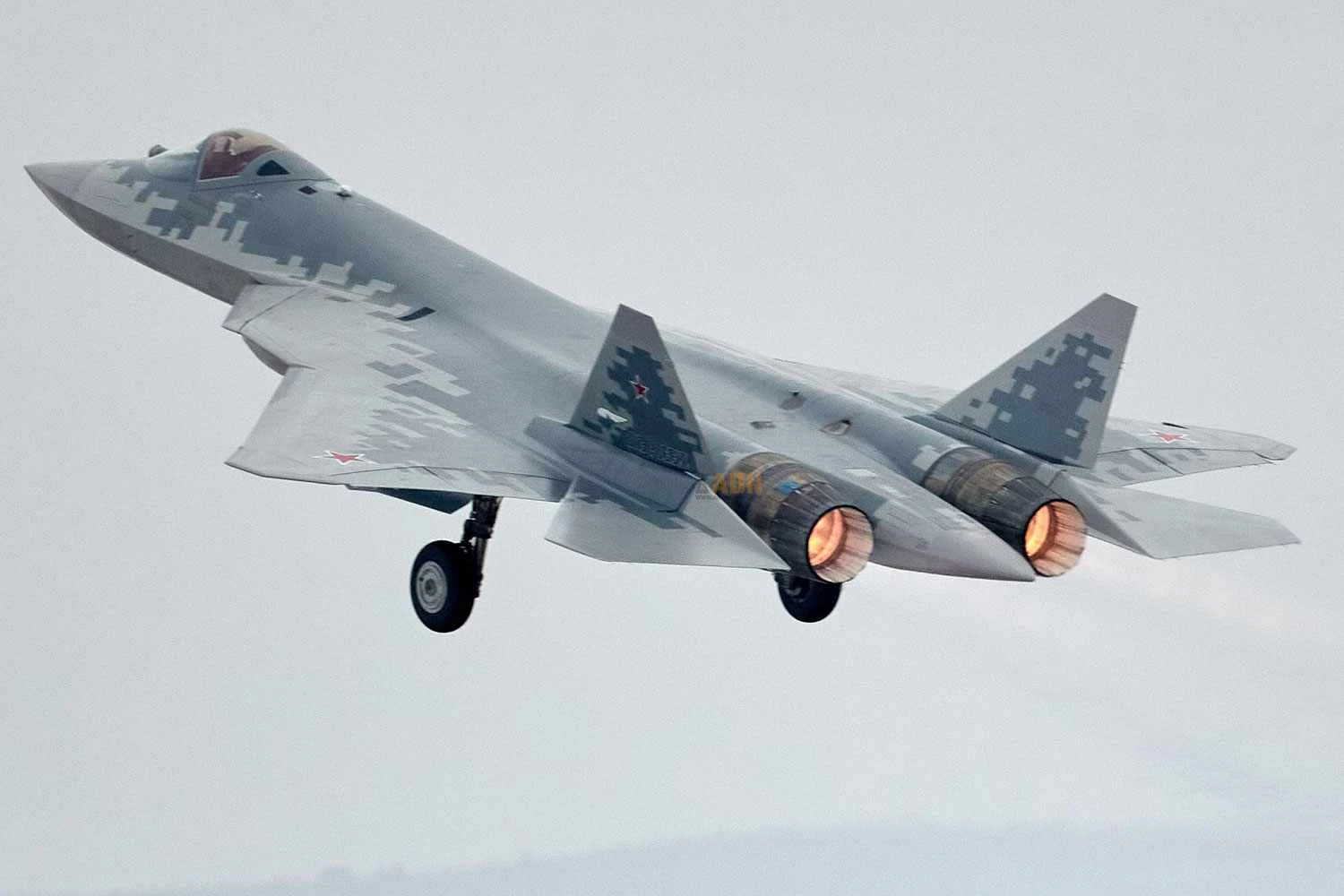
A fire reportedly broke out at a key Russian aircraft factory responsible for producing the Su-57 stealth fighter, according to videos and claims circulating on social media and cited by open-source intelligence analysts.
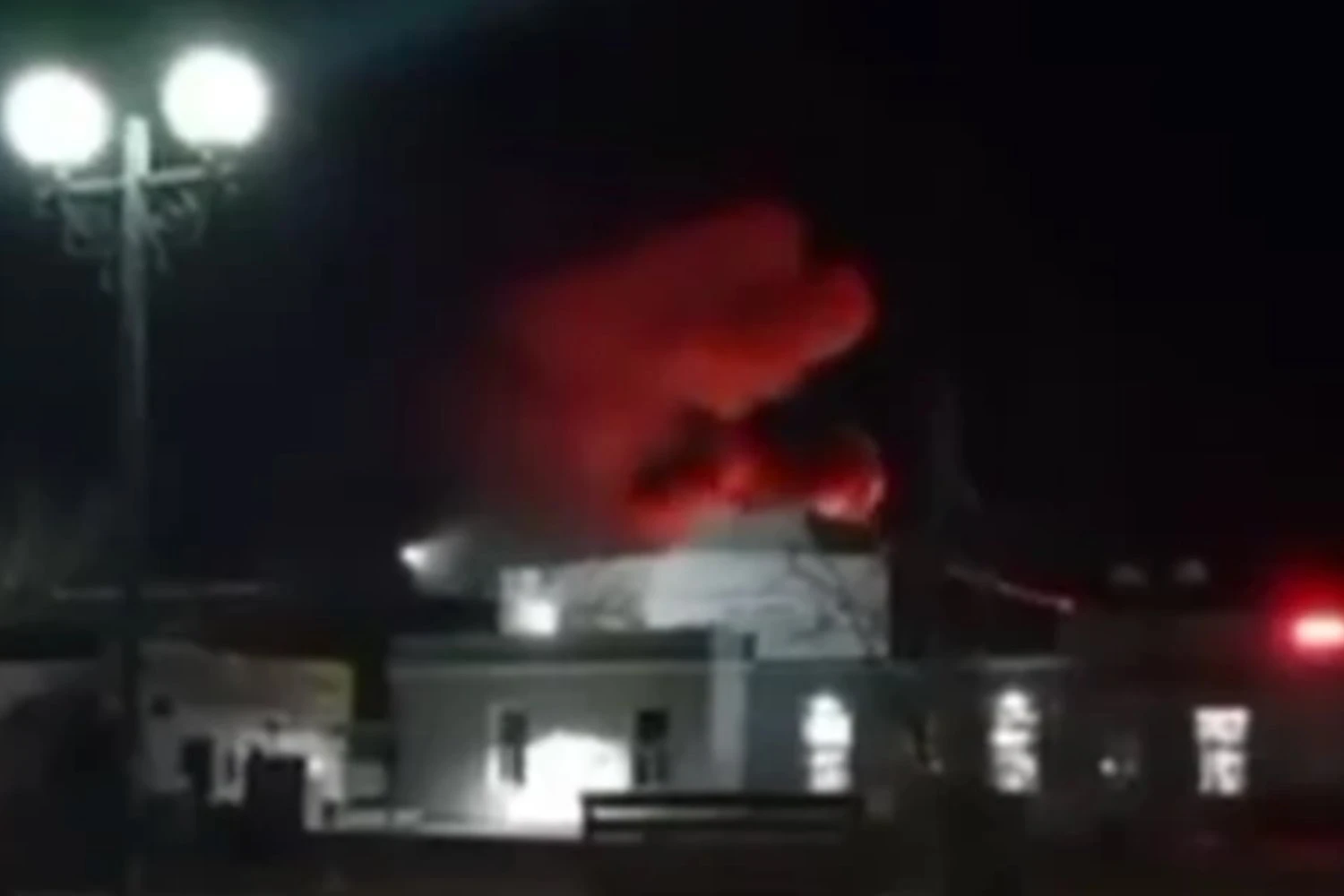
The incident is said to have occurred on April 11 at the Komsomolsk-on-Amur Aviation Plant (KnAAZ), located in Russia’s Far East. The facility is the country’s only serial production site for the Su-57, a fifth-generation fighter developed by Sukhoi under the United Aircraft Corporation (UAC). Russian authorities and the company had not issued any official statement at the time of publication.
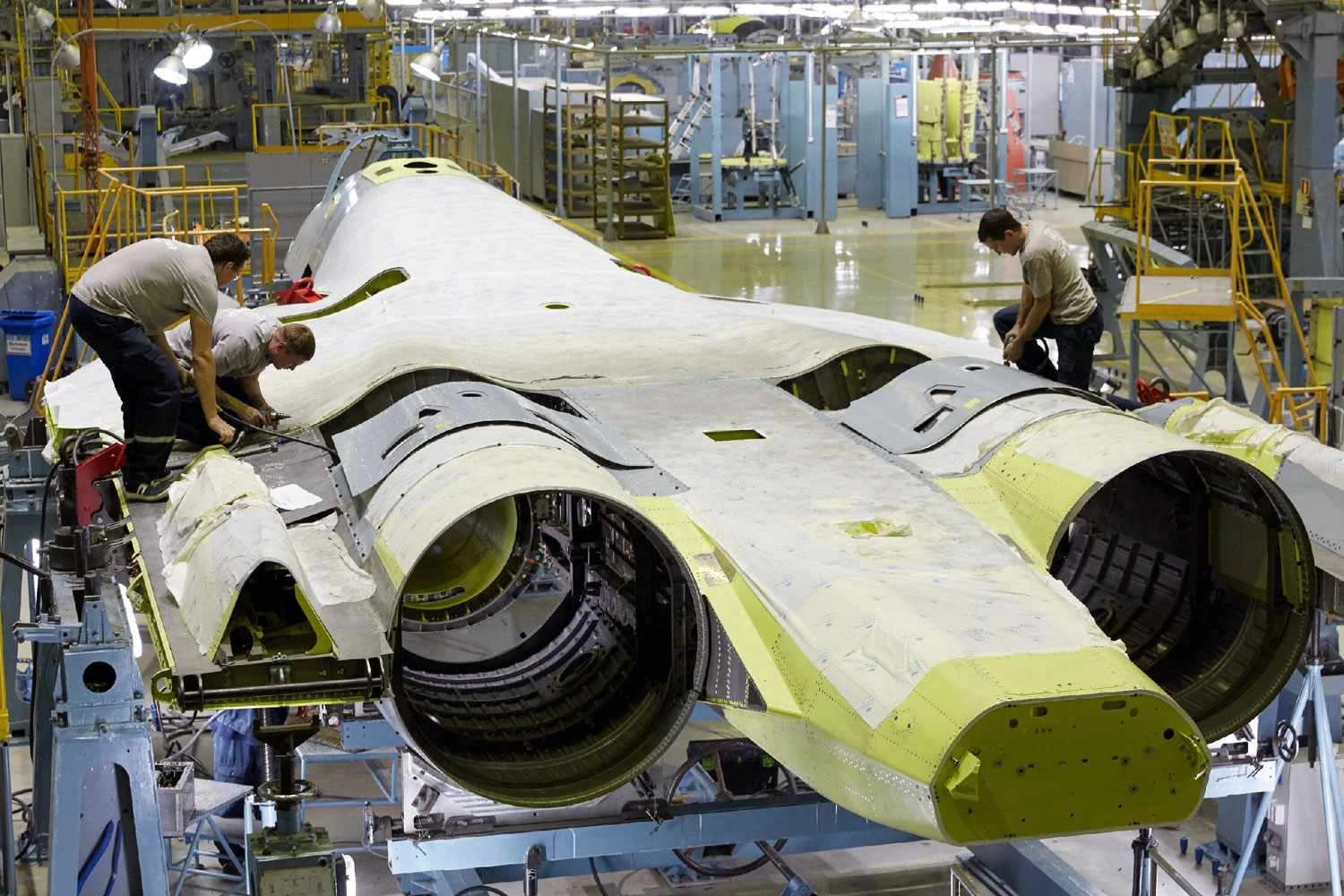
According to the OSINT group Cyberboroshno, the fire affected Shop No. 46, a workshop dedicated to manufacturing polymer composite components used in the Su-57’s structure. The unit reportedly produces around 300 different parts, including roughly 100 large structural elements such as wing panels, control surfaces and fuselage sections.
Follow Air Data News: WhatsApp | Google News | Instagram | LinkedIn | Twitter | Facebook
These composite materials are central to the aircraft’s design, reducing weight and radar signature while maintaining structural strength. Their production involves specialized processes such as precision layup and autoclave curing, requiring trained personnel and tightly controlled environments. Any damage to equipment or infrastructure in this area would be difficult to replace quickly.
Images shared online suggest flames and smoke inside the facility, though the extent of the damage remains unclear. Separate reports indicate that at least part of the workshop may have been heavily affected, potentially disrupting ongoing manufacturing activity.
The KnAAZ plant also produces the Su-35S fighter and operates under Western sanctions, which complicate access to foreign equipment and industrial support. This has already forced reliance on domestic substitutes for some production processes.
The Su-57 program has faced longstanding challenges in scaling up output. A 2019 contract calls for 76 aircraft to be delivered by the late 2020s, but production has progressed slowly, with only a limited number of jets entering service so far. Estimates suggest annual output remains low, with only a handful of aircraft completed each year.
If confirmed, damage to the composite workshop would affect an early stage of the production chain, with consequences likely to propagate through final assembly and delivery schedules. The cause of the fire has not been established, and independent verification of the reports is still pending.