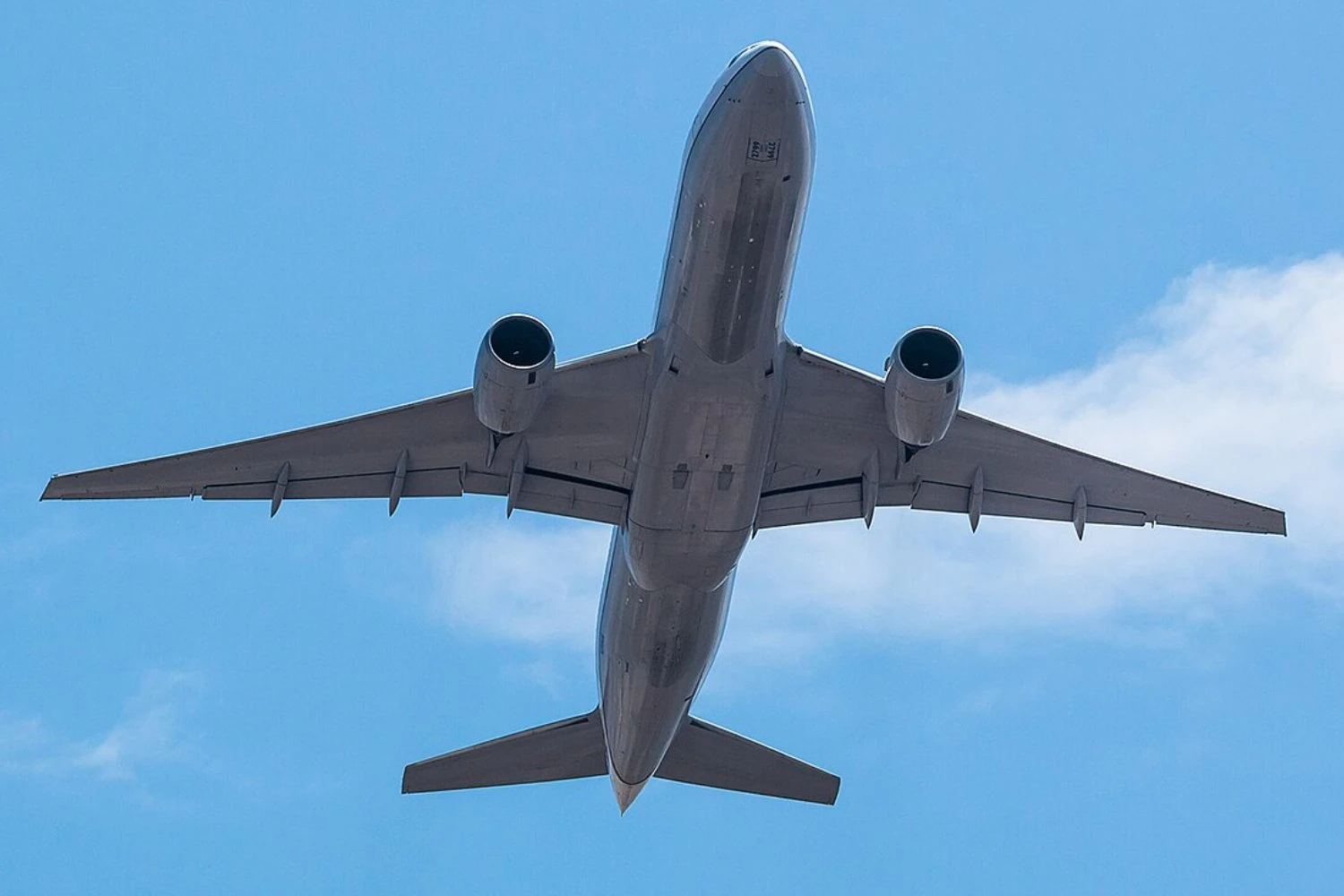
Stratolaunch has acquired a Boeing 777-200ER that will become its third air-launch platform, an addition that may initially seem unusual for a company that already operates the world's largest aircraft specifically designed for that purpose.
The US company announced the acquisition on Wednesday and said the 777 will undergo modifications before entering service in 2027. The aircraft will receive multiple pylon attachment points to carry Talon-A hypersonic vehicles and other test systems.
Stratolaunch did not identify the aircraft's registration, serial number or previous operator.
The 777 will join Roc, the enormous twin-fuselage aircraft originally developed as Stratolaunch's primary launch platform, and Spirit of Mojave, a former Boeing 747-400 converted for the same general role.
Follow Air Data News: WhatsApp | Instagram | LinkedIn | Twitter | Facebook
Rather than providing capabilities unavailable on those aircraft, the 777 appears intended to increase the frequency and geographic flexibility of Stratolaunch's growing hypersonic test operation.
Company expects 35% more flight capacity
Stratolaunch expects the additional carrier to increase its overall flight capacity by approximately 35%. The company also wants to conduct simultaneous test campaigns at different locations.
That distinction helps explain why another carrier aircraft is useful despite the presence of Roc.
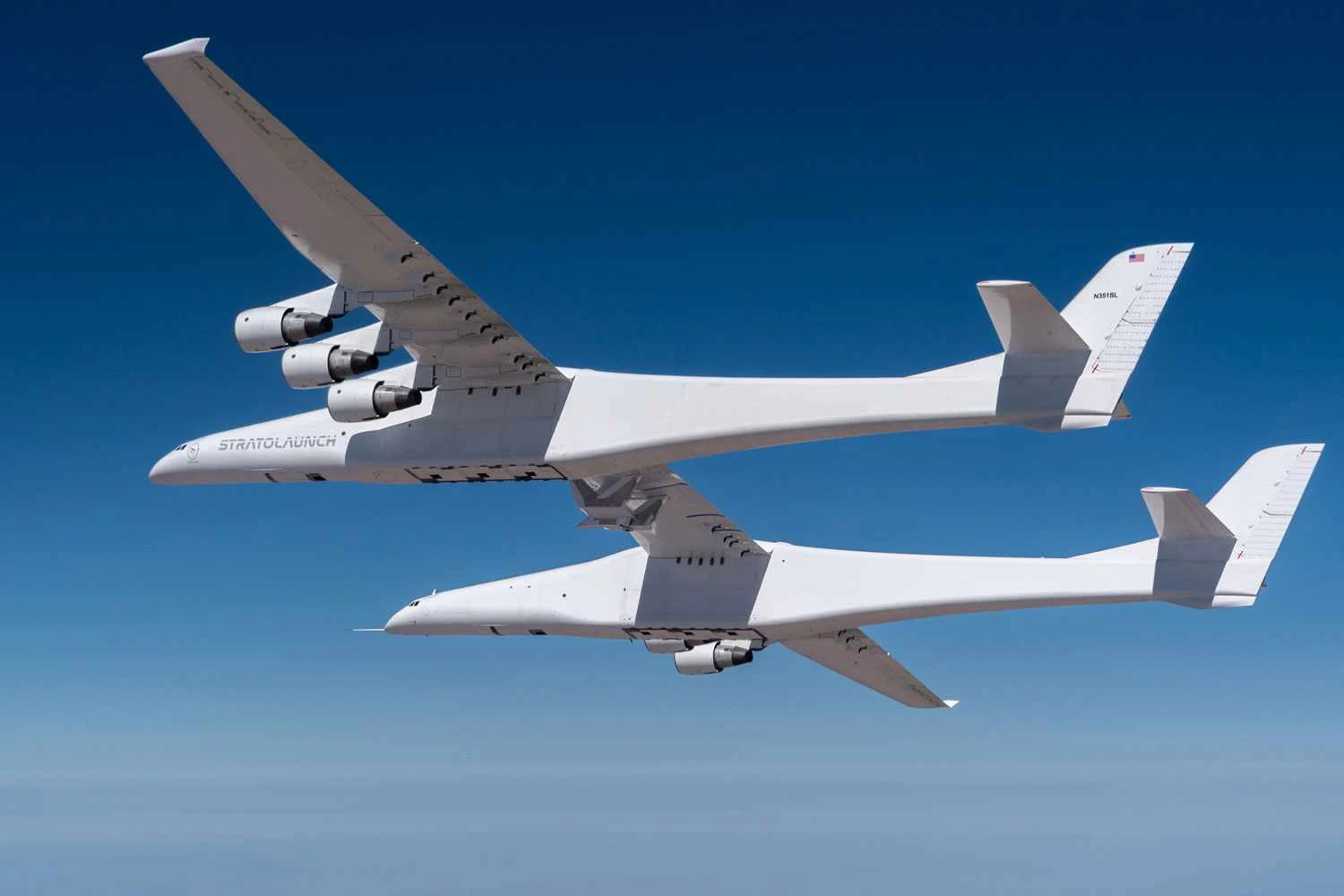
With a wingspan of 385 feet (117 meters) and a payload capacity of 550,000 lb (249,500 kg), Roc was purpose-built to carry very large vehicles beneath its center wing. Its capabilities greatly exceed what is necessary to launch a Talon-A on many missions.
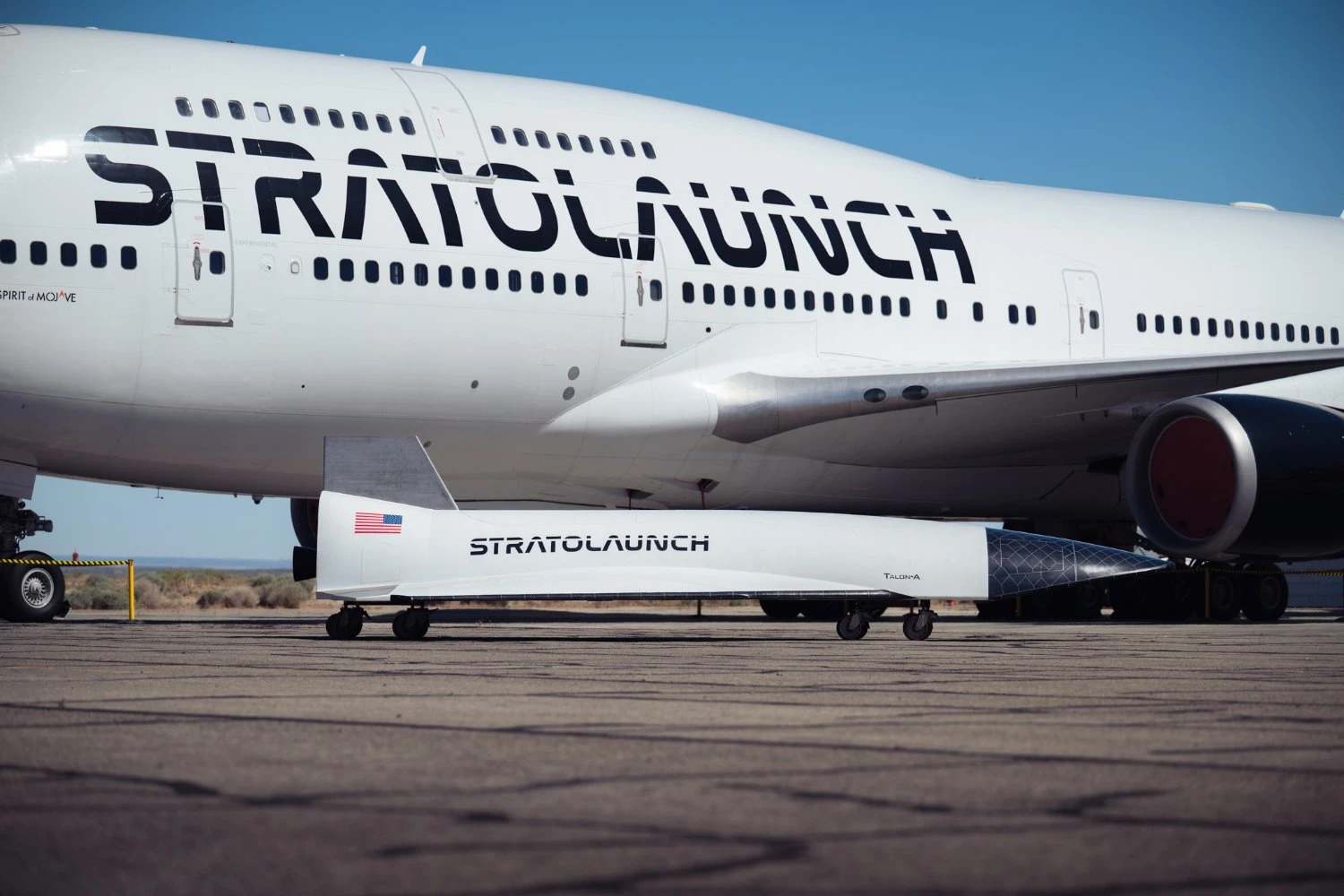
Spirit of Mojave has already demonstrated that a conventional commercial aircraft can perform that job. The modified 747 launched a Talon-A3 during a Missile Defense Agency mission from Mojave earlier this year.
The 747 also provides something Roc cannot offer as easily: the ability to deploy to conventional airports around the world and use an established maintenance and support infrastructure.
A converted 777 adds another long-range launch platform for missions that do not require Roc's exceptional payload capability, while allowing simultaneous campaigns or providing capacity when another carrier is unavailable.
Stratolaunch has not disclosed the aircraft's expected payload or performance after conversion, nor said whether operating costs influenced its choice of the twin-engine 777.
Hypersonic testing expands
The acquisition comes as Stratolaunch moves beyond the initial development of Talon-A toward a higher volume of hypersonic testing for U.S. government customers.
Talon-A is an autonomous, reusable vehicle designed to reach speeds above Mach 5. It is released from a carrier aircraft before its rocket engine accelerates it into hypersonic flight.
Stratolaunch said in July that it had completed more than 10 successful hypersonic flights. Its customers and partners include the U.S. Air Force, Navy, Missile Defense Agency and NASA.
The company also received a US$90.8 million contract this year under the Multi-Service Advanced Capability Hypersonic Test Bed, or MACH-TB, program to provide air-launched hypersonic testing.
The growing test workload is also far removed from Stratolaunch's original business model. Roc was designed to carry and air-launch rockets into space, but the company abandoned its orbital launch plans and later repurposed the aircraft for hypersonic testing.
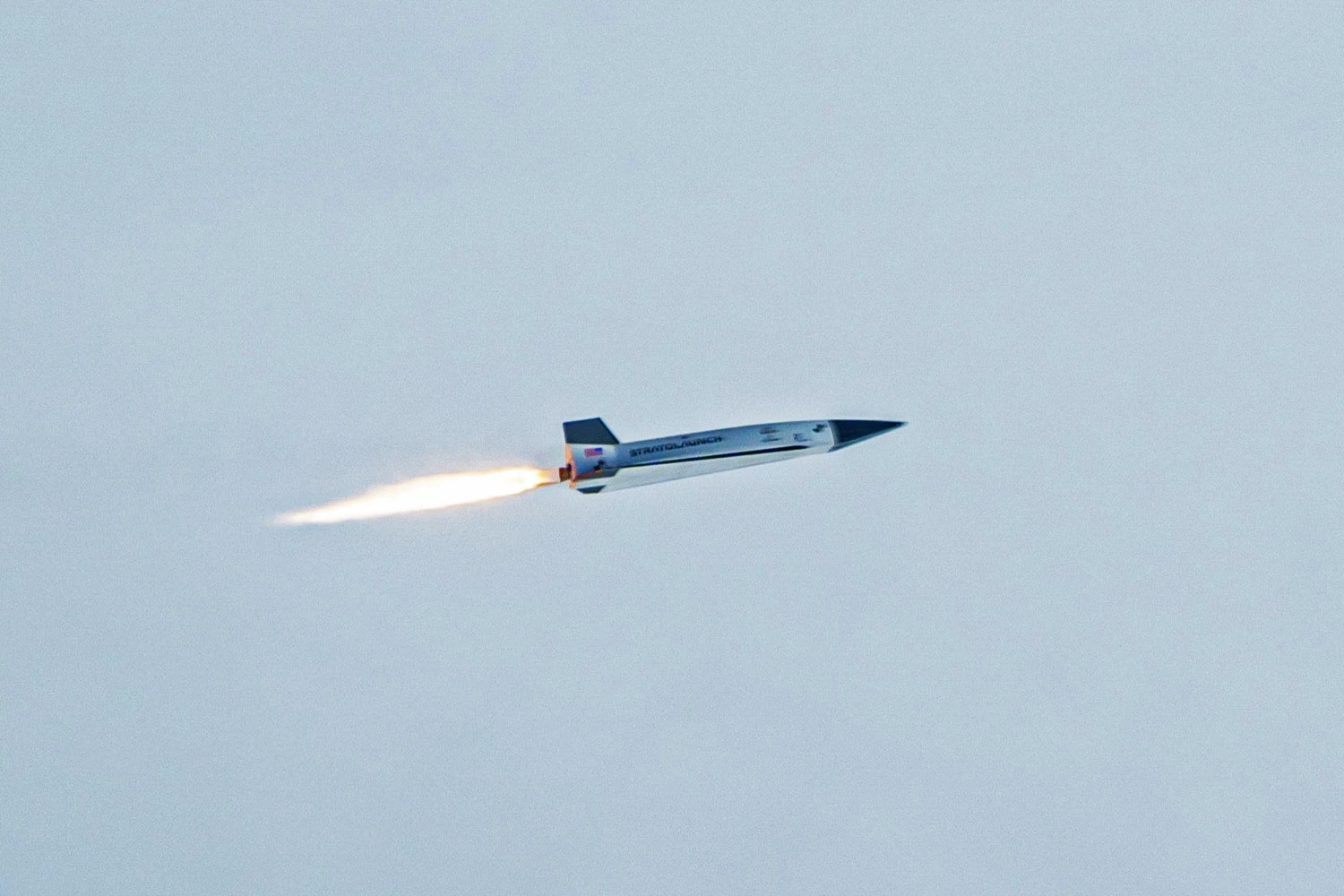
Talon-A has since turned that new direction into an operational business, with repeated flights for government customers and demand for tests from different locations.
777 will be modified for air launch
Stratolaunch plans to repaint and modify the newly acquired 777-200ER with several locations capable of accepting pylons. That could allow the aircraft to support different vehicles rather than being dedicated exclusively to the current Talon-A configuration.
The company expects the conversion to be completed in 2027 but has not disclosed where the work will take place or when flight testing of the modified aircraft will begin.
The acquisition also continues Stratolaunch's use of retired commercial aircraft for its expanding test infrastructure. Spirit of Mojave was acquired from Virgin Orbit after that company entered bankruptcy and was subsequently modified to carry Talon-A.