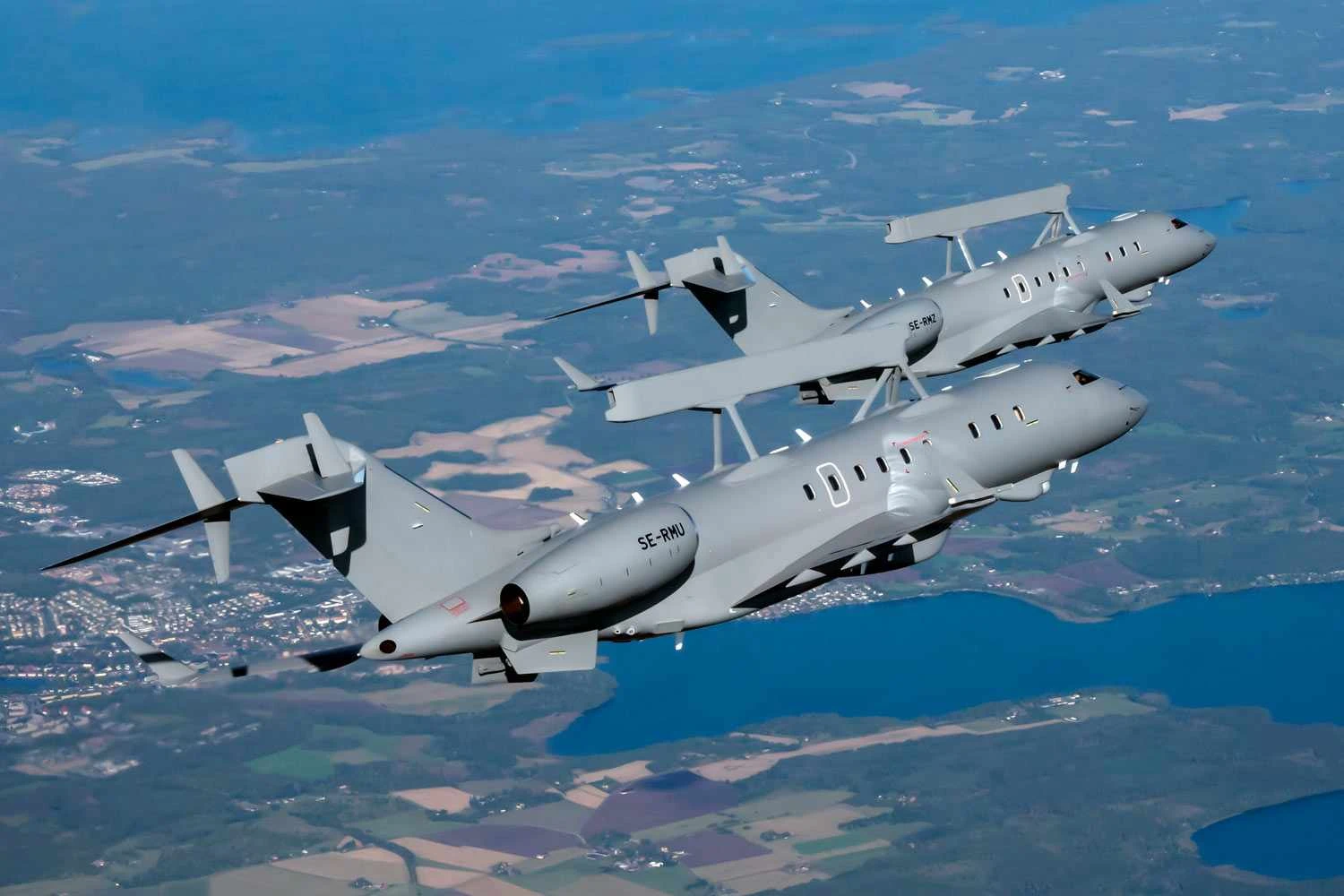
The Netherlands has taken a first formal step toward acquiring the Saab GlobalEye, adding another potential national customer for the airborne early warning and control aircraft shortly after it was selected for NATO's future AWACS capability.
The Dutch government has signed a Letter of Intent with Sweden covering the acquisition of a GlobalEye aircraft, Saab announced on Thursday. No contract has been signed and the Swedish manufacturer said it has not yet received an order from the Netherlands.
Follow Air Data News: WhatsApp | Instagram | LinkedIn | Twitter | Facebook
The move comes two months after 11 NATO members agreed to jointly procure up to ten GlobalEye aircraft to replace part of the Alliance's Boeing E-3A fleet. The Netherlands is among the countries participating in that program, alongside Belgium, Canada, Denmark, Germany, Latvia, Lithuania, Luxembourg, Norway, Romania and Sweden.
NATO's decision represented a significant change from plans announced in November 2023, when the Alliance said it would acquire six Boeing E-7A Wedgetail aircraft, with the first expected to enter operational service in 2031. The GlobalEye was instead announced in July as the basis for NATO's new airborne early warning and control system.
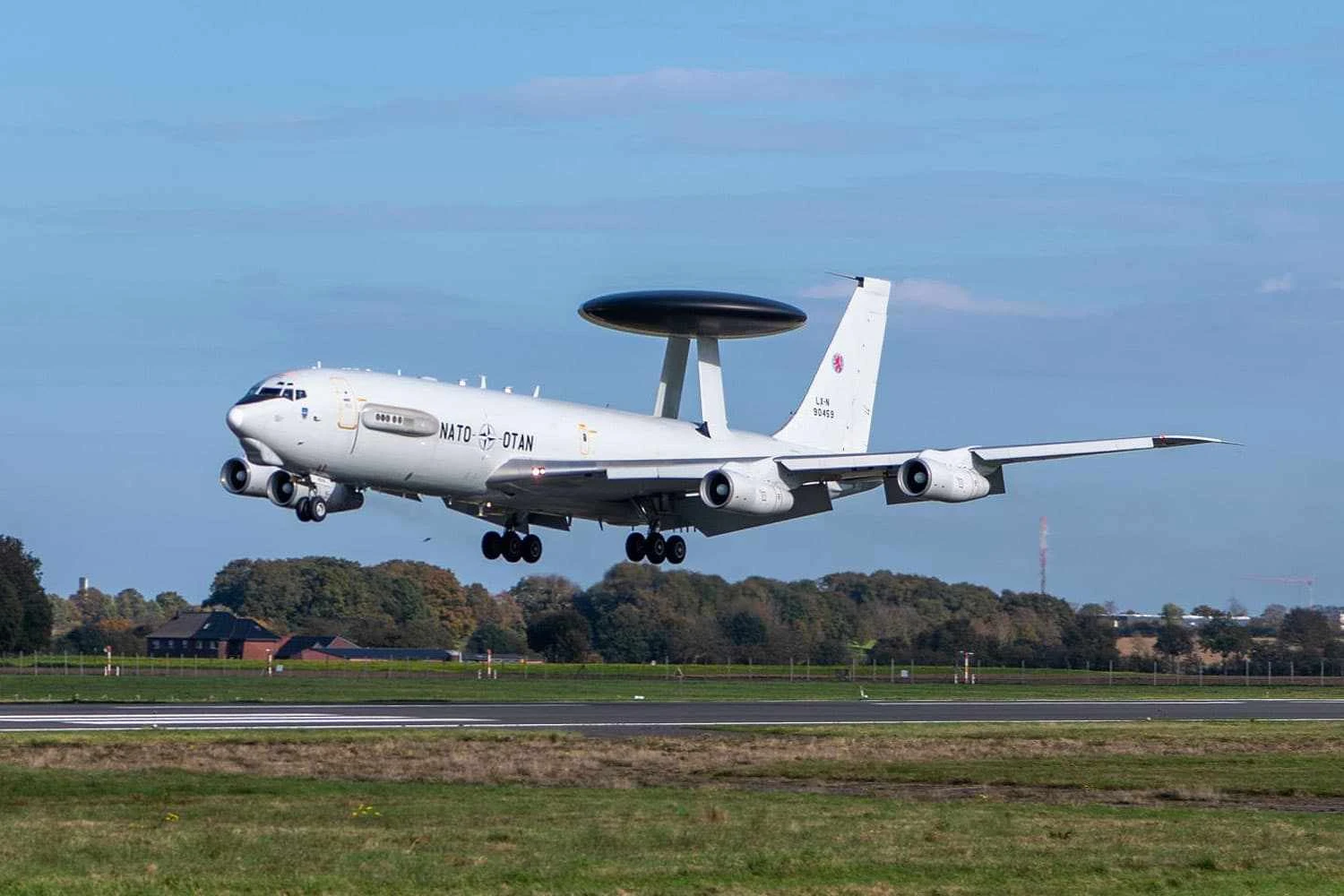
The Alliance currently operates 14 E-3A aircraft from NATO Air Base Geilenkirchen in Germany. The type has been in NATO service since the 1980s and is approaching retirement. Three E-7 Wedgetails being acquired separately by the United Kingdom are still expected to form another component of NATO's airborne early warning force from RAF Lossiemouth.
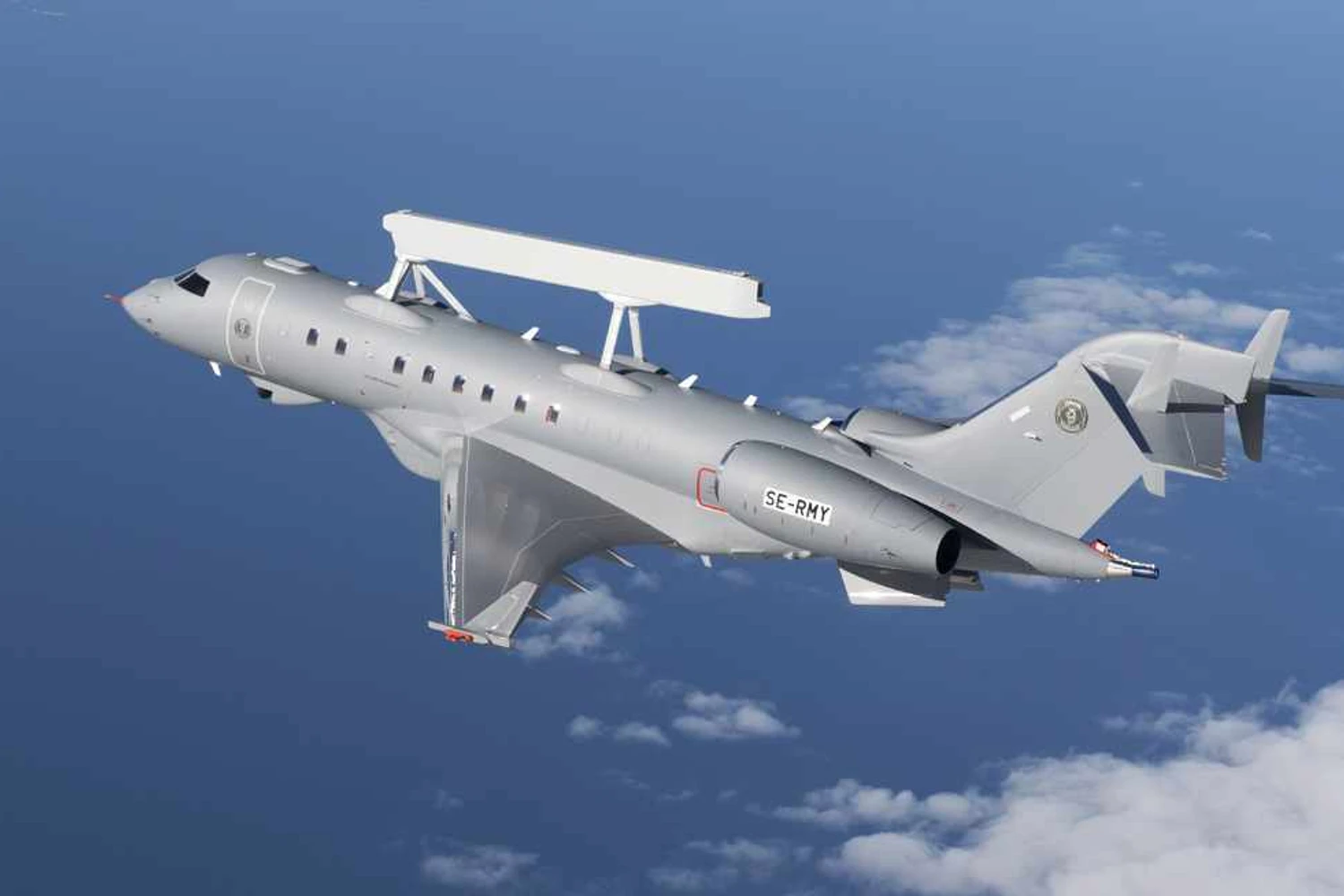
GlobalEye combines Saab's Erieye Extended Range radar and other active and passive sensors aboard the Bombardier Global 6000 business jet platform. The system can simultaneously detect and track targets in the air and at sea and monitor activity on land, providing information to air, naval and ground forces.
The Erieye ER radar has an instrumented range of more than 550 km, according to Saab. Unlike conventional airborne early warning aircraft centered primarily on air surveillance, GlobalEye was designed from the outset as a multi-domain system.
Growing customer base
The United Arab Emirates was the launch customer for GlobalEye and became its first operator. Sweden followed with an initial order for two aircraft in 2022 and subsequently expanded its acquisition to three.
France selected GlobalEye in 2025 and ordered two aircraft to eventually replace its Boeing E-3F AWACS. Canada announced in May 2026 that it intended to enter formal negotiations with Saab over a potential acquisition.
Saab also received a SEK 10.1 billion order in July for two GlobalEye aircraft from an unidentified Middle Eastern customer, with deliveries scheduled for 2030. The manufacturer has not disclosed the country because of national security considerations.
The Dutch Letter of Intent does not establish the number of aircraft that could eventually be acquired or a delivery schedule. Saab said it is awaiting the next stages of the procurement process before a potential contract is concluded.