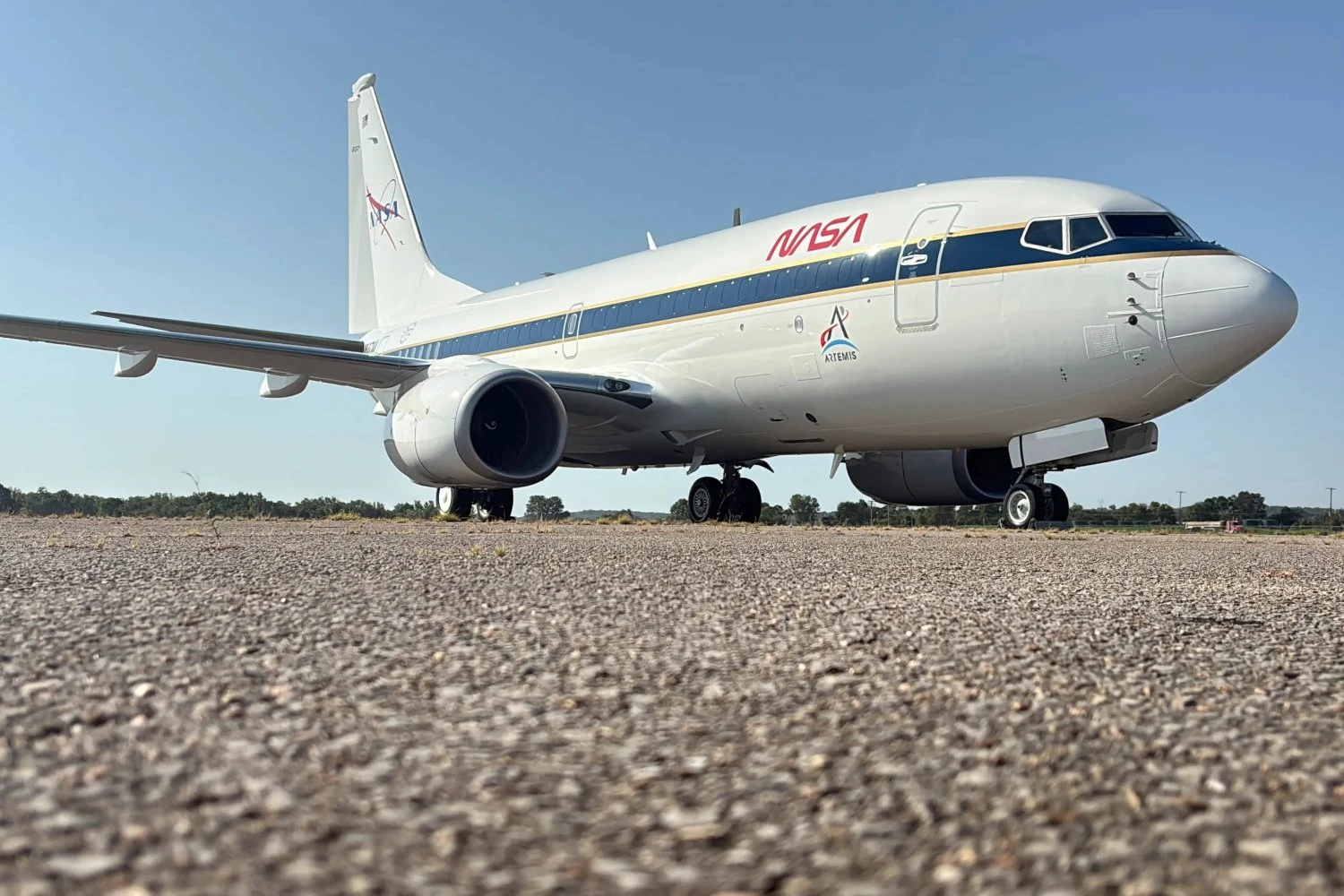
NASA has unveiled the new paint scheme of a Boeing 737-700 that is being converted into a reduced-gravity research aircraft, opening a new chapter for an airframe whose previous mission with the U.S. Air Force remains largely classified.
The aircraft, now registered N837NA, emerged from painting in Oklahoma on August 13 wearing NASA's colors. It will eventually conduct parabolic flights simulating lunar gravity, primarily to support testing of spacesuits and other equipment for the Artemis program.
Follow Air Data News: WhatsApp | Instagram | LinkedIn | Twitter | Facebook
Behind the relatively conventional-looking 737, however, is an unusual history. The aircraft previously served as a USAF flying testbed under the registration N712JM and was associated with classified modifications whose exact purpose has never been publicly disclosed.
Built in 2013, the Boeing 737-73W carries manufacturer serial number 40116. Unlike most aircraft of its age, it never developed a conventional career carrying airline passengers.
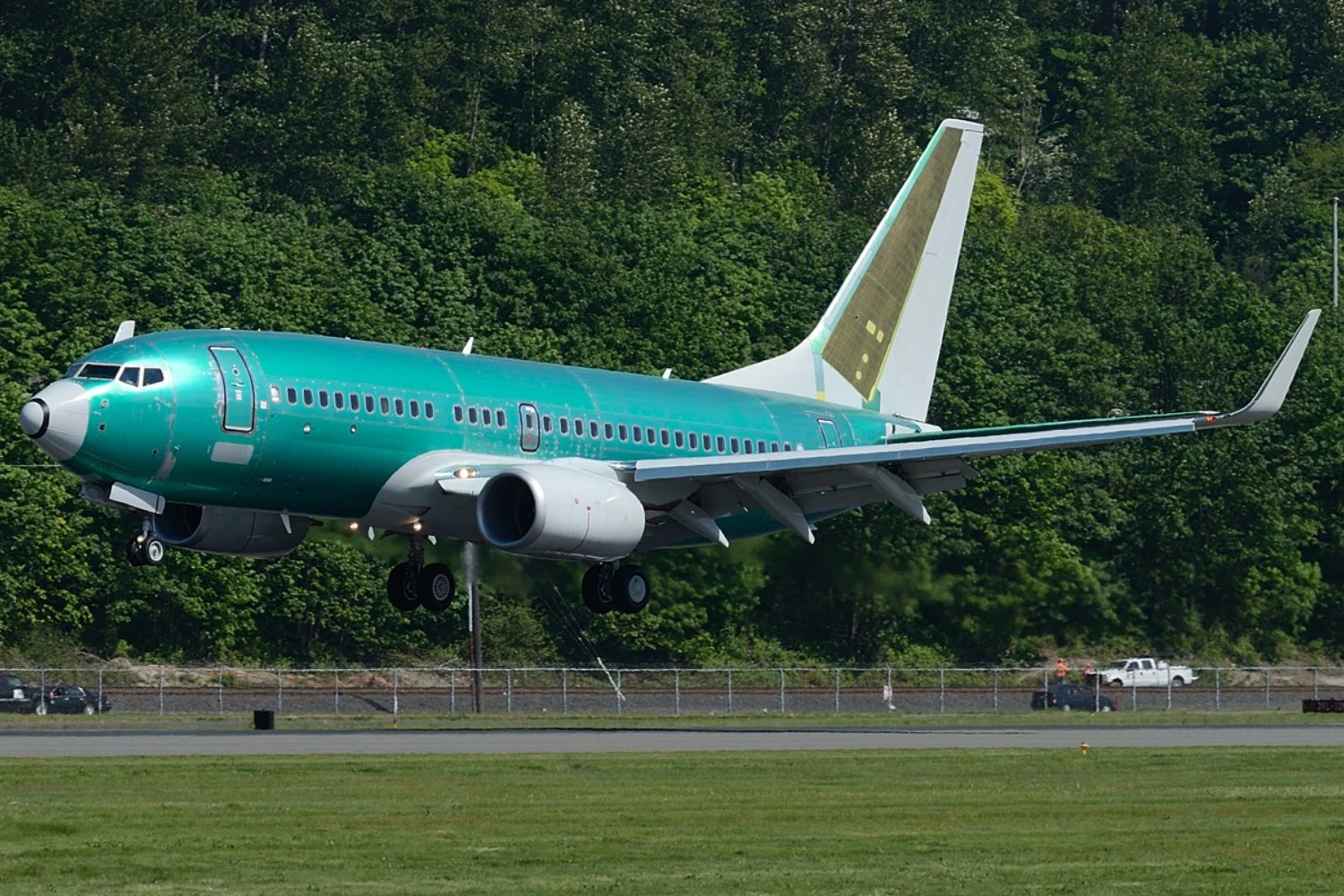
Its history became particularly interesting around 2020, when the aircraft was photographed in California still largely wearing the green protective coating normally seen on unfinished Boeing airframes. External instrumentation, sensors and wiring running through cabin windows indicated that it was being used for flight testing.
https://x.com/60006717/status/1733140791835480168
The aircraft subsequently operated from Santa Maria, California, using the callsign STING 38 and flew missions associated with military test ranges off the California coast. The Air Force never publicly identified the program or explained what equipment was being evaluated aboard the 737.
Secret modifications
Some indication of the sensitivity of its previous work emerged only as NASA prepared to acquire the aircraft.
Procurement documentation supporting NASA's decision to use Denmar Technical Services for the conversion noted that the company had already performed work on the 737 for the Air Force and possessed knowledge of its classified modifications.
The documentation went as far as explaining that NASA personnel did not have a "need to know" the details of those modifications, making continuity with the contractor familiar with the aircraft particularly important.
The USAF subsequently confirmed that the 737 had been acquired as a flying testbed and that its program had ended, clearing the way for the aircraft to be transferred to NASA. What was actually tested aboard STING 38 remains undisclosed.
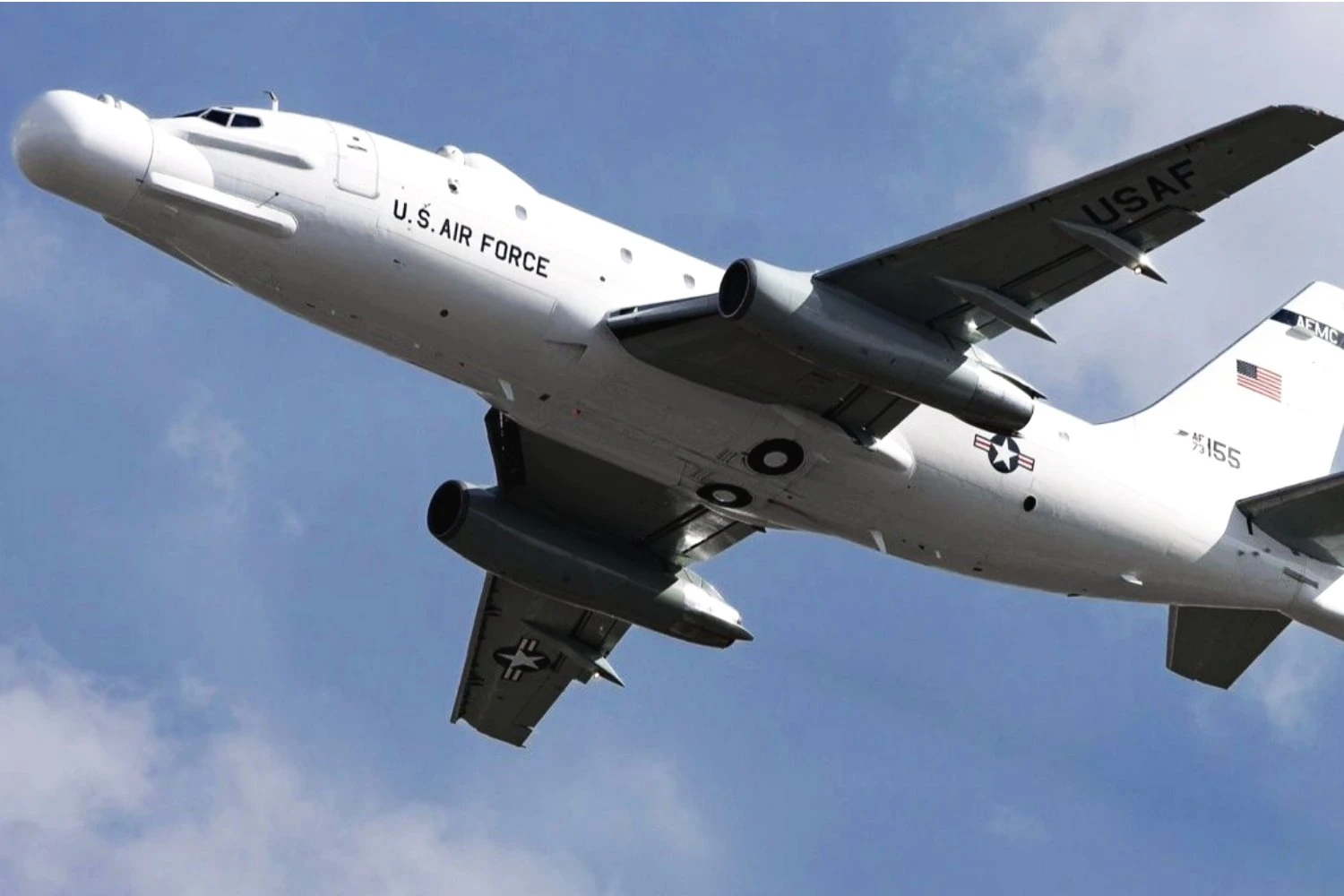
The aircraft has occasionally been associated with another highly unusual U.S. military 737, the NT-43A known by the callsign RAT55, although the two should not be confused.
RAT55 is a heavily modified 737-200 recognizable by enormous structures fitted to its nose and tail and has been used to evaluate the radar signatures of stealth aircraft. Denmar has also been associated with that aircraft, helping fuel speculation about the purpose of the newer 737-700. There is no confirmation that N712JM performed the same mission.
From classified testbed to 'Vomit Comet'
NASA Armstrong Flight Research Center formally took ownership of the aircraft from the Air Force in June. NASA has awarded Denmar a contract worth up to $8.4 million to restore and modify the 737 for its new research mission.
Part of that work involves preparing the cabin for parabolic flight. During these maneuvers, an aircraft repeatedly climbs steeply before following a carefully controlled ballistic trajectory, temporarily producing reduced-gravity conditions inside the cabin.
NASA intends to use N837NA specifically to reproduce lunar gravity, allowing astronauts and engineers to evaluate spacesuits and crew systems being developed for Artemis missions before they are used on the Moon.
The 737 will operate from NASA's Johnson Space Center in Houston for reduced-gravity missions, with NASA Armstrong at Edwards Air Force Base overseeing the aircraft.
Its duties will not be limited to parabolic flights. NASA also intends to use the aircraft as a systems-integration research platform for testing autonomy technologies, sensors and other digital systems.
The 737 therefore remains a flying laboratory, even if its work will now be considerably less secretive. Its first research flights for NASA will also give the relatively young airframe an active role after a highly unusual first 13 years in which much of what it actually did remains classified.