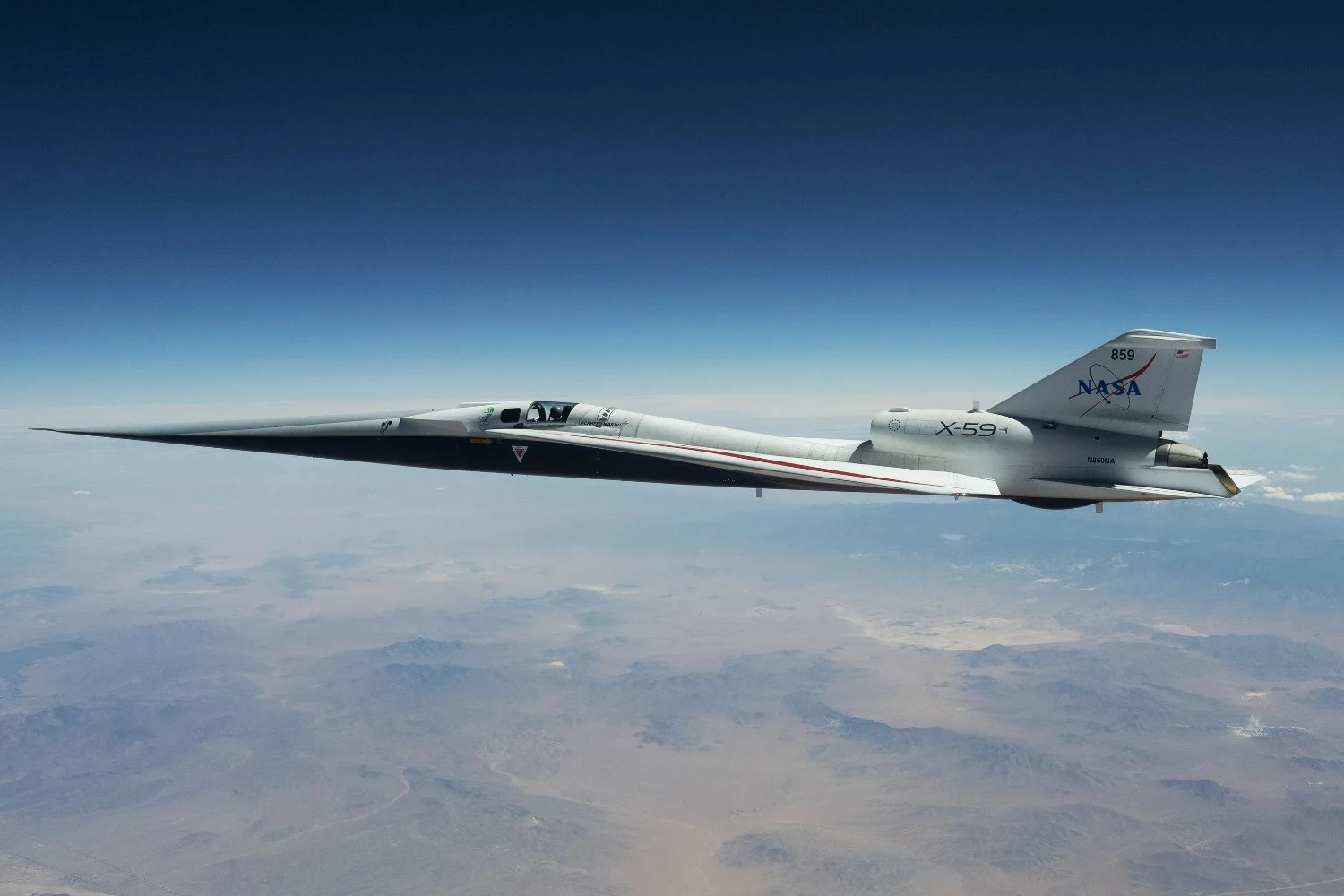
NASA said its X-59 experimental supersonic aircraft has begun performing two test flights per day as the program accelerates preparations for future supersonic trials.
The agency confirmed that the aircraft completed its first dual-flight test day on April 30 at Edwards Air Force Base, California, carrying out its 11th and 12th flights.
During the missions, the X-59 flew at altitudes between 12,000 ft and 43,000 ft while reaching speeds from Mach 0.8 to Mach 0.95 as engineers continued expanding the aircraft’s flight envelope ahead of planned supersonic operations.
NASA said the increased flight tempo is intended to speed up data collection during the envelope expansion and acoustic validation phases of the Quesst program, which are expected to continue through 2026.
Related news
September 20, 2026

September 18, 2026
September 18, 2026
“The team has done an amazing job meeting the weekly planned flight rate,” said Cathy Bahm, manager of the Low Boom Flight Demonstrator project.
The X-59 is designed to demonstrate technologies intended to reduce the noise generated by supersonic flight over land. Instead of producing a traditional sonic boom, NASA expects the aircraft to generate a softer “thump,” which could help support future changes in regulations banning civilian supersonic flights over populated areas.
Built by Lockheed Martin under NASA’s Quesst mission, the X-59 features a long and narrow fuselage, canards and an engine mounted on the upper rear fuselage to reduce shockwave interaction.
The aircraft is expected to conduct flights over selected U.S. communities in coming years as NASA gathers public response data that may eventually be used by regulators reviewing future supersonic flight rules.