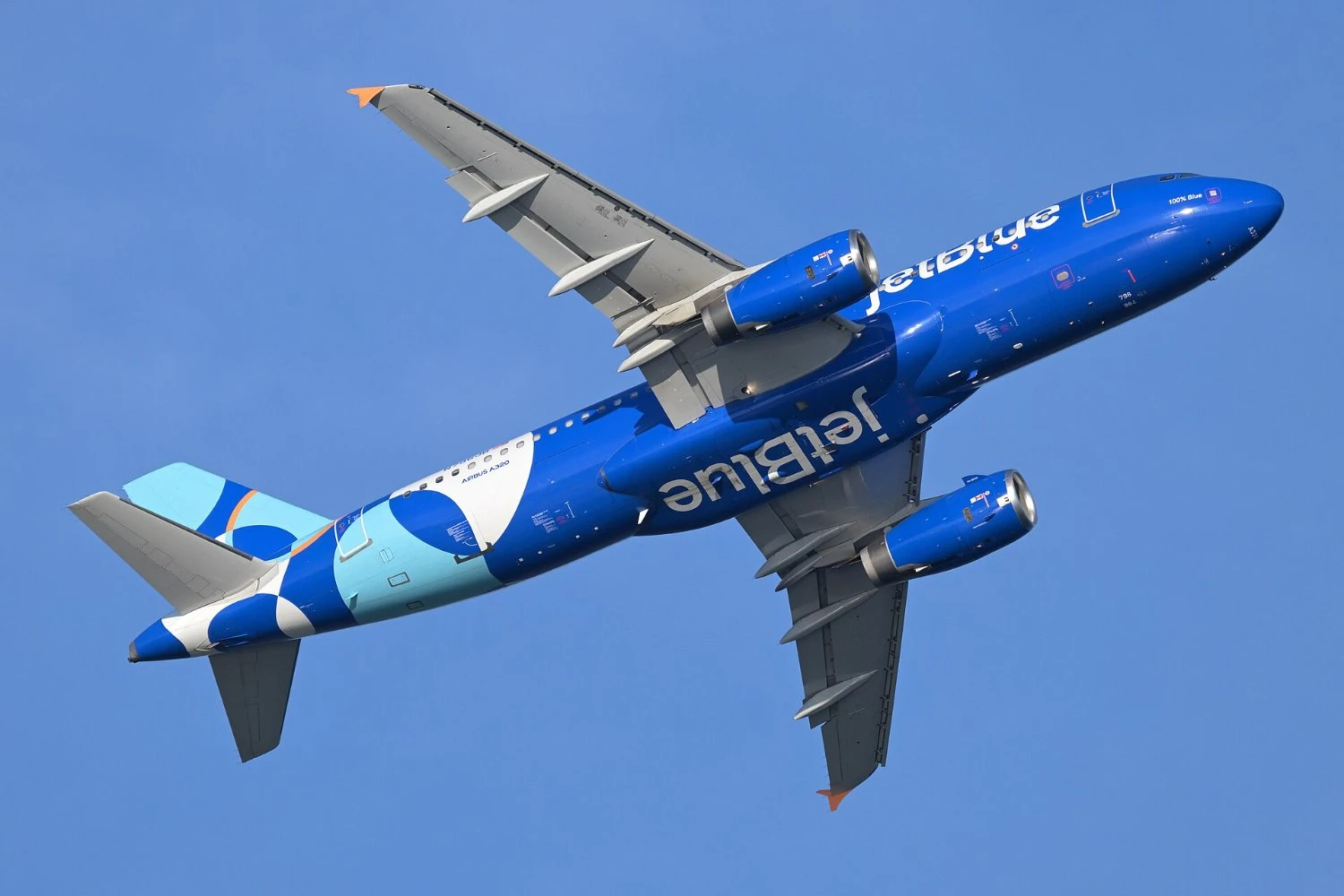
JetBlue Airways increased revenue by 21.1% in the third quarter of 2026 despite operating only slightly more capacity, but the improvement was not enough to prevent the U.S. carrier from posting a US$257 million net loss.
Revenue reached US$2.81 billion, up from US$2.32 billion a year earlier, while capacity increased just 2.3% and the number of passengers carried rose 2.2%.
The figures show that JetBlue is earning considerably more from essentially the same amount of flying. The average passenger fare increased 19.2%, from US$205.67 to US$245.11, while passenger revenue per available seat mile rose 19.2%.
JetBlue said corporate revenue increased 25%, while both its premium products and regular Main cabin recorded double-digit increases in revenue per available seat mile. Fort Lauderdale, where the airline has been expanding rapidly, recorded a 15% increase in unit revenue despite capacity growing by more than 65%.
Follow Air Data News: WhatsApp | Instagram | LinkedIn | Twitter | Facebook
The improvement provides evidence that parts of JetBlue's JetForward turnaround plan are producing results. The airline has been changing its network, improving revenue management and investing more heavily in products aimed at passengers willing to pay higher fares.

That strategy includes BlueFirst, its new domestic first-class cabin scheduled to enter service in December. The product will initially be installed on Airbus A220s and later expanded to A320-family aircraft, adding another premium option below the airline's Mint business class.
Fuel consumes much of the additional revenue
The problem for JetBlue is that its expenses are rising almost as quickly. Fuel provides the clearest example. The airline consumed 222 million gallons (840 million liters) during the quarter, only slightly more than the 217 million gallons (821 million liters) used a year earlier.
But its average fuel price jumped 57.4%, from US$2.49 to US$3.91 per gallon (US$0.66 to US$1.03 per liter).
JetBlue consequently spent US$868 million on fuel during the quarter, US$329 million more than the US$539 million spent in the same period of 2025. That increase alone absorbed about two-thirds of the additional US$490 million in revenue generated by the airline.
JetBlue estimates that stronger revenue allowed it to recover about 87% of the increase in fuel prices, better than the 70% to 80% it had previously expected.
Related news
October 22, 2026
October 06, 2026
October 05, 2026
Other expenses also increased. Salaries, wages and benefits rose 9.4%, while costs excluding fuel increased 7% for each seat mile flown. Operational disruptions accounted for about four percentage points of that increase and cost the airline approximately US$19 million.
The result was a US$144 million operating loss, compared with US$100 million a year earlier. After interest and other financial expenses, JetBlue reported a US$257 million net loss, up from US$143 million in the third quarter of 2025.
For the first nine months of 2026, the airline has accumulated a net loss of US$823 million, compared with US$425 million during the same period last year.

Cash falls while debt remains high
Those losses are putting pressure on JetBlue's balance sheet. The airline ended September with US$1.26 billion in cash, down from US$1.95 billion at the end of 2025. Short-term investments declined from US$531 million to US$368 million over the same period.
Combined cash and investments therefore fell by about US$851 million in nine months.
Debt, meanwhile, remained largely unchanged at approximately US$8.4 billion. JetBlue incurred US$149 million in interest expense during the third quarter alone and expects approximately US$590 million for the full year.
The carrier says it has US$2.2 billion in available liquidity, although that figure includes a US$600 million revolving credit facility that has not been drawn.
JetBlue also expects to raise approximately US$250 million during the fourth quarter through financing backed by aircraft. It says it still has about US$7 billion in unencumbered assets, including approximately US$2.8 billion in aircraft and engines.
A220 takes over fleet growth
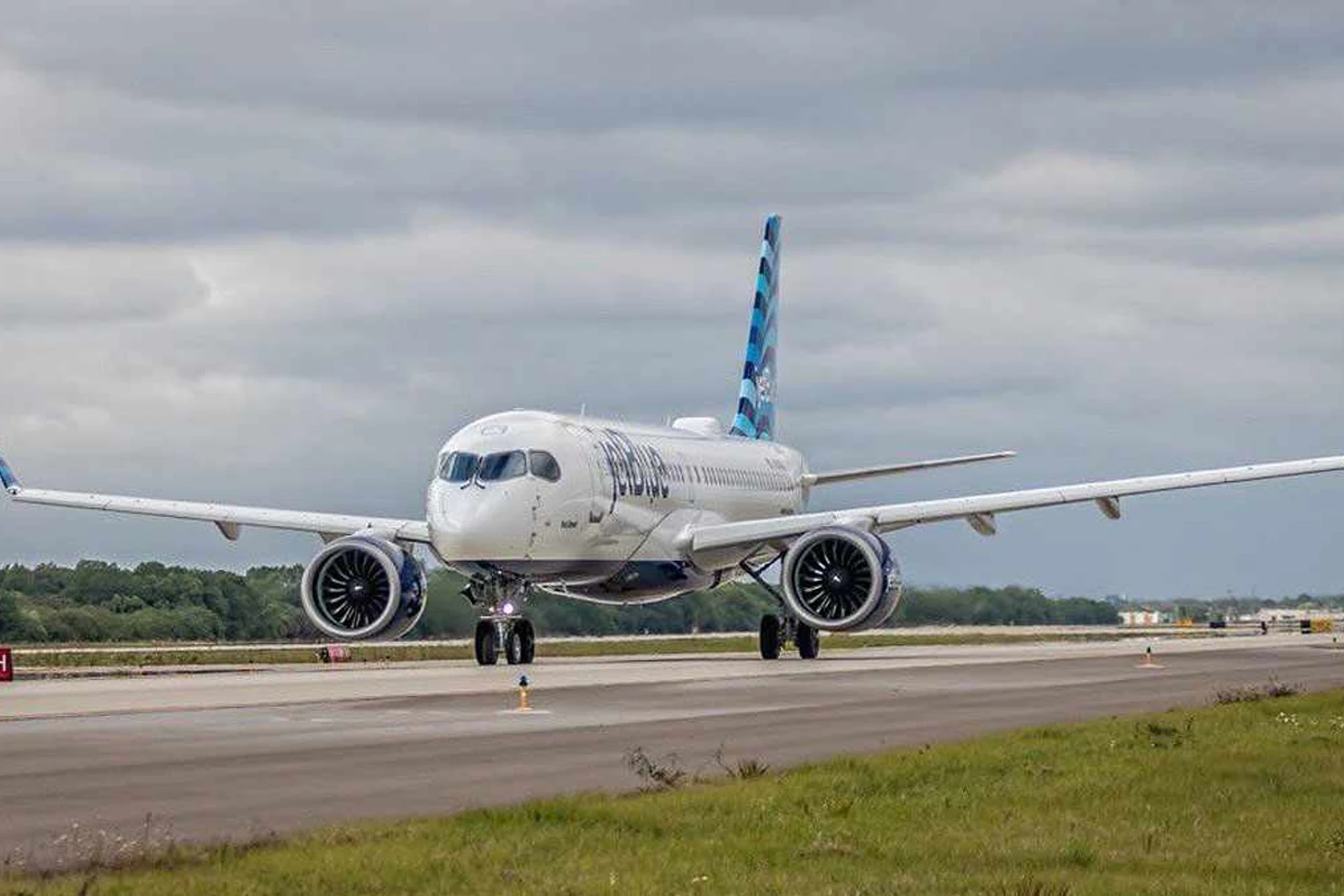
JetBlue is simultaneously trying to limit how much cash it needs to spend on new aircraft. The carrier had 298 aircraft at the end of September: 129 Airbus A320s, 102 A321-family aircraft and 67 A220-300s.
The A220 has effectively become JetBlue's growth aircraft for the remainder of the decade. The airline expects 12 deliveries in 2026, eight of which had already occurred by the end of September, followed by seven aircraft in 2027, nine in 2028, ten in 2029 and two in 2030.
Only two A321neos are currently scheduled for delivery through 2030. That reflects a major fleet decision announced in 2024, when JetBlue deferred 44 A321neo-family aircraft that had been scheduled for delivery between 2025 and 2029. Most are now expected after 2030, reducing near-term capital expenditure.
The move came as JetBlue was also dealing with prolonged groundings caused by inspections of Pratt & Whitney PW1100G engines powering part of its Airbus fleet. Six aircraft remained grounded because of the issue during the third quarter of 2025.

The airline has since completed another major fleet transition by retiring its Embraer E190s, leaving it with an all-Airbus operating fleet. It also decided against adding the long-range A321XLR to its network and arranged to sell the two aircraft it had ordered.
JetBlue currently lists 42 A321neos and one A220 for delivery after 2030 and retains options for another 20 A220s.
Another fuel increase ahead
JetBlue expects its commercial improvement to continue during the fourth quarter, forecasting revenue per available seat mile to increase between 18% and 22% while capacity grows only 3% to 4%.
Fuel, however, is expected to become considerably more expensive. The airline is forecasting an average price of US$4.64 per gallon (US$1.23 per liter) during the fourth quarter, about 85% higher than a year earlier and well above the US$3.91 paid in the third quarter.
JetBlue continues to target sustainable operating profitability in 2027 and positive free cash flow between late 2027 and 2028.