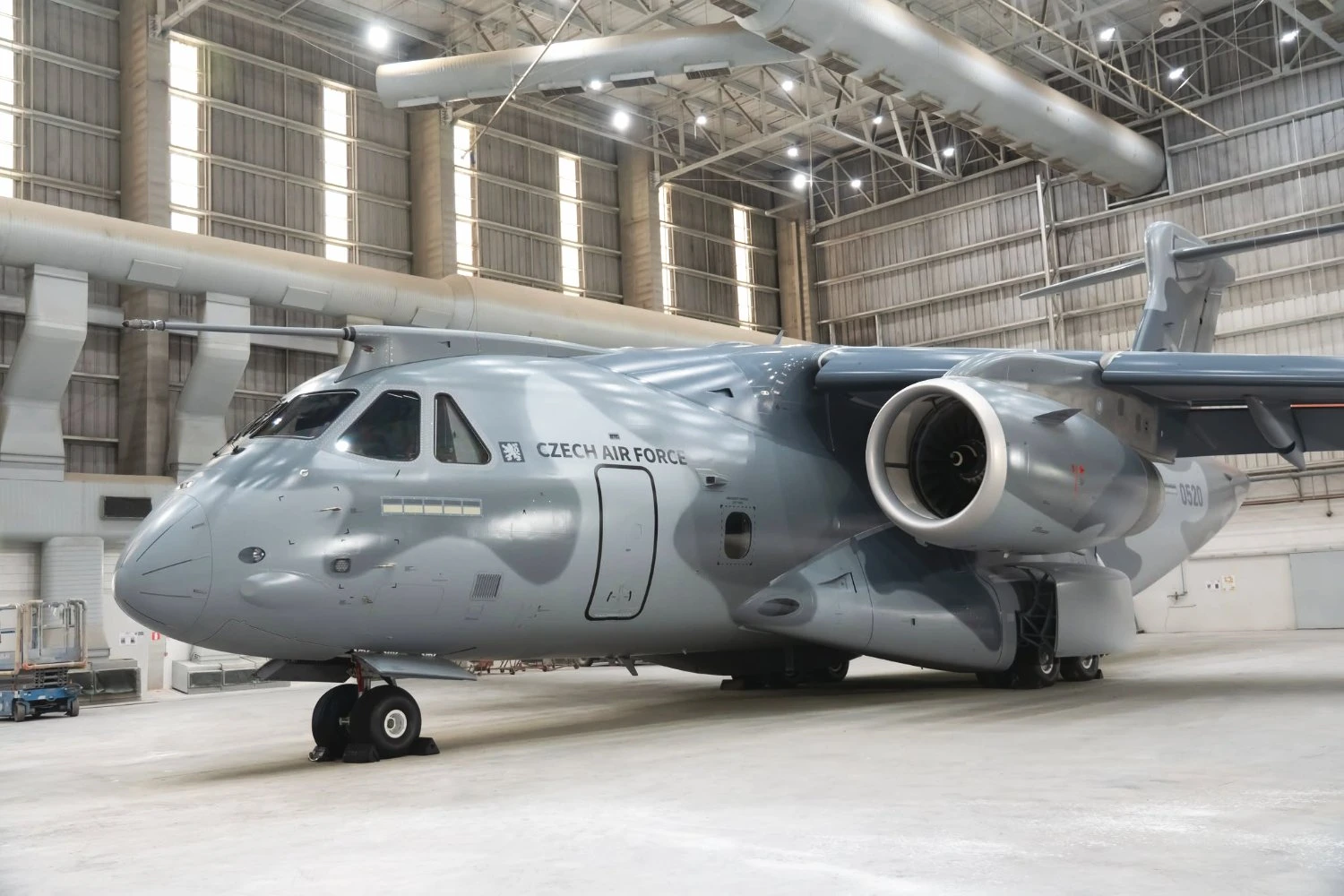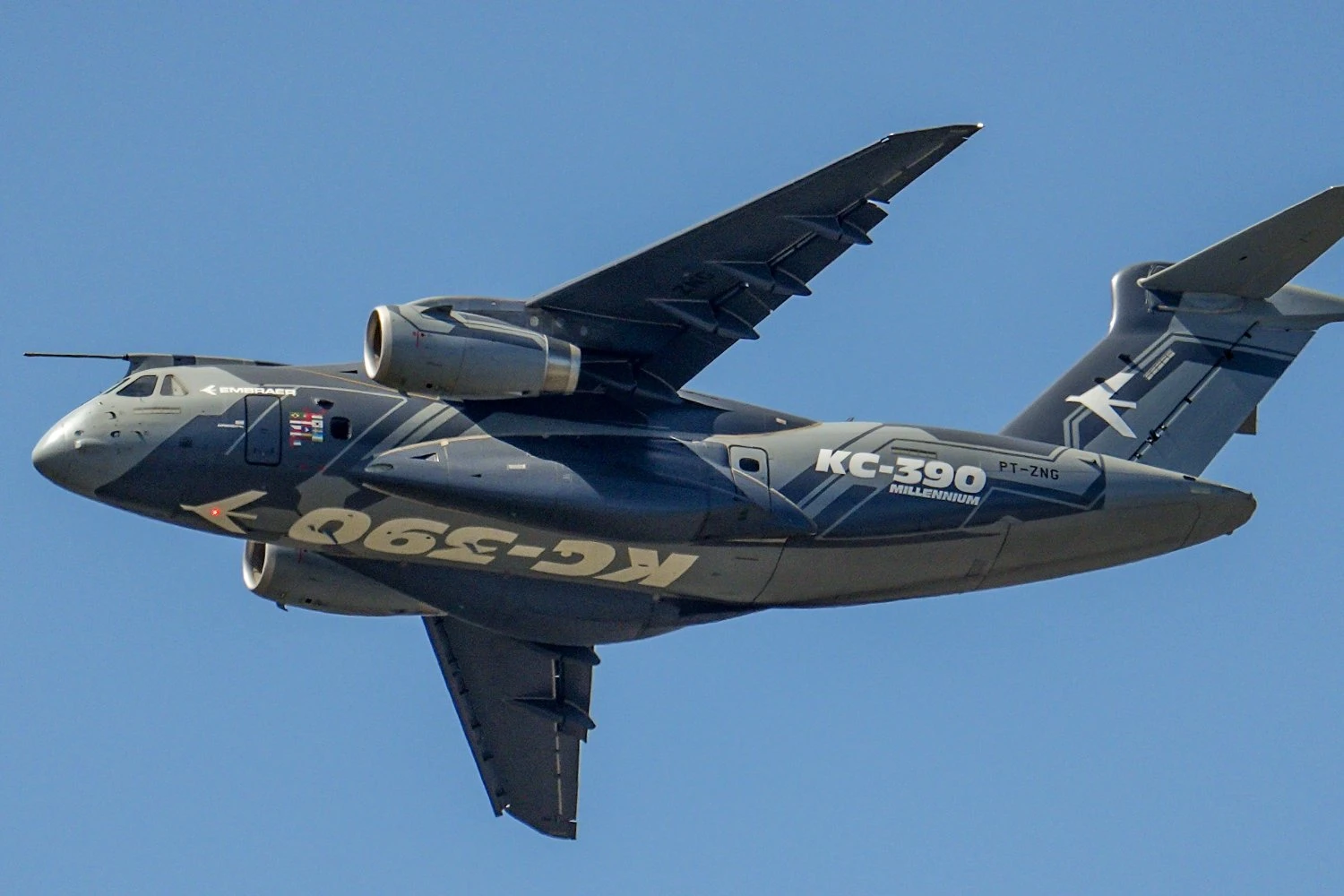
Embraer expects to have capacity to produce 10 C-390 Millennium aircraft per year in Brazil by 2030, but increasing production beyond that level could depend on major sales campaigns in India and the United States that would justify new assembly lines abroad.
CEO Francisco Gomes Neto discussed the production outlook during Embraer's second-quarter earnings webcast on Monday, August 10, after being asked whether the growing C-390 order book could require output to exceed 10 aircraft annually.
Follow Air Data News: WhatsApp | Instagram | LinkedIn | Twitter | Facebook
"One opportunity we are working on is with India, and this will allow us to implement a second assembly line outside Brazil and go to production levels above 10 per year," Gomes Neto said.
He also identified the United States as another possible location, although establishing a production line there would depend on securing a sufficiently large order.

"Another opportunity we are working on is with the United States that will also allow us, if things go well and depending on the size of the order, to implement a third assembly line that will allow us to increase even further the production of KC-390," he said.
Without those additional lines, Embraer's current expansion plans remain centered on Brazil. Gomes Neto said the company expects its Brazilian facilities to reach annual capacity for 120 to 130 commercial jets, around 200 executive jets and 10 C-390s by 2030.
The current C-390 production rate has not been disclosed. Deliveries indicate that output remains well below the capacity planned for the end of the decade, with 15 aircraft handed over to customers so far.
That includes eight aircraft for Brazil, four for Portugal, two for Hungary and one for the Czech Republic.
Existing backlog already provides years of production
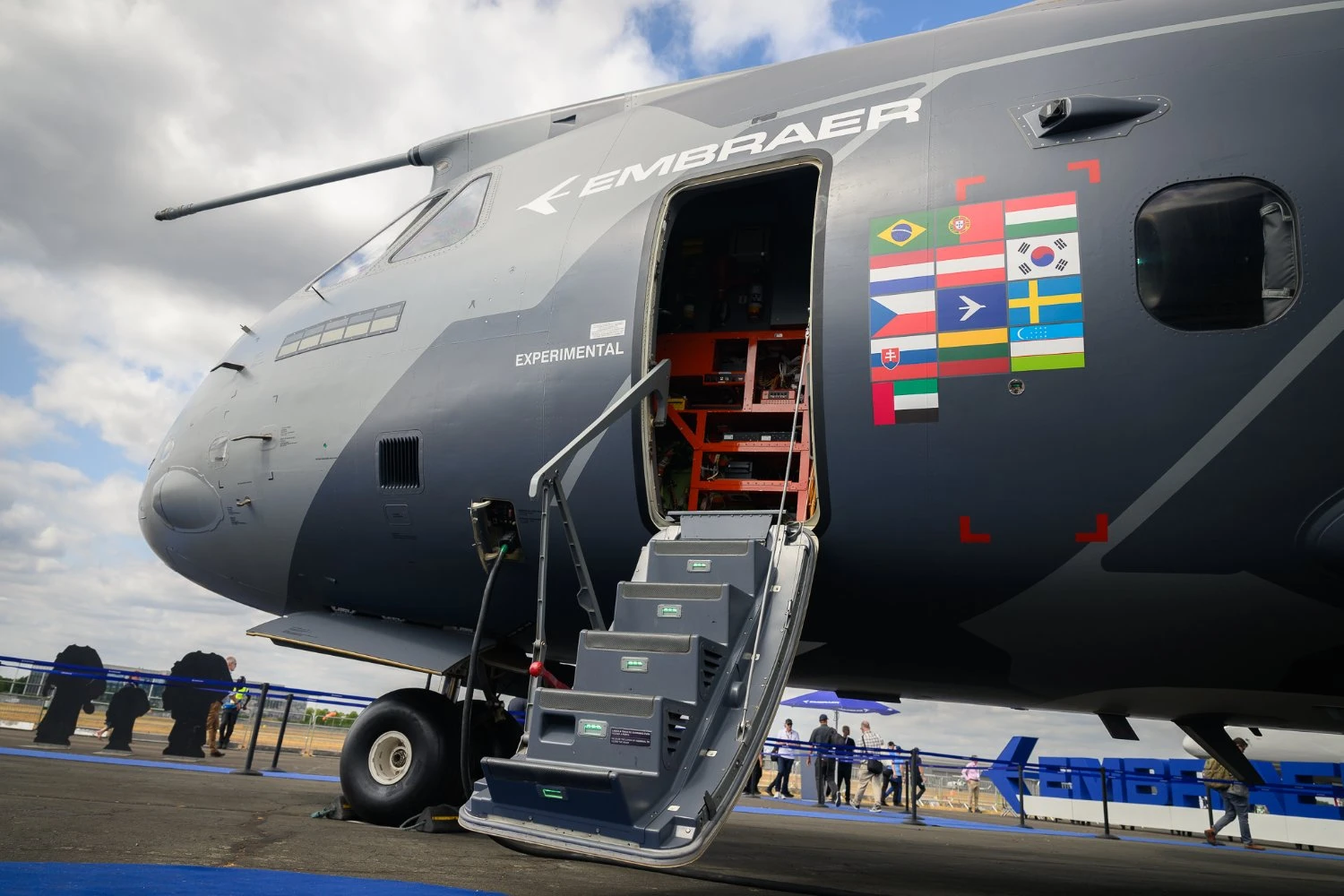
Embraer currently has 62 C-390 orders or announced commitments from 12 countries, excluding Lithuania, which has suspended its acquisition process until at least 2030.
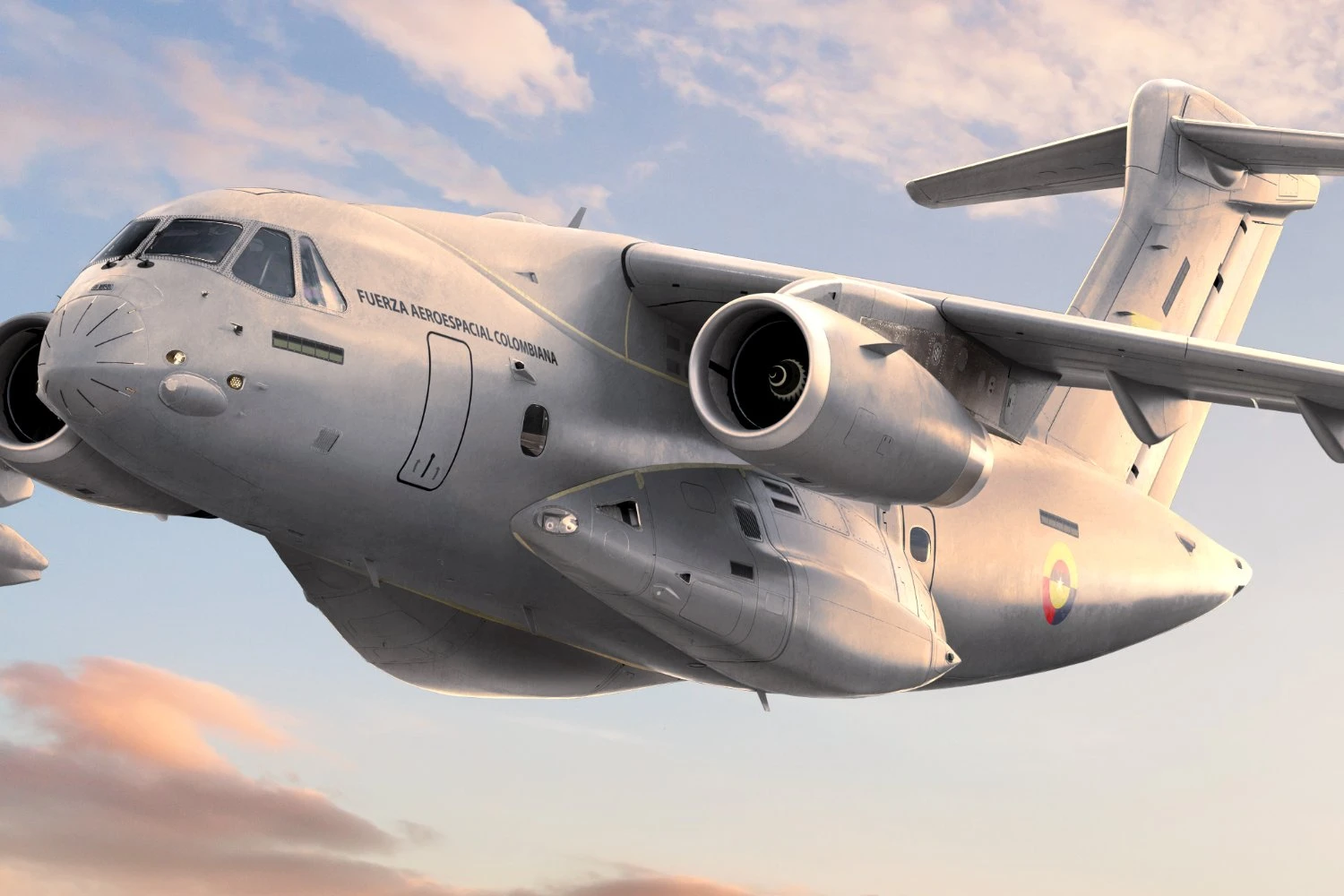
Brazil accounts for 19 aircraft, Portugal six, Hungary two, the Netherlands five, Austria four, the Czech Republic two, South Korea three, Uzbekistan two, Sweden four, Slovakia three, Colombia two, and the United Arab Emirates 10.
With 15 aircraft already delivered, around 47 remain to be produced under those orders and commitments. At the planned Brazilian capacity of 10 aircraft per year, that volume alone would represent approximately four and a half years of production.
The calculation is only an indication of the size of the order book rather than a delivery schedule. Production is still below 10 aircraft annually, contracts have different delivery timetables and some of the announced commitments have yet to progress through all contractual stages.
Greece could also add three C-390s. During Monday's webcast, Gomes Neto confirmed that the potential acquisition is being discussed between Greece and Portugal, an arrangement that could provide shorter delivery times.
India could change the scale of the program
The situation would change considerably if Embraer succeeds in India.
The Indian Air Force's Medium Transport Aircraft program could involve between 60 and 80 aircraft, according to Gomes Neto. Even at the lower end, an Indian order would exceed Embraer's entire current international C-390 order book.
Embraer has signed a memorandum of understanding with Mahindra Group and is waiting for the Indian Air Force to issue its request for proposal. The companies have also been working on a localization plan for the program.
Such an order would provide the volume needed to establish an Indian assembly operation rather than requiring the Brazilian line to absorb dozens of additional aircraft.
The US opportunity is less defined. Embraer did not identify a specific order quantity during the webcast, and Gomes Neto explicitly tied the possibility of a third assembly line to the size of a potential contract.
For now, Brazil therefore remains sufficient for Embraer's disclosed production plans. India and the United States would not simply provide additional factories for the existing backlog; successful campaigns in those countries could create the order volume that makes production above 10 C-390s per year necessary.