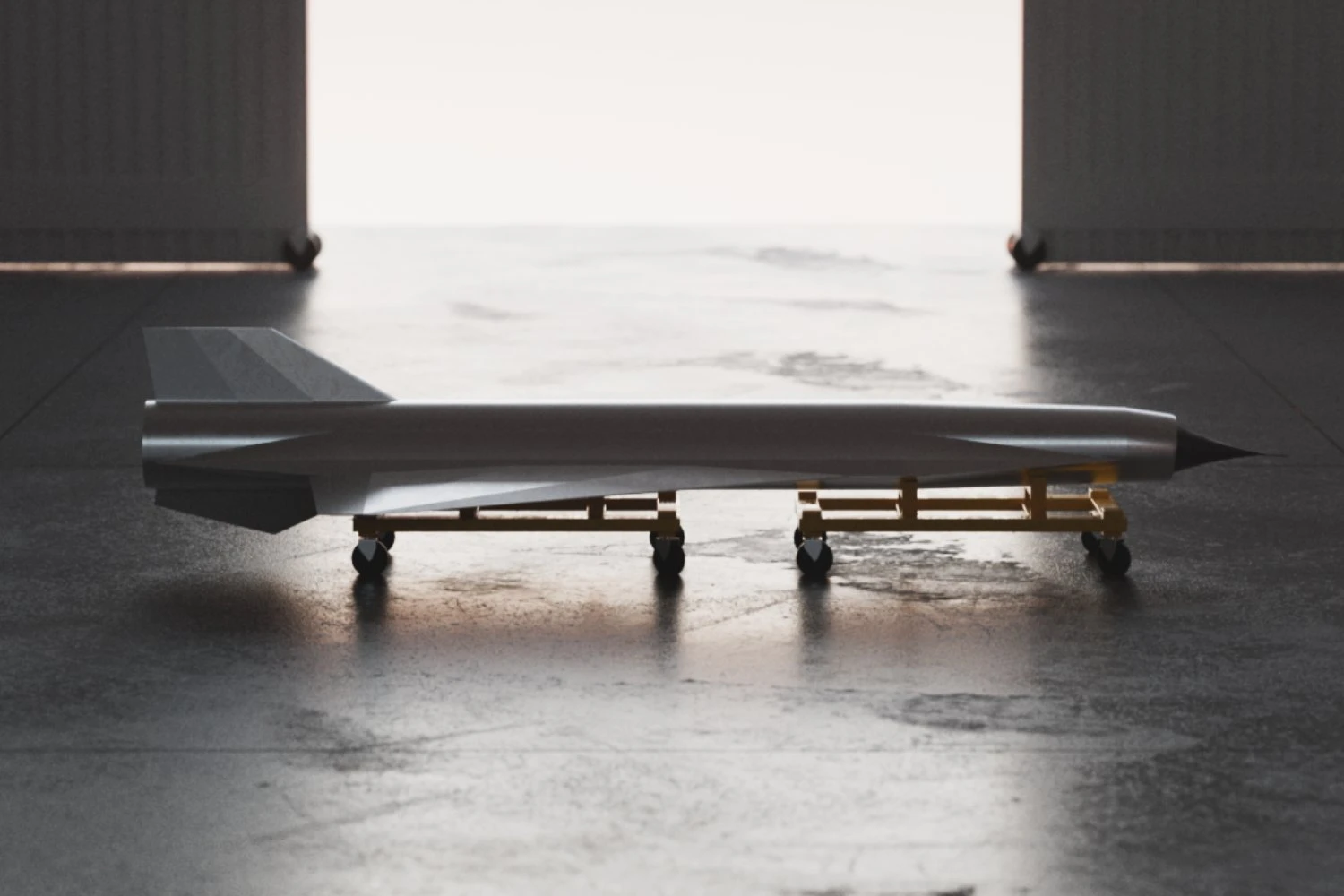
Hermeus has unveiled Ramjet-X, a low-cost expendable vehicle designed to provide sustained high-Mach flight testing after being air-launched from one of the company's Quarterhorse aircraft.
The new vehicle addresses one of the fundamental limitations of ramjet propulsion. A ramjet relies on the forward motion of the aircraft to compress incoming air and therefore requires significant initial speed before it can operate effectively.
Instead of using a large expendable booster to accelerate Ramjet-X on every mission, Hermeus plans to carry the vehicle aboard a reusable Quarterhorse. The aircraft will accelerate and climb to the required launch conditions before releasing Ramjet-X, which will then begin ramjet-powered flight while Quarterhorse returns for subsequent missions.
Hermeus has not disclosed the intended launch speed and altitude or the maximum speed expected from Ramjet-X. The company describes its intended operating environment only as "high-Mach" and has not identified which Quarterhorse variant will carry the vehicle.
Follow Air Data News: WhatsApp | Instagram | LinkedIn | Twitter | Facebook
Development is already underway. The ramjet engine is being tested at Hermeus' HEAT facility in Jacksonville, Florida, while high-temperature structures are under development in California. Integrated vehicle testing is planned for 2027.
High-Mach testing as a service
Beyond its own development work, Hermeus intends to use Ramjet-X to offer what it calls Flight Test as a Service, providing other organizations with access to sustained high-speed flight without requiring them to develop a dedicated test vehicle.
Payloads could include sensors, communication and computing equipment, autonomous systems, material samples and experimental propulsion technologies. Customers would integrate their equipment with Ramjet-X and use the vehicle to collect data under representative high-Mach conditions.
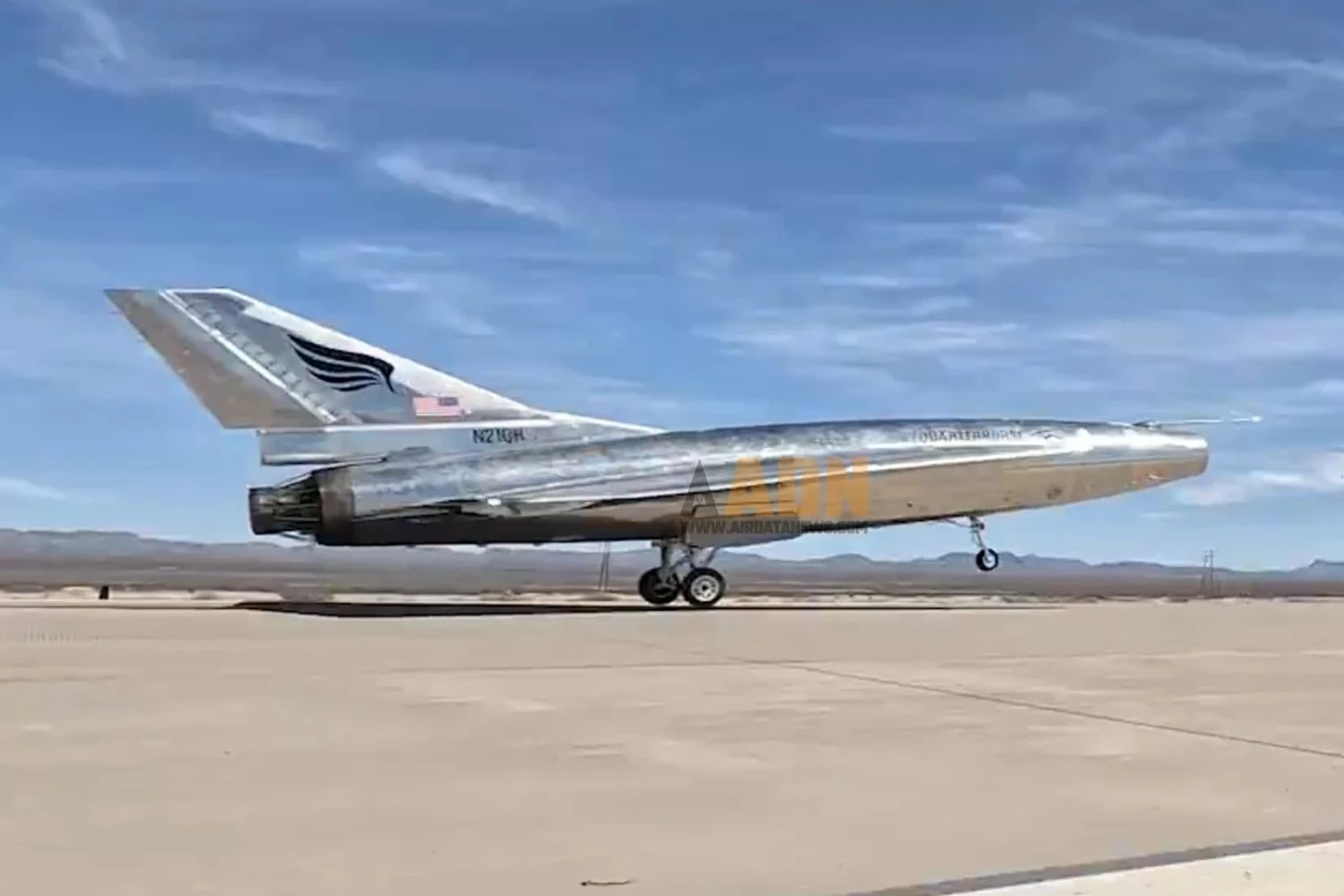
The concept also expands the role of Quarterhorse beyond testing technologies for Hermeus' future aircraft. The company has been developing the program through a succession of distinct vehicles, rather than continuously modifying a single prototype.
Quarterhorse Mk 2.1, which reached Mach 1.21 in May, was designed to demonstrate supersonic stability and control. Mk 2.2 is intended to exceed Mach 2 and introduces a spike inlet, the Gryphon engine and precooler technology, while Mk 2.3 is being designed with high-temperature materials for operation near Mach 3.
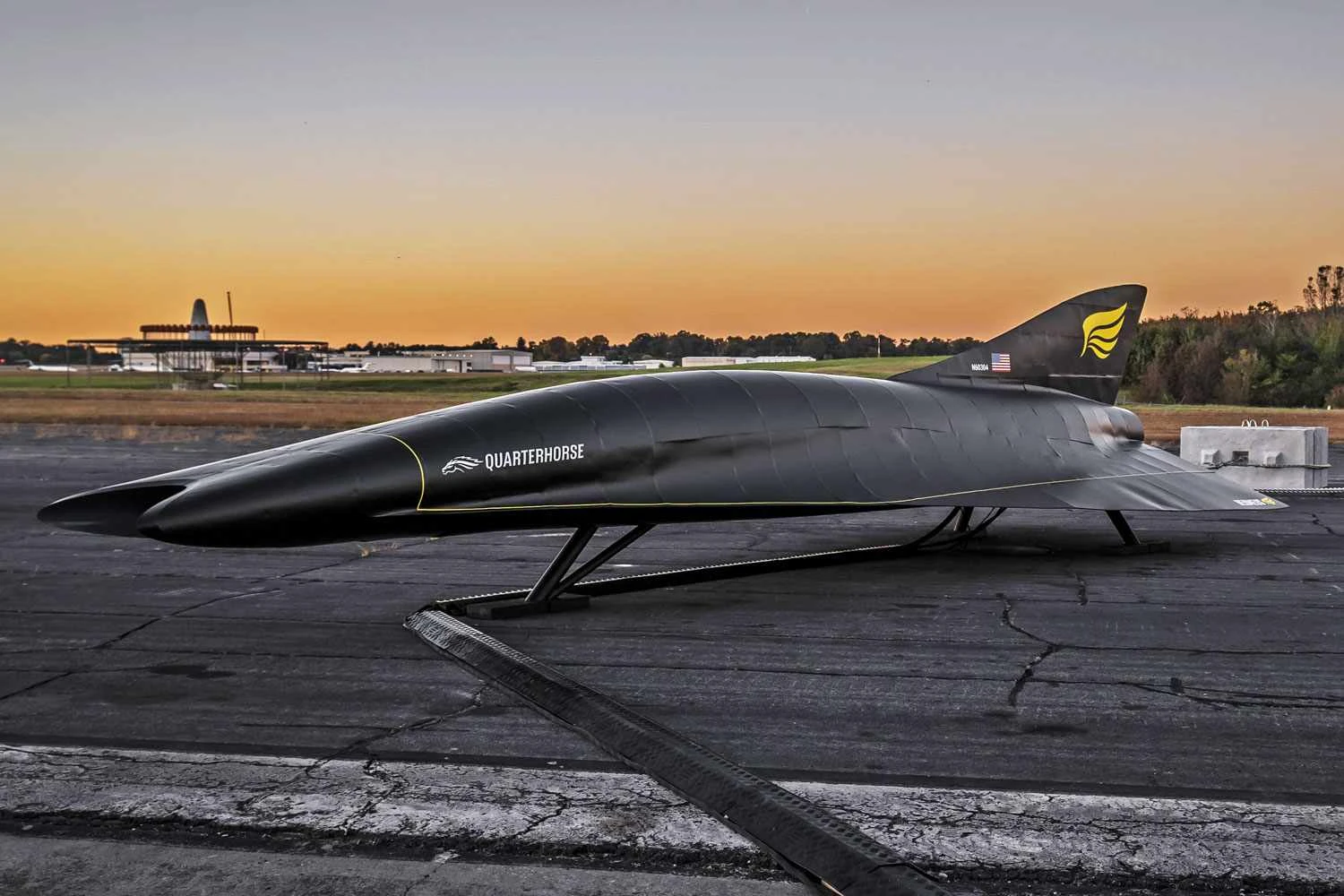
Hermeus currently plans to begin flight testing Mk 2.3 in 2027, the same year targeted for integrated Ramjet-X testing. The company has not said whether this version or another Quarterhorse aircraft will be used to launch the new vehicle.
Path toward ramjet-powered aircraft
Quarterhorse development is expected to continue with several additional aircraft. A multipurpose high-Mach Mission Plane is planned for 2028, followed by Mk 3, which is intended to demonstrate the transition from turbine to ramjet propulsion using the Chimera II engine.
Mk 4, scheduled for 2029, is planned as a hypersonic aircraft capable of sustained ramjet-powered flight. Further ahead, Hermeus is developing Darkhorse, a reusable hypersonic uncrewed aircraft intended for defense and national security missions.
Ramjet-X follows a different approach. Rather than combining turbine and ramjet propulsion to accelerate an aircraft from a runway, it uses another aircraft to provide the initial speed required by its ramjet. The vehicle itself can therefore remain expendable while the Quarterhorse used to launch it is recovered for another flight.