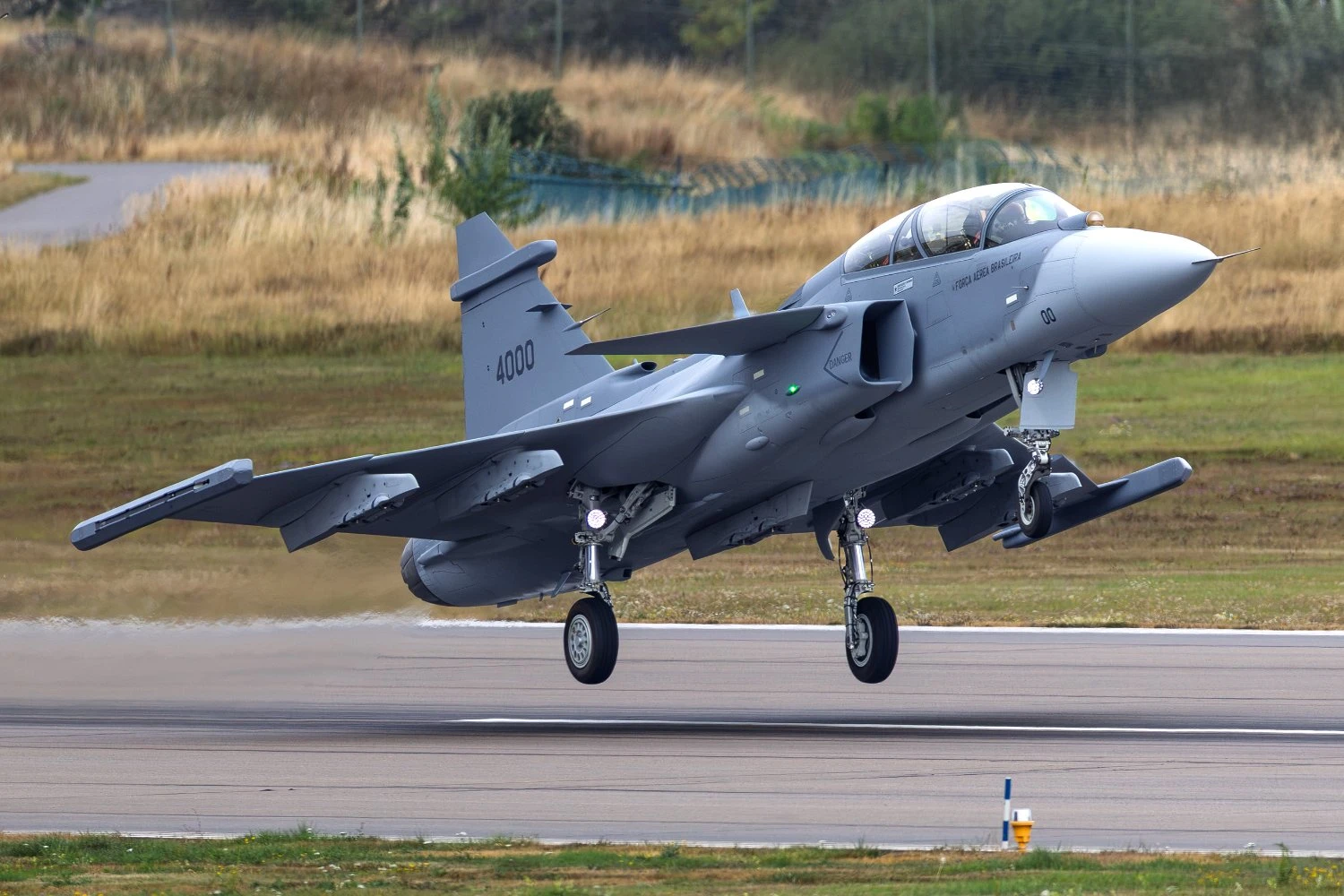
Saab has flown the Gripen F for the first time, opening the flight test campaign for the two-seat version of the Gripen E family developed initially to meet a Brazilian Air Force requirement.
The aircraft took off from Saab's airfield in Linköping, Sweden, at 9:40 a.m. local time on August 28 and remained airborne for 40 minutes.
Follow Air Data News: WhatsApp | Instagram | LinkedIn | Twitter | Facebook
Saab chief test pilot Jakob Högberg and Brazilian Air Force test pilot Lt. Col. Abdon de Rezende Vasconcelos conducted the first flight, during which the crew checked the aircraft's core systems and initial flight performance.
The flight comes less than three months after Saab formally rolled out the first Gripen F at Linköping on June 2.
The aircraft will now undergo production acceptance flights before beginning progressive envelope expansion. Saab plans to gradually clear limits including speed, altitude, G-load and angle of attack. Testing will also cover tactical capabilities and functions unique to the rear cockpit.
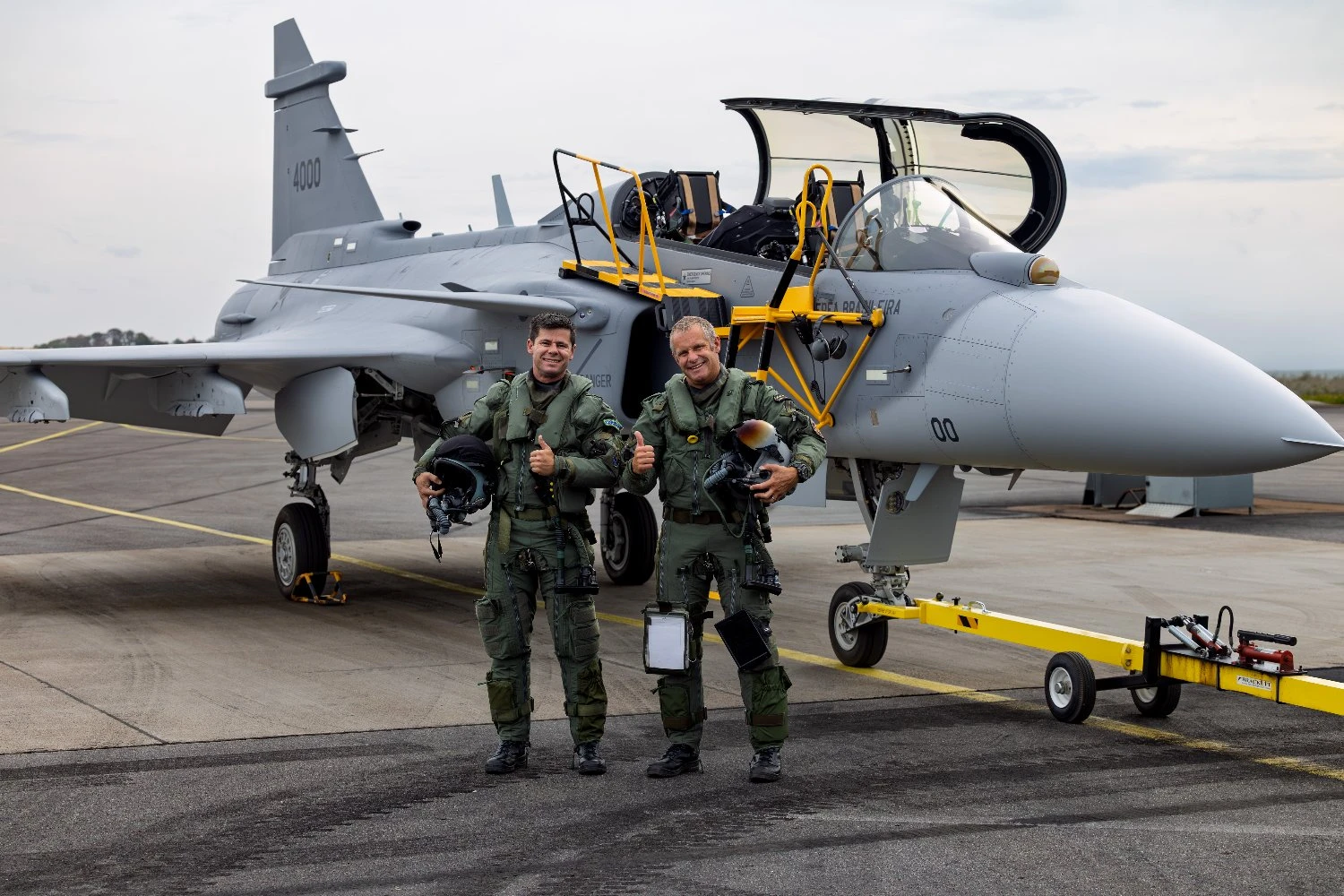
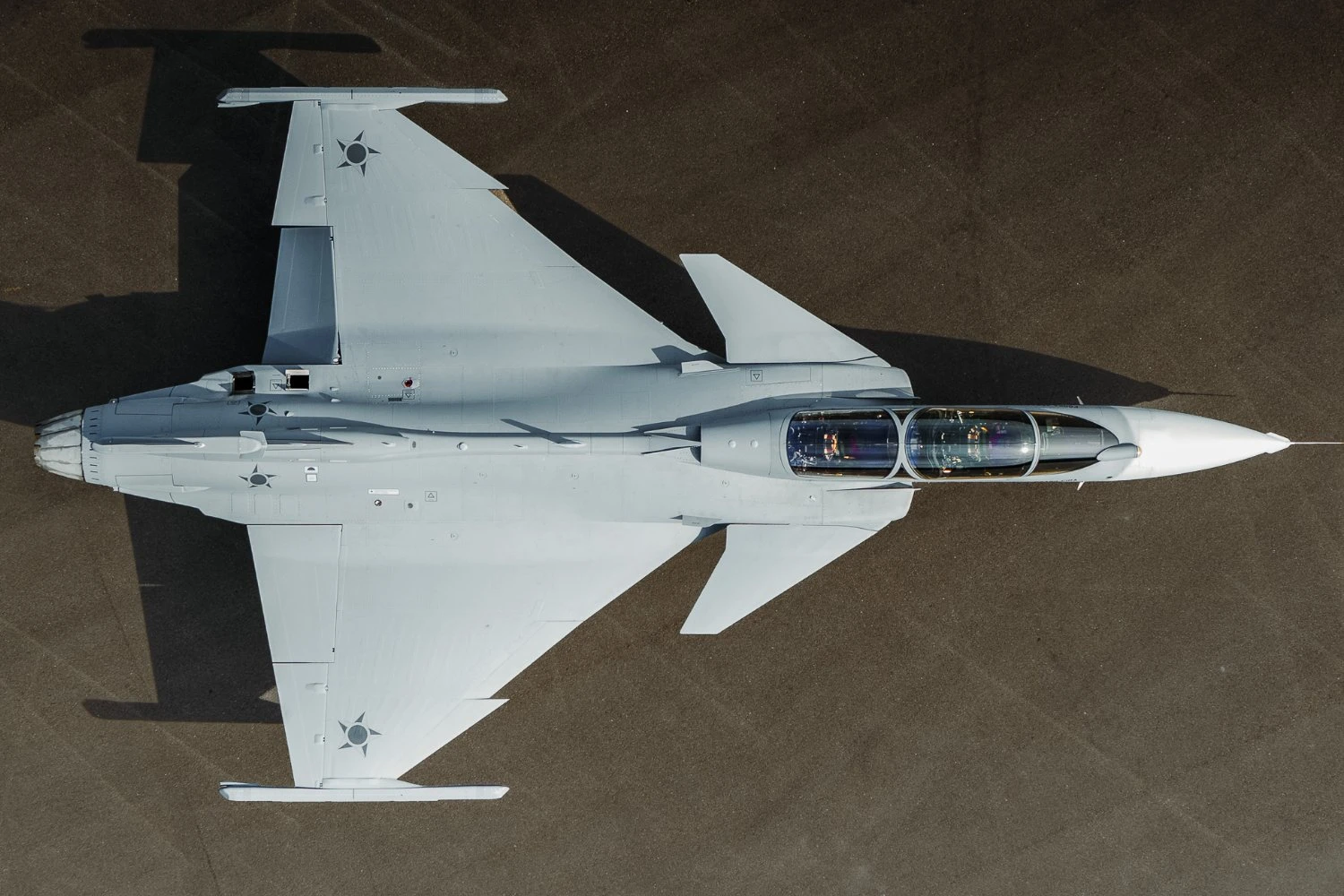
Unlike a conventional two-seat trainer derived from a combat aircraft, the Gripen F retains operational combat capability. Its second cockpit can operate independently or together with the front cockpit, allowing the aircraft to be used both for conversion training and operational missions.
The F is slightly longer than the single-seat Gripen E, measuring 15.9 m (52.2 ft) compared with 15.2 m (49.9 ft). Both versions have a maximum takeoff weight of 16,500 kg (36,376 lb) and use the same 98 kN-class General Electric F414G engine.
The two-seat version retains 10 external hardpoints but, unlike the Gripen E, does not carry the internal 27 mm Mauser BK27 cannon.
Brazil drove development of two-seat version
The Gripen F exists largely because of Brazil's requirement for a two-seat aircraft.
Sweden ordered 60 single-seat Gripen Es and did not initially require a two-seat version of the new generation. Brazil, however, included eight Gripen Fs when it selected the aircraft under its F-X2 fighter program.
The contract signed in 2014 covers 36 fighters: 28 single-seat Gripen Es and eight two-seat Gripen Fs.
Brazil consequently became the launch customer and participated directly in development of the new variant. More than 350 Brazilian engineers, technicians and pilots have undergone training involving development, production, flight testing and aircraft maintenance under the technology-transfer program.
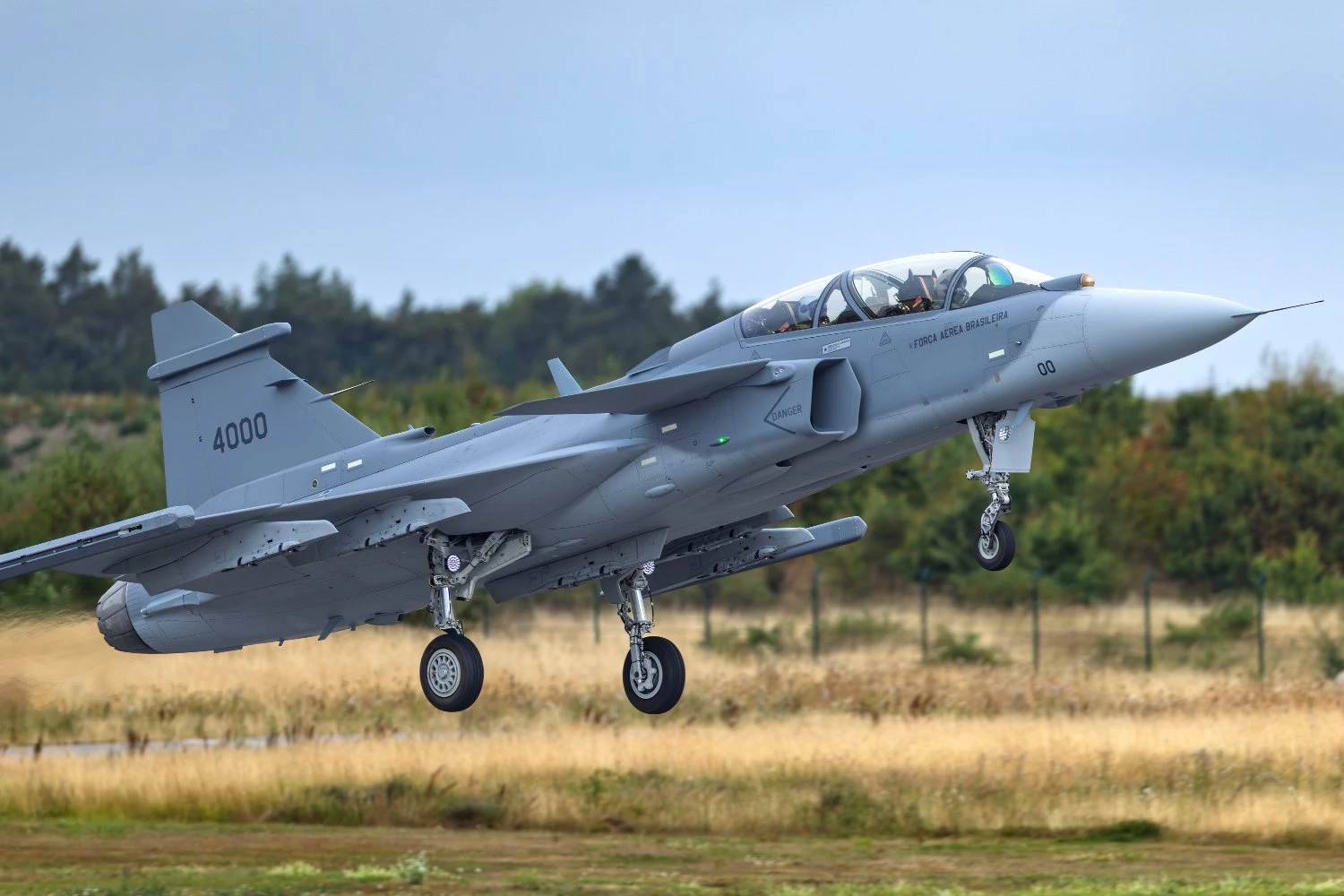
Manufacturing of the first Gripen F began in 2020. The aircraft combines components common with the Gripen E with a redesigned forward fuselage accommodating the second cockpit.
Brazilian industry is also involved in production of the Gripen E/F family. Embraer's Gavião Peixoto facility in Brazil operates a Gripen production line, while Saab's plant also in Brazil manufactures aerostructures for the program.
The first Gripen E assembled in Brazil was rolled out at Gavião Peixoto in March. Saab said another 14 aircraft under the existing Brazilian contract are scheduled to follow the same production model.
Saab said in June that 11 of the 36 aircraft covered by Brazil's original contract had been handed over.
More Gripen F customers
Brazil is no longer the only customer for the two-seat fighter. Colombia has ordered two Gripen Fs as part of its acquisition of the Gripen E/F, while Thailand has ordered one two-seat aircraft alongside three Gripen Es in its initial procurement.
The Swedish Air Force, by comparison, currently has no Gripen F on order. Flight testing of the first aircraft will remain at Saab's Flight Test Centre in Sweden. The company will conduct the planned test program and aircraft acceptance procedures before preparing the fighter for delivery to the Brazilian Air Force.