 Air Transport
Embraer is exploring the possibility of establishing an industrial footprint in Tunisia, as part of a strategic plan to diversify its supplier base and expand production capacity focused on European markets.
The news was confirmed by Tunisia’s Foreign Investment Promotion Agency (FIPA-Tunisia), which hosted a high-level delegation from the Brazilian aerospace manufacturer on July 10. The group was led by Francisco Moraes, Vice President of Africa Commercial Aviation at Embraer.
According to FIPA, the visit aimed to evaluate Tunisia’s potential for integration into Embraer’s global supply chain, particularly in areas such as subcontracting, engineering, and skilled labor. Tunisia currently hosts over 80 aerospace companies and employs more than 17,000 people in the sector.
While Tunisia itself is not a potential customer for Embraer aircraft — the country’s air force operates the C-130J and T-6C, competitors to the KC-390 and A-29, and its commercial carriers fly a modest Airbus-only fleet — the country offers key advantages: proximity to southern Europe, fiscal incentives, and an established aerospace industrial base.
Assembly hub?
Embraer’s approach comes at a time when the company is actively seeking to mitigate production bottlenecks and scale up to meet growing international demand.
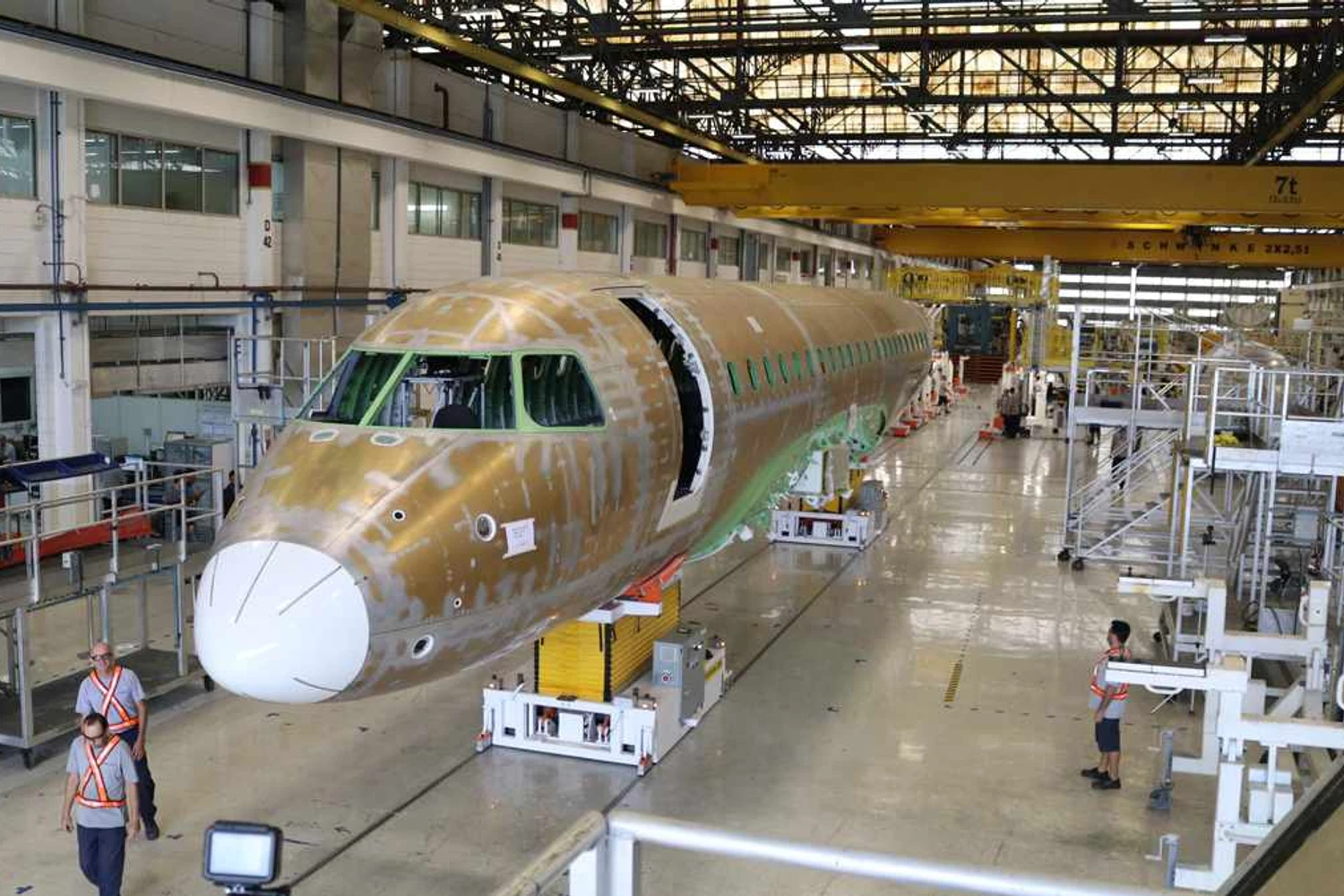
The potential facility could serve as a production or assembly hub supporting Embraer operations across Africa, the Mediterranean region, and Europe. This would mark Embraer’s first industrial site in North Africa and signal its intent for long-term integration into the regional aerospace ecosystem.
Though still in the exploratory phase, the tone of discussions between Embraer and Tunisian authorities suggests strong mutual interest.
If realized, the investment could solidify Tunisia’s role in the global aerospace value chain and contribute to Embraer’s ongoing expansion strategy, while generating economic and technological gains for the host country.