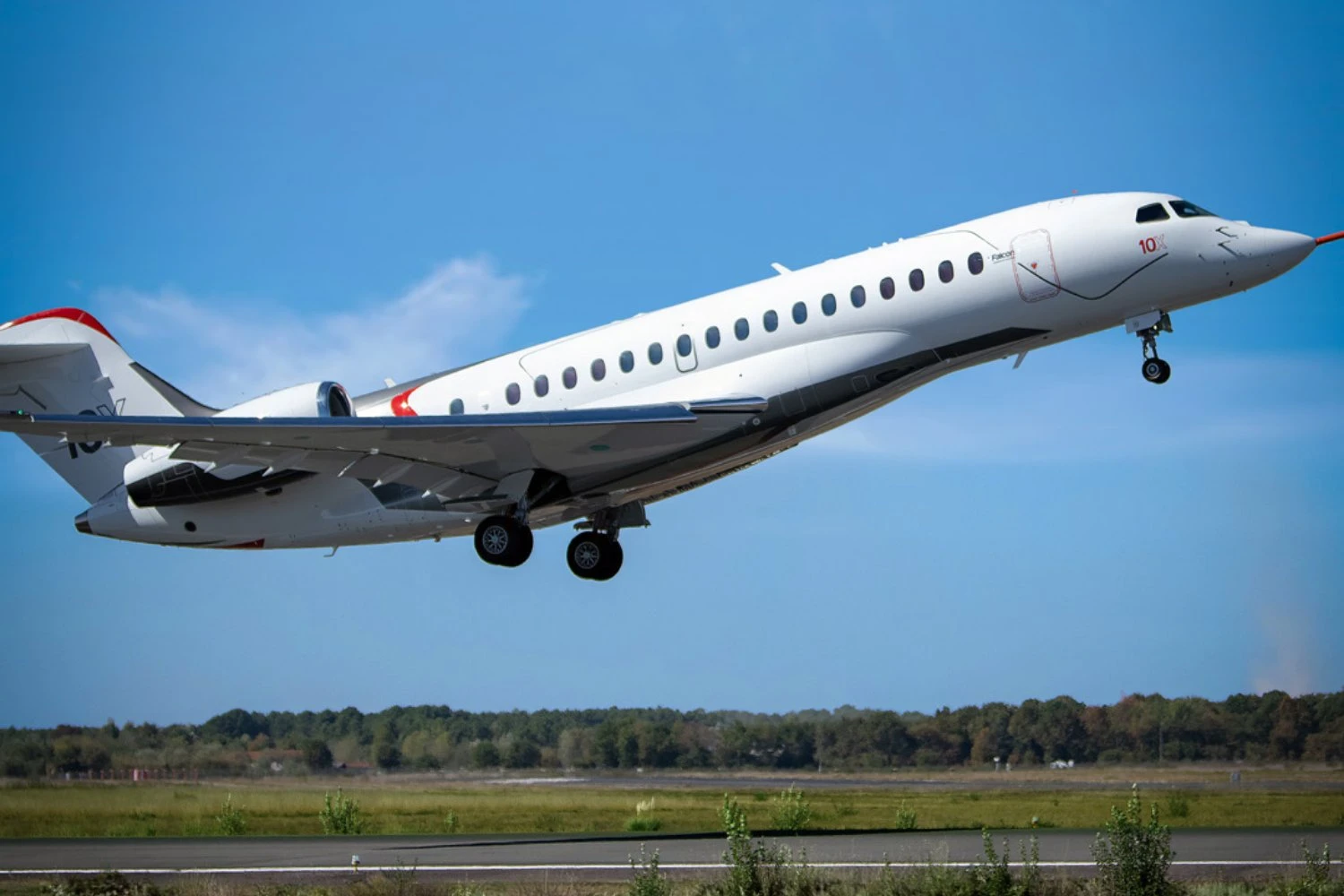
Dassault Aviation has stopped researching hydrogen propulsion for its aircraft, according to chairman and CEO Éric Trappier. Speaking on the French radio program Le Grand Jury on November 15, the executive said the technology was not a practical option for the business jets manufactured by the company.
“At Dassault, we have stopped researching,” Trappier said during the interview with RTL and Public Sénat.
He cited the Falcon 10X, Dassault's largest business jet, to illustrate the difficulties of using hydrogen in long-range aircraft. The model has a projected range of 7,500 nautical miles (13,890 km), making fuel storage and available cabin space particularly important considerations.
Hydrogen contains more energy per unit of mass than conventional jet fuel, but requires substantially more storage volume. In liquid form, it must be kept at approximately −423°F (−253°C), requiring insulated cryogenic tanks that would be difficult to accommodate in an aircraft designed for conventional fuel.
Dassault had already questioned hydrogen propulsion
Trappier's remarks do not indicate the cancellation of a previously announced hydrogen-powered Falcon program. The company had already expressed doubts about the technology several years earlier. See also: Falcon aircraft
Follow Air Data News: WhatsApp | Instagram | LinkedIn | Twitter | Facebook
In 2020, when he also chaired the French aerospace industry association GIFAS, Trappier considered hydrogen a possible option for aviation and discussed the prospect of technology demonstrators around 2035.
By May 2023, his position had changed. During a hearing before the French Senate, he said Dassault did not intend to commit its own funds to hydrogen aircraft development.

The latest statement confirms that the company has since discontinued its research in this area.
Instead, Dassault is concentrating on more efficient engines, lower fuel consumption and sustainable aviation fuel (SAF), which can reduce lifecycle carbon emissions compared with conventional petroleum-derived jet fuel.
The Falcon family is certified to operate with blends containing up to 50% SAF. Trappier also called for tax incentives to encourage greater adoption of these fuels, acknowledging that conventional jet fuel would remain in use for many years.
Airbus continues research under revised ZEROe program
Dassault's decision contrasts with the position of Airbus, which continues investigating hydrogen-powered aircraft despite scaling back its original plans.
Airbus introduced three hydrogen aircraft concepts in 2020 under its ZEROe program, initially targeting the entry into service of a zero-emission commercial aircraft by 2035. See also: ZEROe program
Related news
November 15, 2026
November 15, 2026
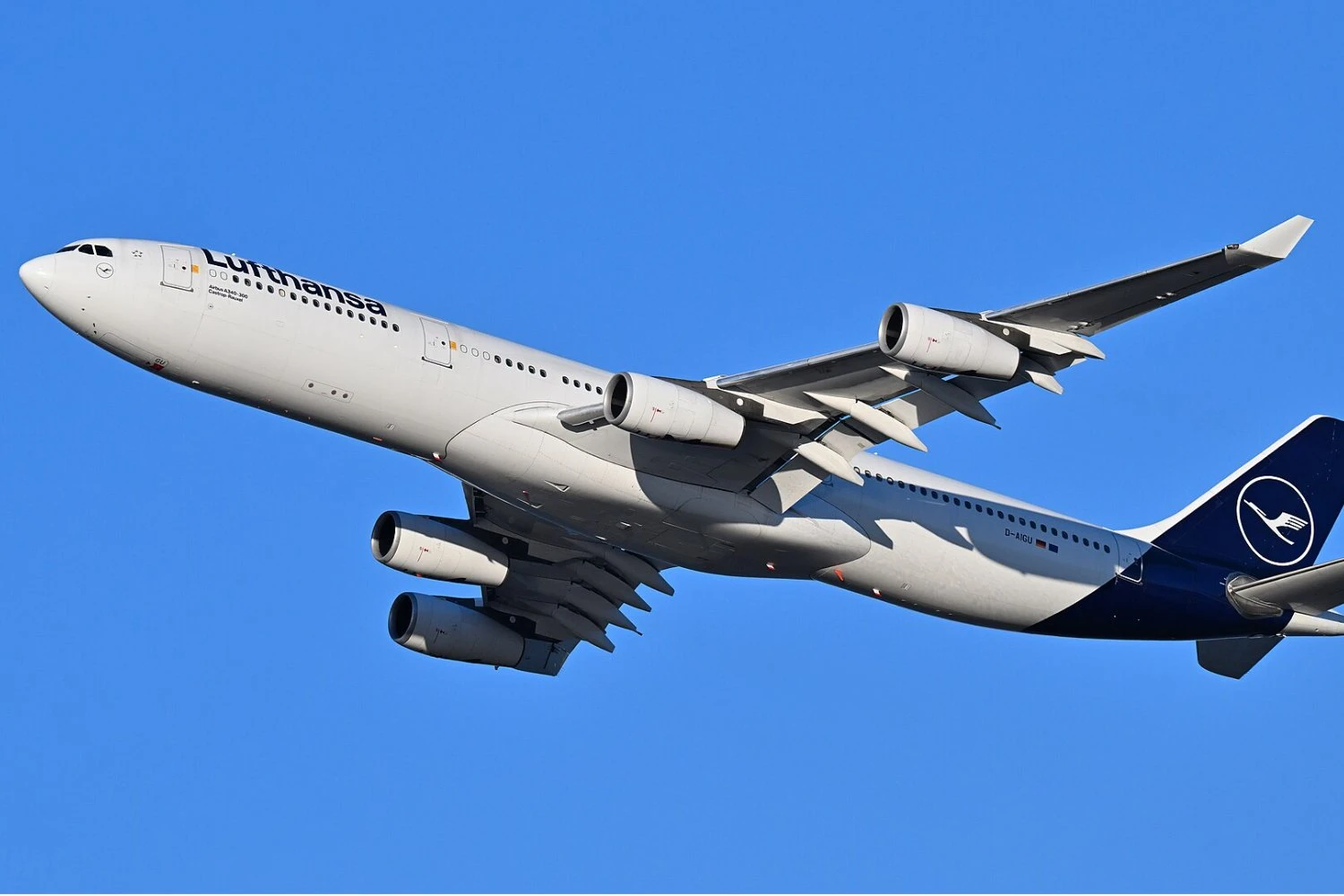
The manufacturer revised that timetable in 2025. It dropped plans to test a hydrogen combustion engine aboard an Airbus A380 and shifted its attention toward electric propulsion powered by hydrogen fuel cells.

Its latest concept uses four electric propulsors supplied by fuel cells, which generate electricity from hydrogen. Airbus plans integrated ground testing in 2027 but no longer maintains its original 2035 service-entry target.
Other developers have also encountered difficulties. Australia's Stralis Aircraft discontinued its hydrogen propulsion projects in 2026 after failing to secure sufficient funding. France's Beyond Aero, however, continues developing a hydrogen fuel-cell business aircraft.
Unlike Airbus and Beyond Aero, Dassault has decided against further investment in hydrogen propulsion research, with Trappier arguing that the technology is not suitable for the aircraft his company produces.