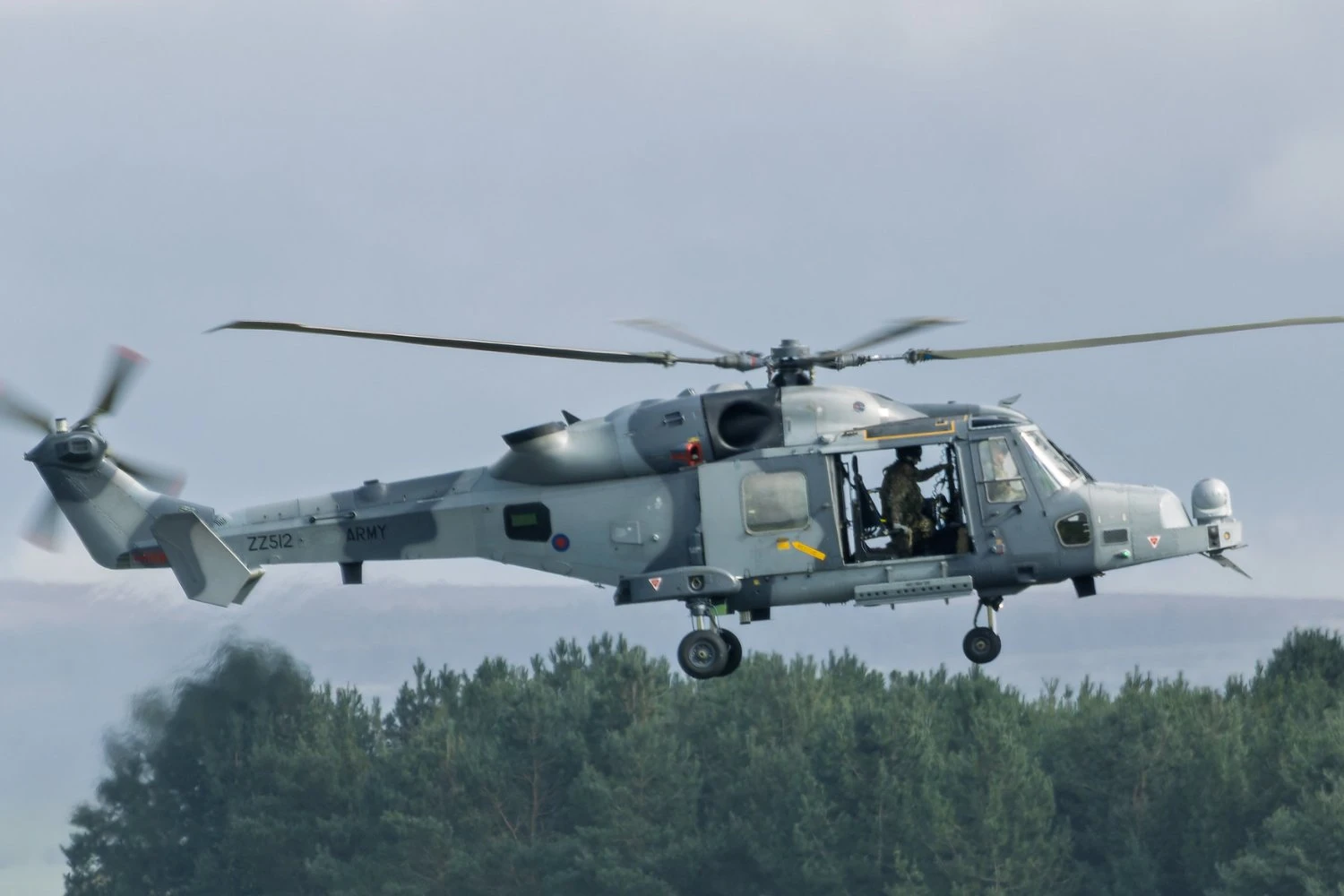
The British Army will begin withdrawing its fleet of 34 Leonardo Wildcat AH1 helicopters in 2027. Under the UK's new Defence Investment Plan, uncrewed aircraft will assume the battlefield reconnaissance role.
The UK's defense review follows lessons from the war in Ukraine, where drones, electronic warfare and networked sensors have sharply reduced the survivability of reconnaissance helicopters near the front line.
Recent news
September 16, 2026
September 16, 2026
September 16, 2026
Officials said reconnaissance missions once carried out by crewed helicopters can now be performed by uncrewed systems at lower cost, without sending aircrews into increasingly sophisticated air defense environments.
The Wildcat AH1 entered service in 2014 as the British Army's light battlefield reconnaissance and utility helicopter. It is a development of the Westland Lynx, one of the UK's best-known military helicopter families, produced originally by Westland Helicopters before the company became part of Leonardo.
Besides scouting missions, the Wildcat can transport small teams, support special operations and carry out utility missions. British officials have not explained how some of those tasks will be performed after the helicopter leaves service.
The retirement forms part of the Army's new reconnaissance-strike concept, which combines surveillance drones, electronic sensors and long-range precision weapons. Prime Minister Keir Starmer recently said the modernization plan aims to make the British Army "10 times more lethal" through greater use of autonomous systems.
The Defence Investment Plan also postpones some helicopter modernization projects and calls for the gradual retirement of older Boeing Chinook helicopters as they reach major maintenance milestones. At the same time, the UK continues its New Medium Helicopter program, which selected the Leonardo AW149 to replace the retired Puma HC2 fleet.
Follow Air Data News: WhatsApp | Instagram | LinkedIn | Twitter | Facebook
The British Army's decision affects only the Wildcat AH1. The Royal Navy's 28 Wildcat HMA2 helicopters remain in service in anti-submarine warfare, maritime surveillance and anti-ship missions. Some analysts have suggested part of the Army fleet could eventually be transferred to naval aviation, although the Ministry of Defence has not announced any plans for the aircraft after retirement.
Once the Wildcat AH1 leaves service, the Army Air Corps will operate mainly Boeing AH-64E Apache attack helicopters, together with a small number of Airbus Dauphin helicopters assigned to special operations support.