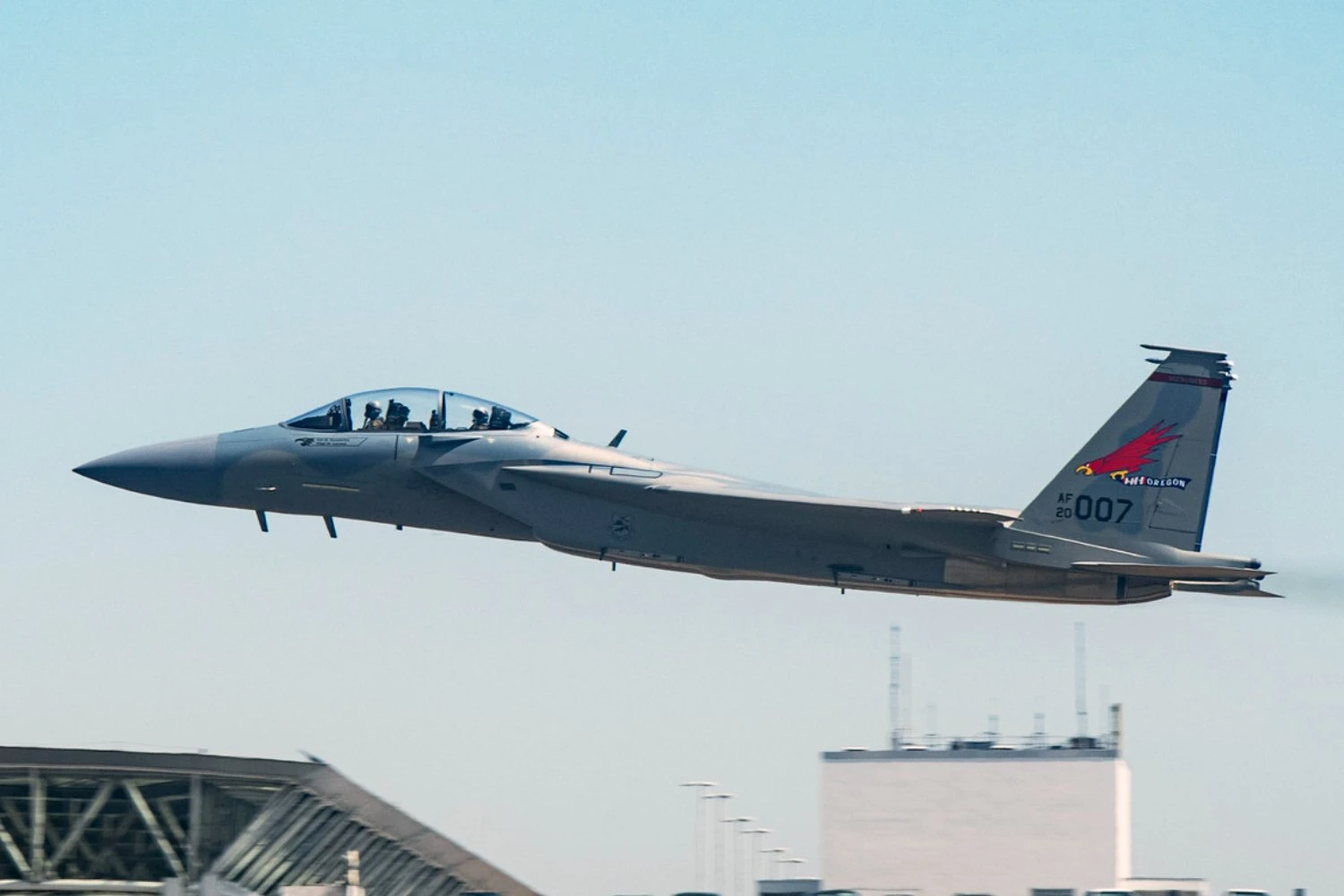
Boeing has received a contract with a ceiling of US$131.23 billion that could cover virtually every aspect of the F-15 program over the next decade, from building new fighters to upgrading and supporting aircraft already in service.
The unusually high figure announced by the US Department of War on Monday does not represent an immediate US$131 billion order for Boeing. Eagle Crest is an indefinite-delivery/indefinite-quantity, or IDIQ, contract under which individual orders can be placed as requirements emerge.
Follow Air Data News: WhatsApp | Instagram | LinkedIn | Twitter | Facebook
Only US$343,740 in fiscal 2026 research, development, test and evaluation funds was committed when the contract was awarded.
The agreement nevertheless gives Boeing a potentially valuable long-term framework for the F-15. Its scope explicitly includes aircraft production, systems integration, modernization, upgrades, retrofits and sustainment, as well as the establishment of additional depot maintenance capabilities.
Orders can initially be placed through August 24, 2031, with an option to extend the ordering period until August 2036. Work can continue through August 2037.
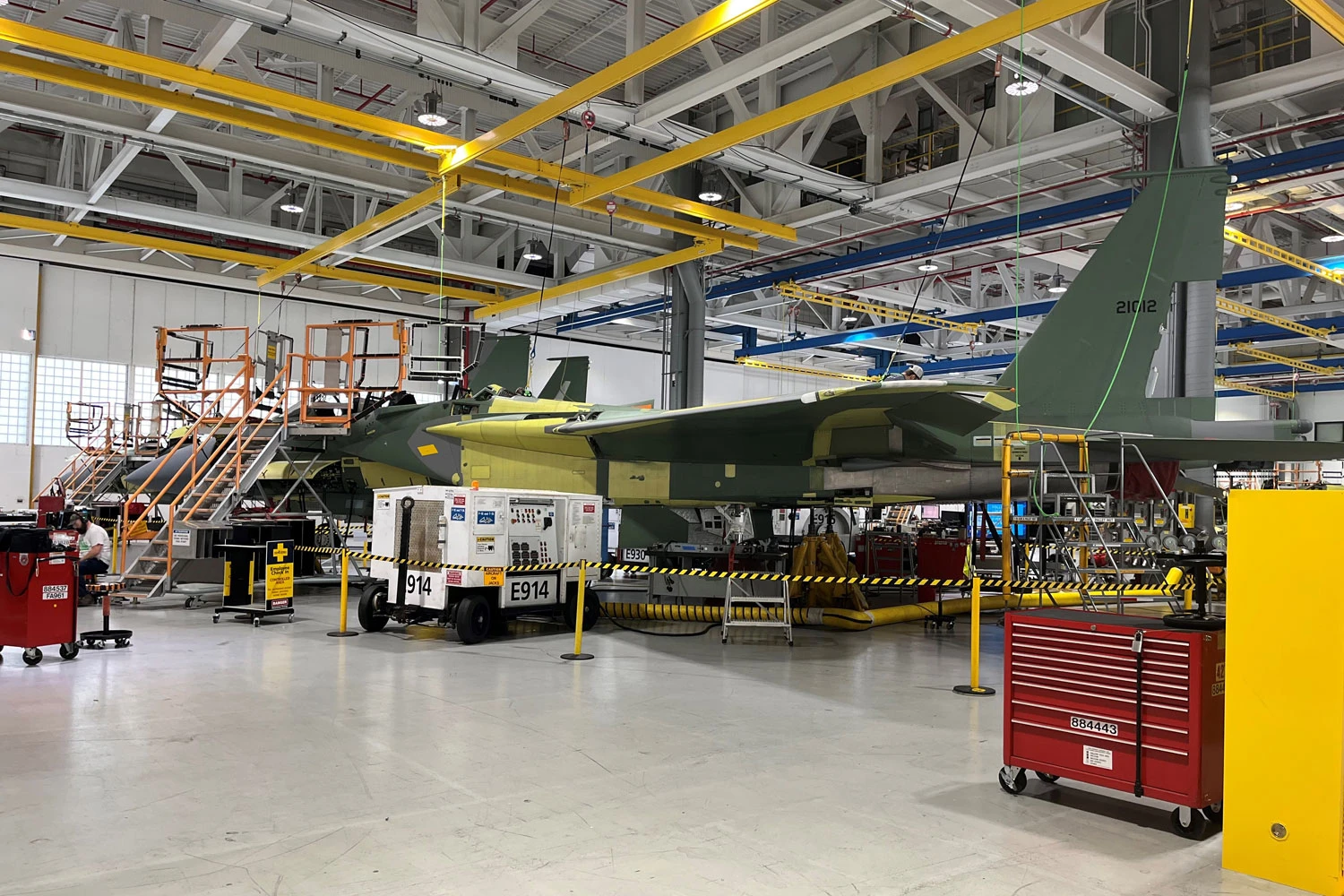
The contract was awarded on a sole-source basis to Boeing, which builds the latest F-15EX Eagle II at its St. Louis facility in Missouri.
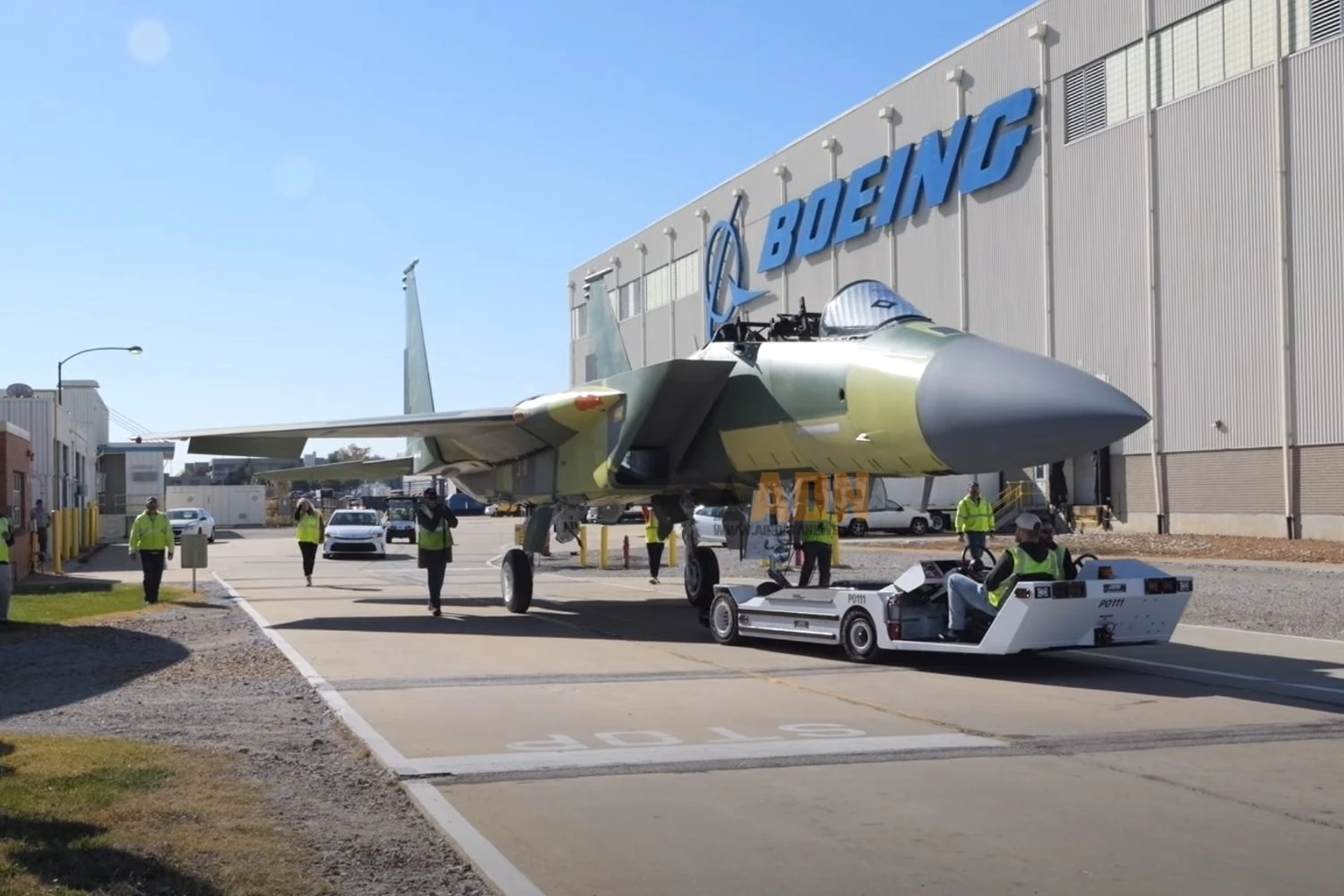
What Eagle Crest actually means
Eagle Crest is not a new version of the F-15 or a modernization package.
The name identifies the contracting vehicle created by the US Air Force Life Cycle Management Center to consolidate a broad range of future F-15 work under a single framework.
When the Air Force disclosed its intention to award Eagle Crest to Boeing in November 2025, it described a scope extending beyond production and maintenance. The contract can also cover hardware and software design and development, subsystem and component production, studies, modification kits and future enhancements to the F-15 weapon system.
That makes its US$131.23 billion ceiling easier to understand. It establishes how much business can potentially be ordered through Eagle Crest rather than committing the US government to spend that amount.
The arrangement can support both the US fleet and Foreign Military Sales customers. This could include additional F-15EX aircraft for the US Air Force as well as new export fighters and major modernization programs for existing operators.
Seven countries named — including two that do not operate the F-15
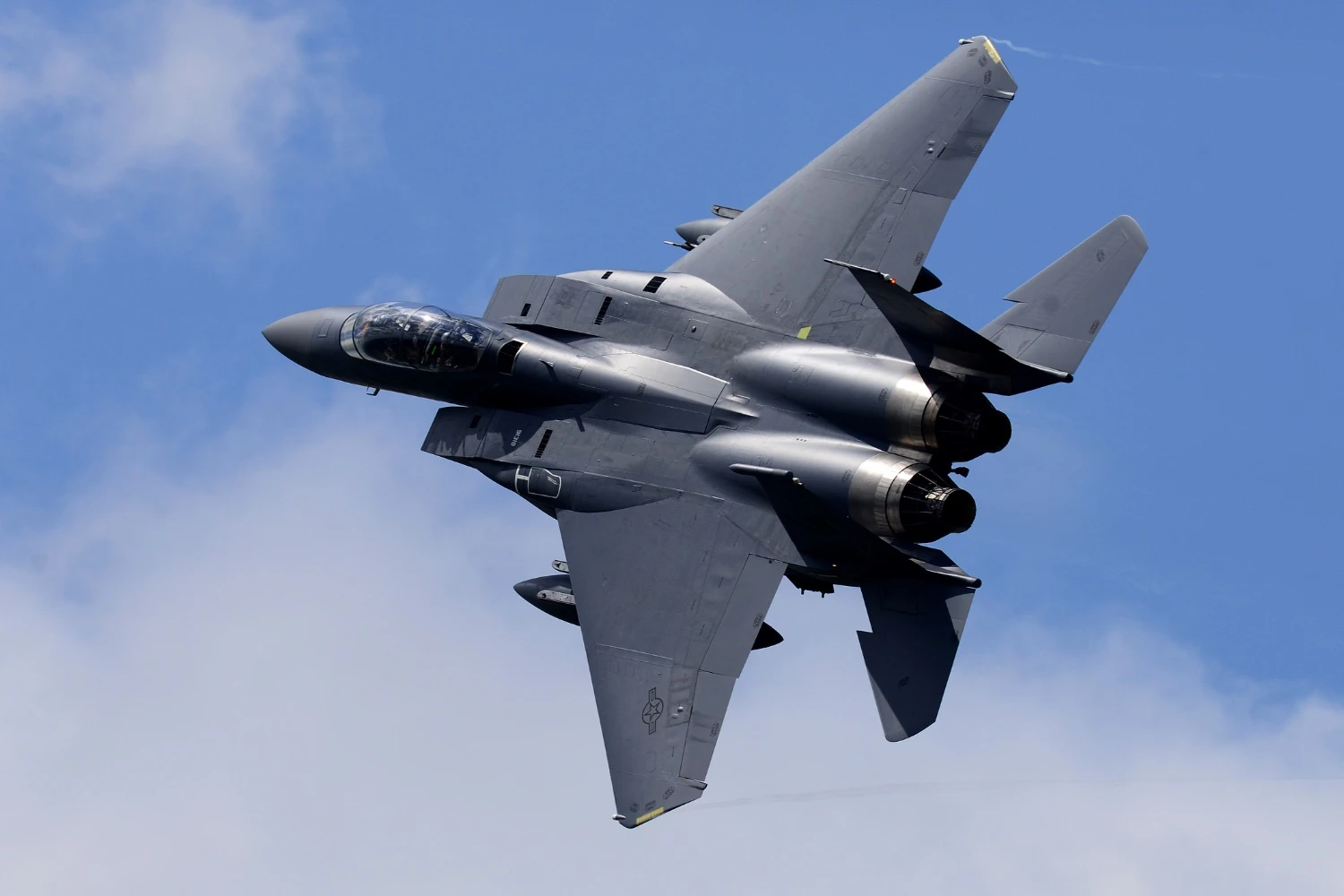
The Department of War said Eagle Crest involves potential Foreign Military Sales to Japan, Israel, Saudi Arabia, South Korea, Singapore, Indonesia and Poland.
Most of those names are unsurprising. Japan, Israel, Saudi Arabia, South Korea and Singapore operate different versions of the F-15, and several have major upgrade or acquisition programs underway.
Indonesia and Poland stand out because neither currently operates the fighter.
Indonesia's inclusion is particularly curious. Jakarta signed a memorandum of understanding with Boeing in August 2023 covering up to 24 F-15EX aircraft, which would have been designated F-15IDN.
The proposed acquisition did not progress to a firm contract. In February 2026, Boeing said the F-15 was no longer an active campaign in Indonesia and declined to explain why, referring questions about the potential government-to-government sale to US and Indonesian authorities.
Six months later, however, Indonesia is explicitly named by the US government among the countries covered by Eagle Crest.
Its presence does not establish that the F-15IDN acquisition has been revived. An IDIQ contract can accommodate potential requirements that never become orders, and Indonesia may simply remain within the contracting framework because of the previous FMS process. But the reference is notable given Boeing's statement earlier this year that the campaign was no longer active.
Poland presents a different case. Boeing has actively promoted the F-15EX to Warsaw since at least 2023. The company has offered the fighter as a potential FMS acquisition and continued campaigning in Poland in 2025, including a proposal combining the F-15EX with the MQ-28 Ghost Bat collaborative combat aircraft.
Poland has not selected or ordered the F-15EX. Its combat aircraft plans already include F-16s, F-35As and South Korean FA-50s.
Its inclusion in Eagle Crest therefore does not amount to a previously undisclosed purchase, but it confirms that the US contracting structure has been established to accommodate a potential Polish F-15 program if Warsaw eventually decides to proceed.
F-15 production could continue well into next decade
The new agreement also provides another indication of the unusually long future still envisioned for a fighter whose origins date to the late 1960s.
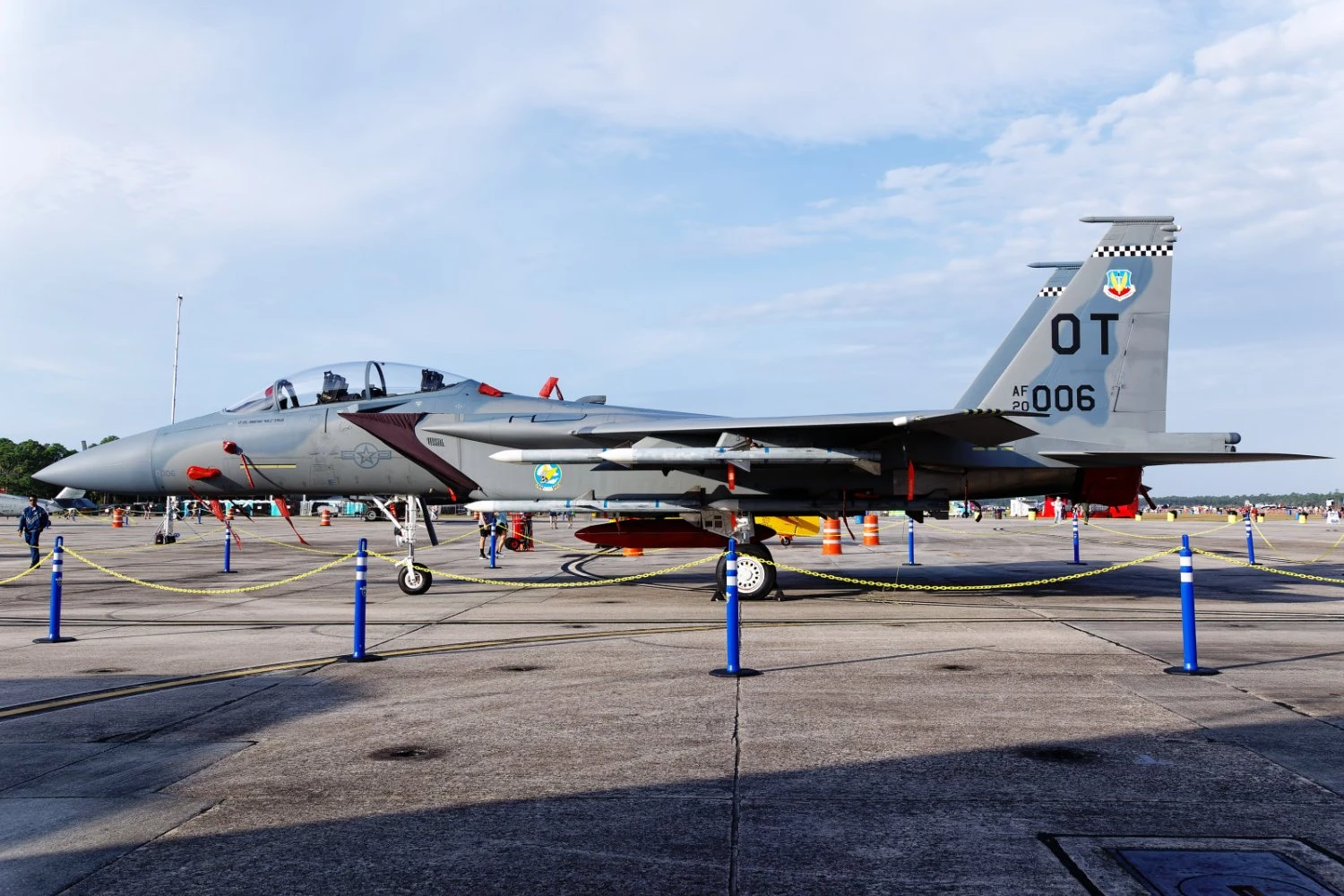
The first F-15 flew in 1972 and entered US Air Force service in 1976. Half a century later, Boeing is producing the extensively redesigned F-15EX, which combines the basic Eagle airframe with fly-by-wire controls, an AESA radar, digital cockpit, modern electronic warfare equipment and an open mission systems architecture.
The US Air Force is acquiring the F-15EX to replace aging F-15C/D aircraft, while Israel has ordered its own new-generation version. Existing fleets in countries including Japan and South Korea are also undergoing extensive modernization.
With Eagle Crest allowing orders to be issued into the 2030s and work to continue until 2037, the contract provides a mechanism for Boeing to keep producing, modifying and supporting the Eagle long after the type passes 60 years since its first flight.