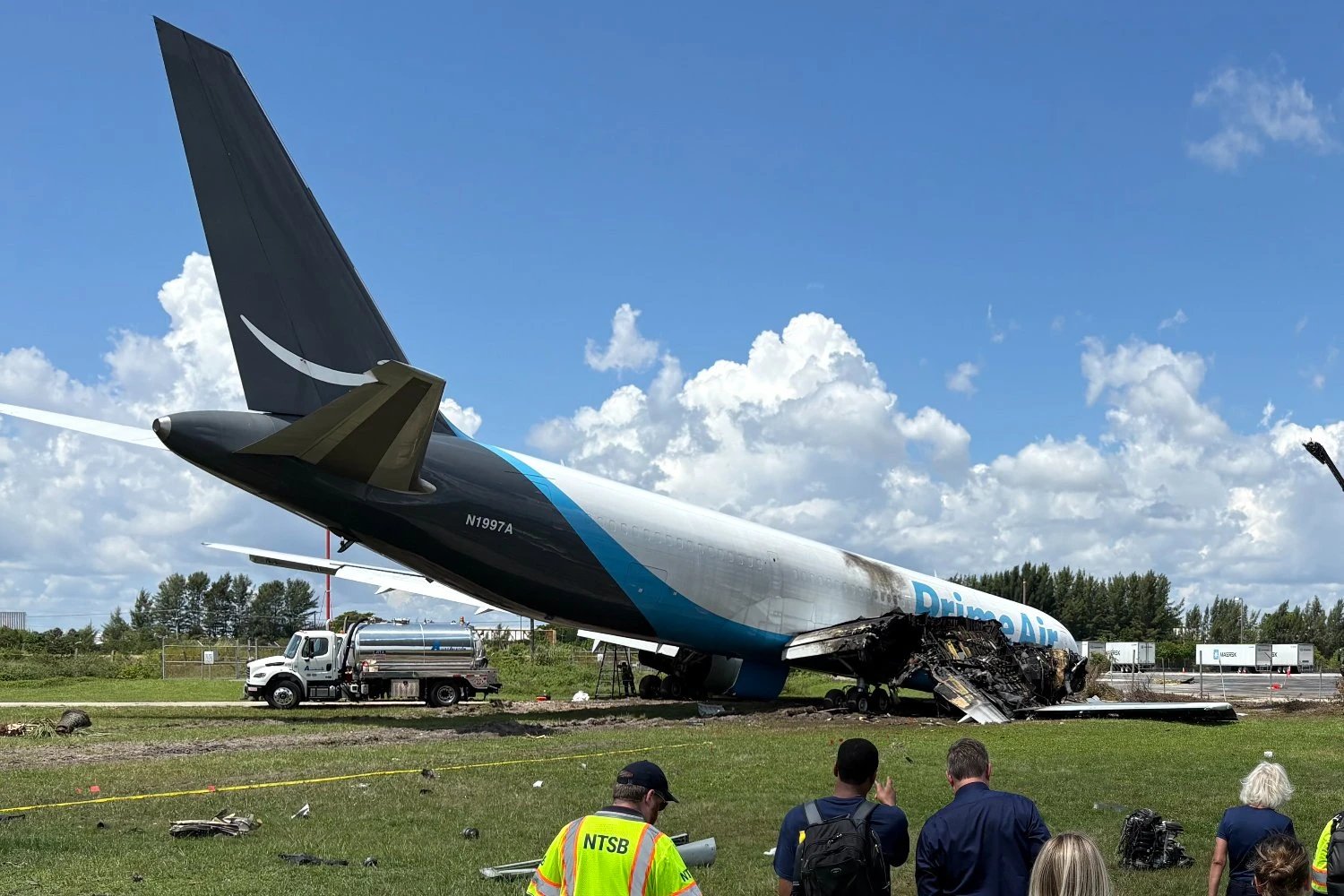
Amazon has paused operations with cargo carrier 21 Air following the September 6 accident involving a Boeing 767-300 freighter at Miami International Airport that killed five people on the ground.
The decision was announced on September 13, a week after 21 Air Flight 7598 overran Runway 30 while arriving from San Juan, Puerto Rico.
Amazon spokesperson Kelly Nantel said the company had supported the investigation and reviewed circumstances surrounding the accident before making the decision.
“We’ve decided to pause our operations with 21 Air,” Nantel said.
Follow Air Data News: WhatsApp | Instagram | LinkedIn | Twitter | Facebook
Amazon did not specify which circumstances prompted the suspension or how long it will remain in effect. The company has not said it is terminating its relationship with the cargo carrier.
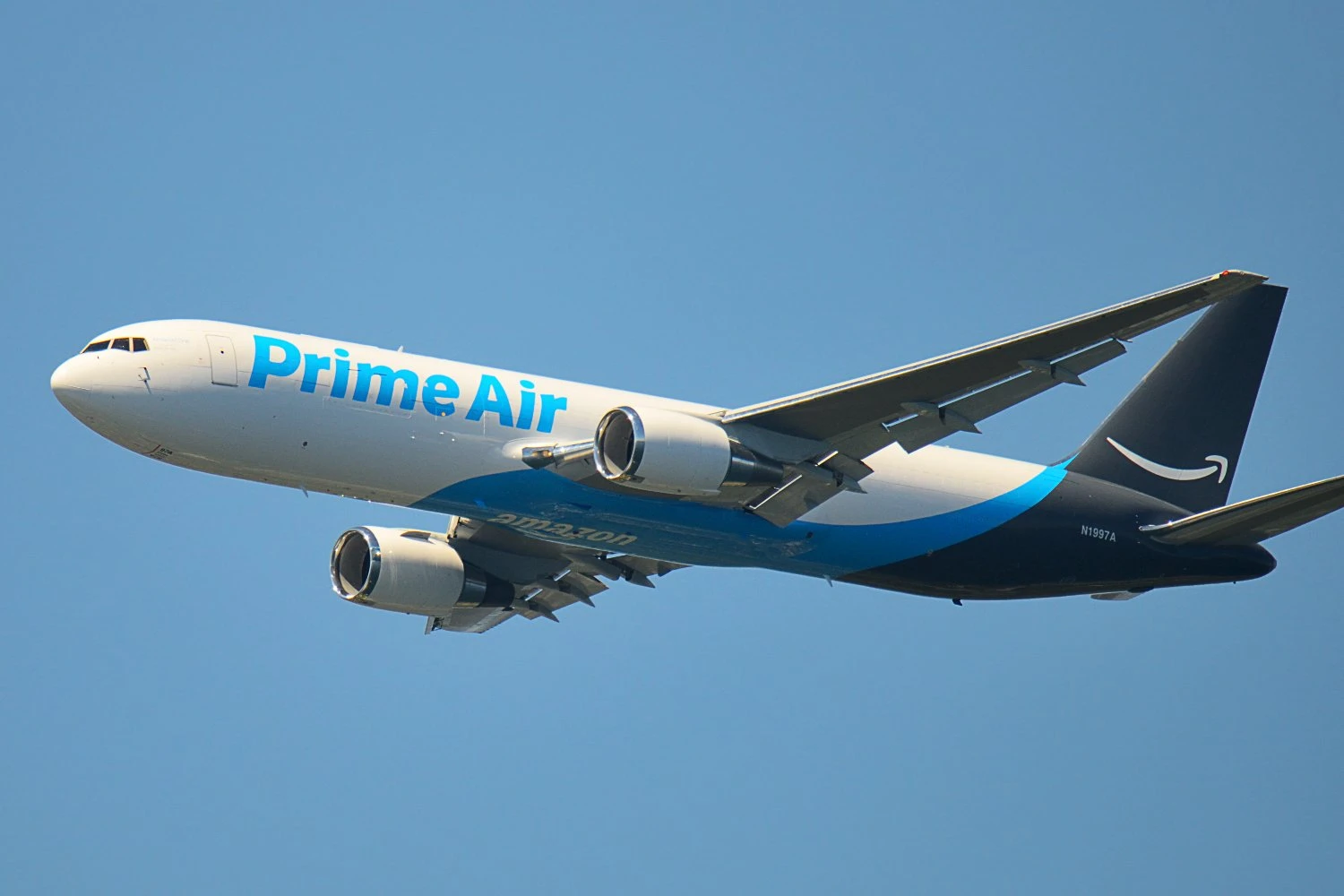
Before the accident, 21 Air had eight Boeing 767-300 freighters operating for Amazon Prime Air. Seven remain listed in the operation following the loss of N1997A, according to Planespotters fleet data.
21 Air said it continues to cooperate with the National Transportation Safety Board and Amazon. The carrier also said it remains confident in its safety policies, procedures and training.
Repeated speed warnings preceded landing
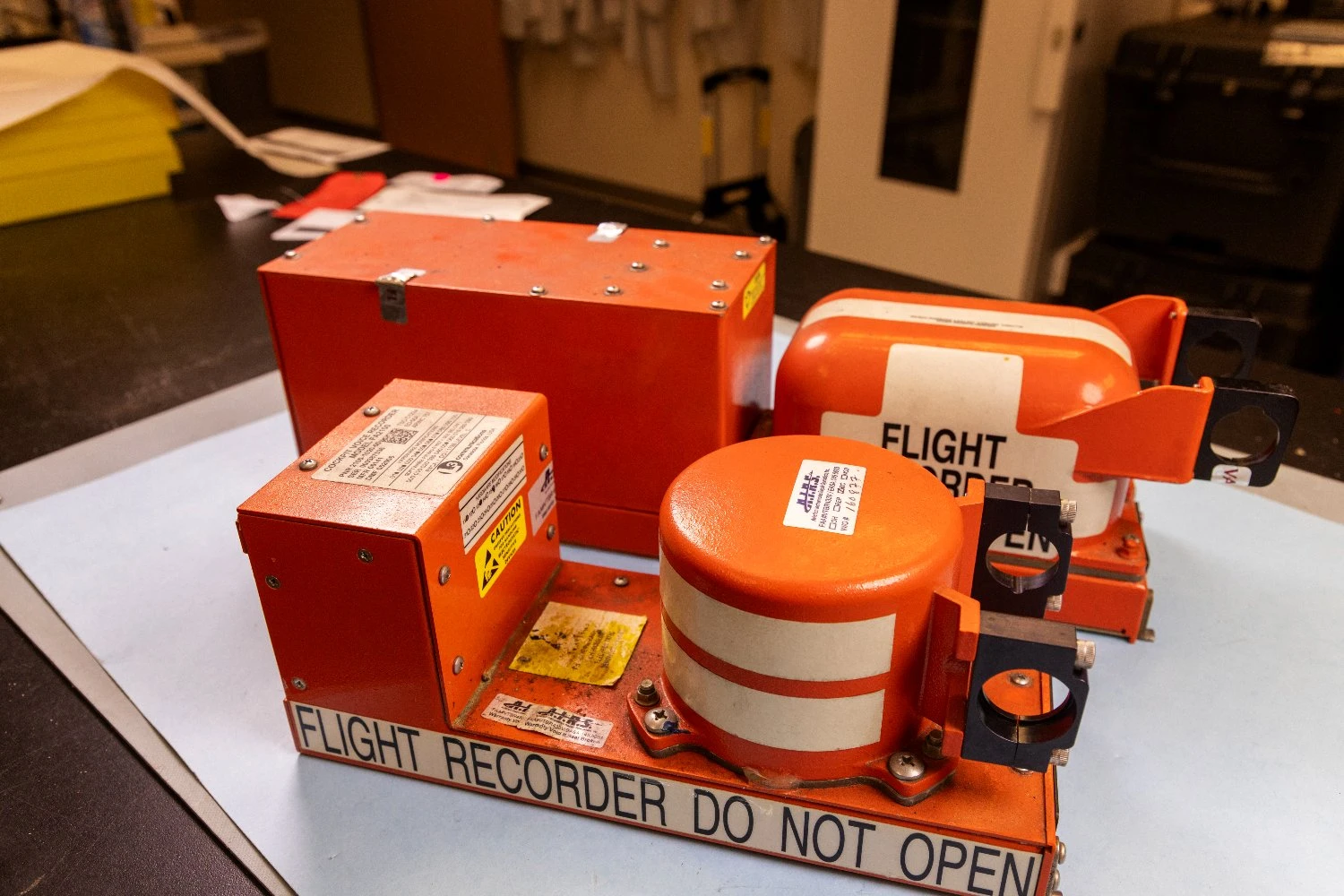
The Amazon decision comes as the NTSB has disclosed information recovered from the cockpit voice and flight data recorders of N1997A.
According to investigators, one of the pilots commented that the aircraft was too fast 1 minute and 42 seconds before the end of the cockpit recording. Additional comments about excessive speed followed, and the NTSB said there was not a consistent verbal response to those comments.
The autopilot was disconnected 1 minute and 23 seconds before the recording ended. A “sink rate” warning followed 19 seconds later, with another seven seconds after that.
With 48 seconds remaining, the enhanced ground proximity warning system issued a “too low terrain” alert four times. A pilot called for flaps 30 with 41 seconds remaining, immediately followed by the 40-ft radio-altimeter callout.
The NTSB has not determined why the approach continued or established a probable cause for the accident.
Go-around thrust applied after touchdownat 158 kt
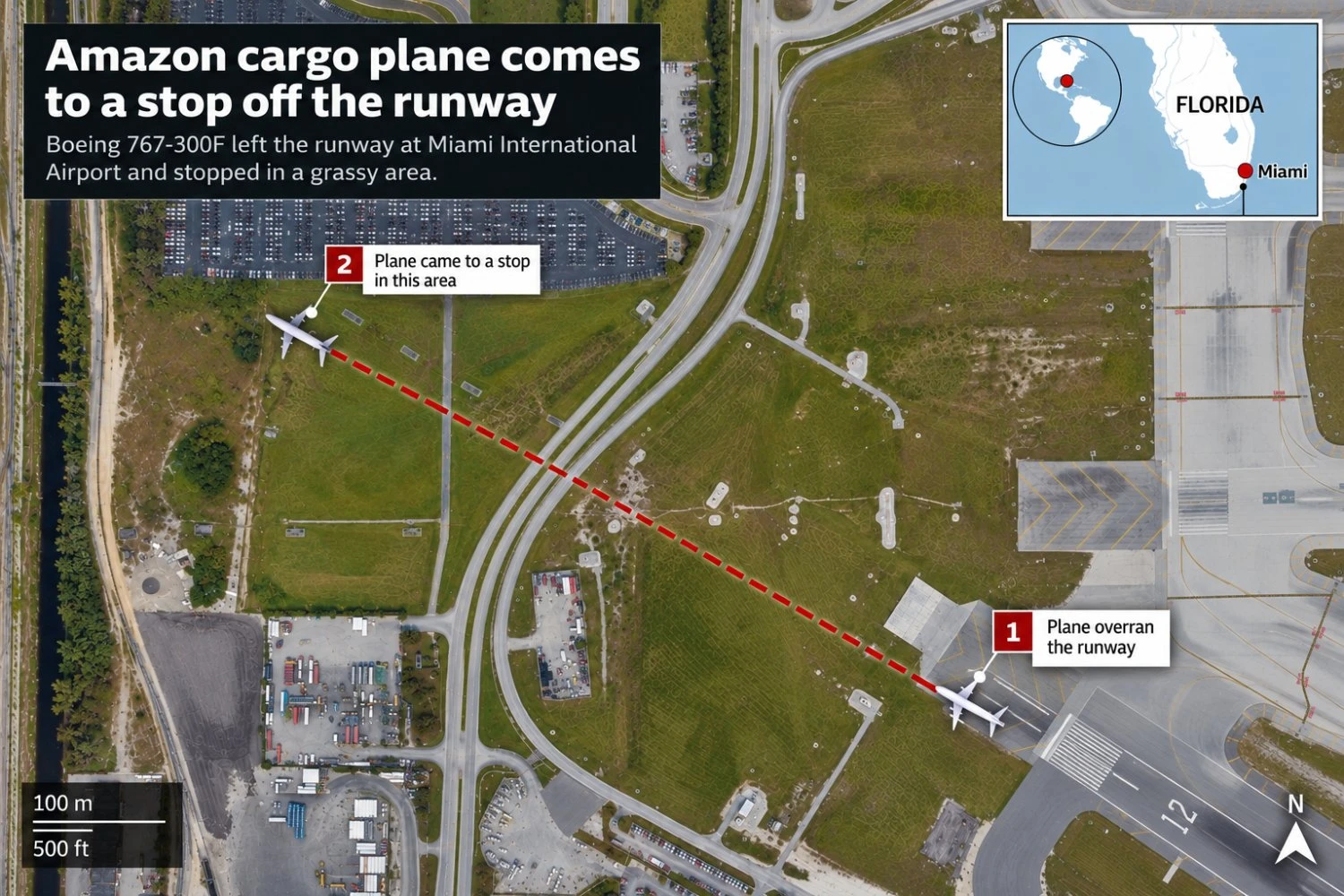
Flight data shows the nose landing gear and right main landing gear initially contacted the runway at a groundspeed of 158 kt. Braking began seven seconds later, when the aircraft had slowed to 146 kt.
The left main landing gear did not contact the runway until 11 seconds after the initial touchdown, at a groundspeed of 134 kt.
Four seconds later, at approximately 120 kt, brake pressure was released and the throttles were advanced to a position consistent with go-around thrust.
The throttles returned to idle four seconds later, at 117 kt, and braking resumed. The cockpit voice recorder captured a pilot calling for a go-around 15 seconds before the recording ended.
Five seconds after that call, the recorder captured a sound consistent with the aircraft leaving the paved surface.
Speed brakes and reversers not recorded
The flight data recorder did not indicate deployment of the speed brakes or thrust reversers during the landing sequence, according to the NTSB.
Investigators have not determined why deployment of either system was not recorded. The finding does not establish whether this resulted from crew actions, aircraft configuration, a technical issue or another factor.
N1997A was operating its third flight of the day when the accident occurred. The aircraft had flown from Cincinnati to Miami and then from Miami to San Juan before departing Puerto Rico for the return flight.
The Boeing 767-300ER had been converted to a freighter and was operated by 21 Air for Amazon. Planespotters identifies the aircraft as a 767-33AER(BDSF), MSN 27310, which first flew in June 1994 and was converted for cargo operations in 2016.
Both pilots survived the accident. Five people on the ground were killed after the 767 left the airport property and struck vehicles beyond the runway. The NTSB investigation remains in progress and no probable cause has been determined.