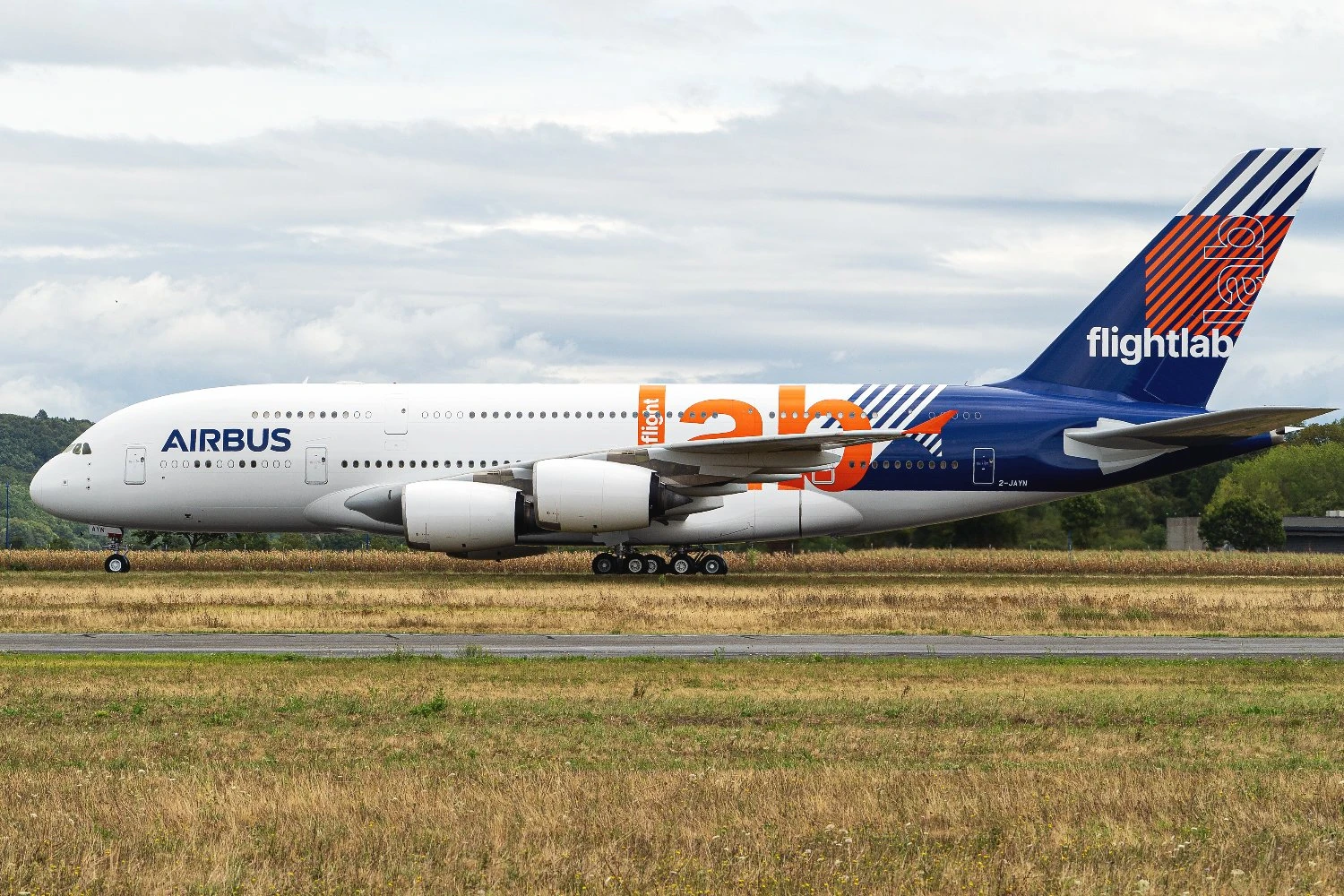
Airbus has revealed the new identity of an A380 brought back from years of storage to become a flying laboratory for some of the technologies being considered for its next generation of commercial aircraft.
The former Malaysia Airlines A380, MSN114, has emerged in a new Airbus FlightLab livery following painting work at Shannon, Ireland. The aircraft subsequently flew back to France, including a low pass over Toulouse before continuing to Tarbes.
The flights took place earlier in August and follow the aircraft's return to the air in July, when it was ferried from Tarbes to Shannon after several years out of service.
Airbus intends to use the four-engine aircraft as a platform for propulsion testing, with major modifications expected to begin in 2027. Among the technologies scheduled to fly on the A380 is the Open Fan demonstrator being developed by CFM International under its RISE program.
Follow Air Data News: WhatsApp | Instagram | LinkedIn | Twitter | Facebook
Flight testing of the propulsion demonstrator is currently targeted for 2029.
Second life for former Malaysia Airlines A380
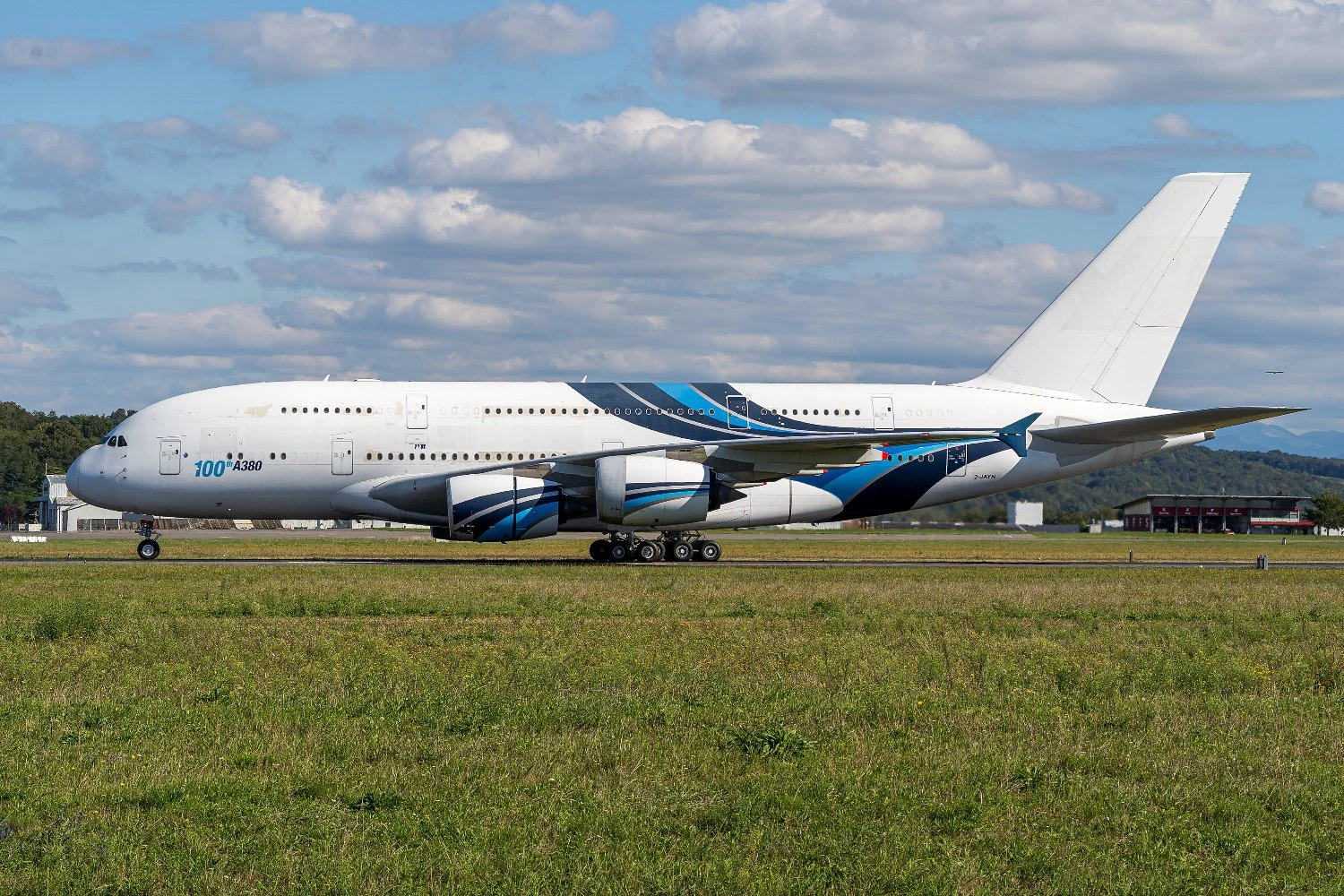
MSN114 first flew in October 2012 and was delivered to Malaysia Airlines the following year as 9M-MNF. It was the 100th A380 produced by Airbus.
The aircraft was withdrawn from airline service as Malaysia Airlines progressively disposed of its six A380s and subsequently spent several years stored in France.
Unlike most retired A380s, however, MSN114 escaped dismantling. Airbus eventually recovered the aircraft for use as a test platform, and its return to flight in July provided the first visible indication of its new role. The subsequent application of the FlightLab colors makes that role explicit.
The A380 offers several advantages as an engine testbed. Its size provides substantial clearance for experimental propulsion systems, while its four-engine configuration allows a demonstrator to be installed while retaining three conventional engines.
Airbus Chief Executive Guillaume Faury has previously pointed to those characteristics when discussing the use of an A380 for future propulsion trials, although he has also acknowledged that operating such a large aircraft as a testbed is expensive.
Open Fan headed for A380
One of MSN114's most important planned roles is supporting development of the CFM RISE Open Fan demonstrator.
CFM International, the 50-50 joint venture between GE Aerospace and Safran Aircraft Engines, launched RISE in 2021 to mature technologies for an engine generation that could enter service in the mid-2030s.
Unlike a conventional turbofan, the Open Fan architecture eliminates the nacelle surrounding the large fan at the front of the engine. The larger effective fan diameter is central to CFM's goal of achieving more than 20% lower fuel consumption compared with current-generation engines.
The architecture is one of the propulsion options being studied for the aircraft that will eventually succeed the Airbus A320neo family.
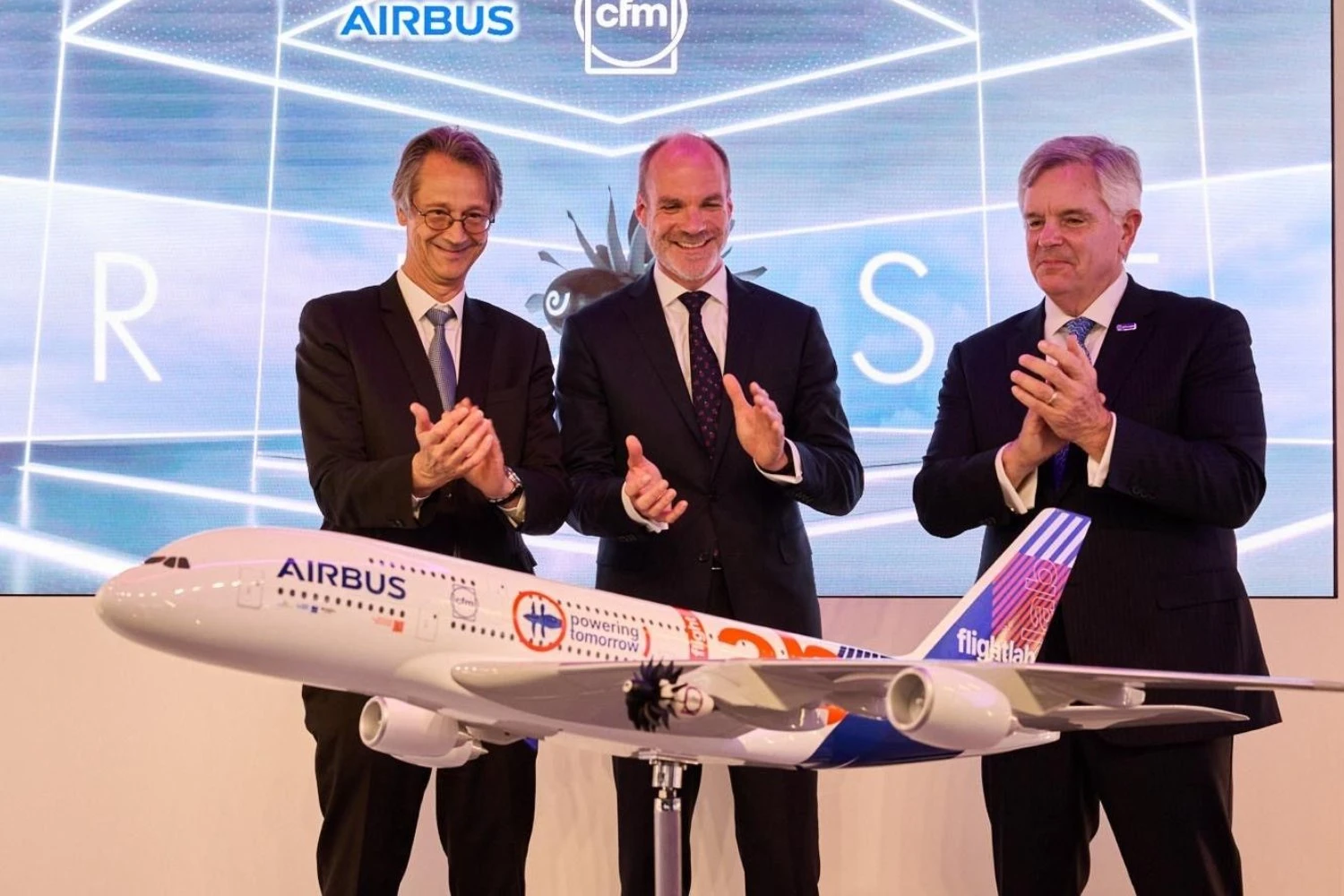
Airbus has not yet selected the engine architecture for that aircraft. A conventional ducted turbofan with a very high bypass ratio remains another possibility, making the A380 campaign part of a broader technology evaluation rather than confirmation that Airbus has selected Open Fan propulsion for its future single-aisle jet.
Current plans call for the Open Fan demonstrator to be installed in the A380's No. 2 engine position, replacing the inboard Rolls-Royce Trent 900 on the left wing.
The installation will require substantial changes to the aircraft before flight testing can begin. European research programs supporting the demonstrator currently point to modification work beginning in 2027 and flight trials in 2029.
From engine development to next Airbus narrowbody
Work on the propulsion technology is already progressing before the A380 installation.
GE Aerospace has completed preliminary design reviews covering the compact core, Open Fan and outlet guide vanes, allowing manufacturing of demonstrator components to progress. Ground testing will precede installation on the FlightLab.
The flying demonstrator will allow engineers to study aspects that cannot be completely reproduced on ground rigs, including aerodynamic interaction between the Open Fan and the aircraft, vibration, acoustics, loads and operation under real flight conditions.
The results will feed into decisions Airbus and engine manufacturers must make during the development of the aircraft generation expected to follow today's A320neo family.
Airbus has indicated that its next single-aisle aircraft could enter service in the second half of the 2030s. That timetable makes propulsion architecture one of the major technology decisions that will need to be made well before the aircraft itself reaches detailed development.
MSN114 is therefore beginning a second career very different from its first. After carrying passengers for Malaysia Airlines, the 100th A380 built is being prepared to help determine what could power aircraft several generations smaller than the superjumbo itself.