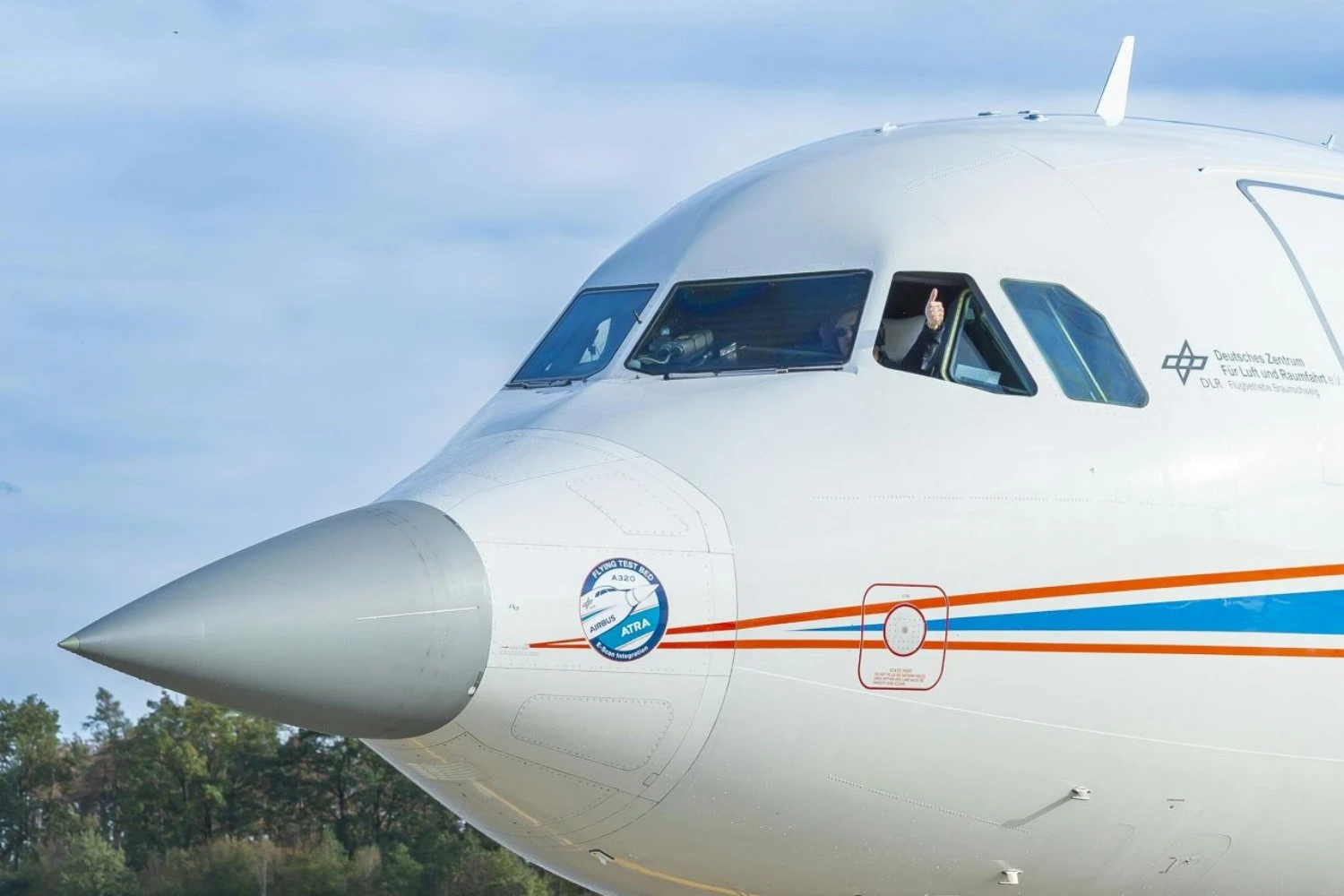
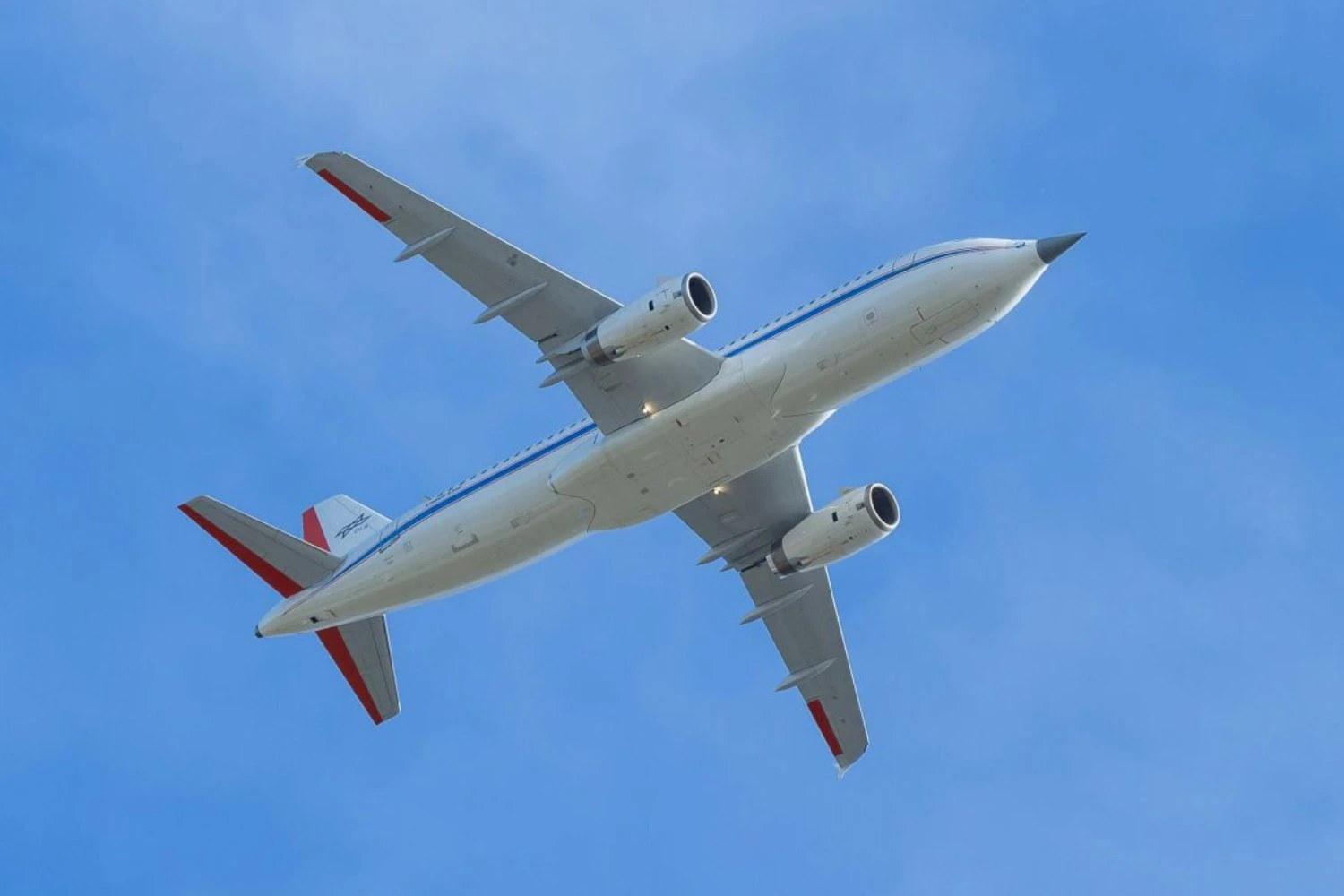
An Airbus A320 fitted with the pointed nose of a Eurofighter Typhoon has completed its commissioning flights in Germany and is now operational as a flying laboratory for the European fighter's next-generation radar. Airbus confirmed the milestone on November 6, marking the start of a new role for an aircraft that once carried holidaymakers across Europe.
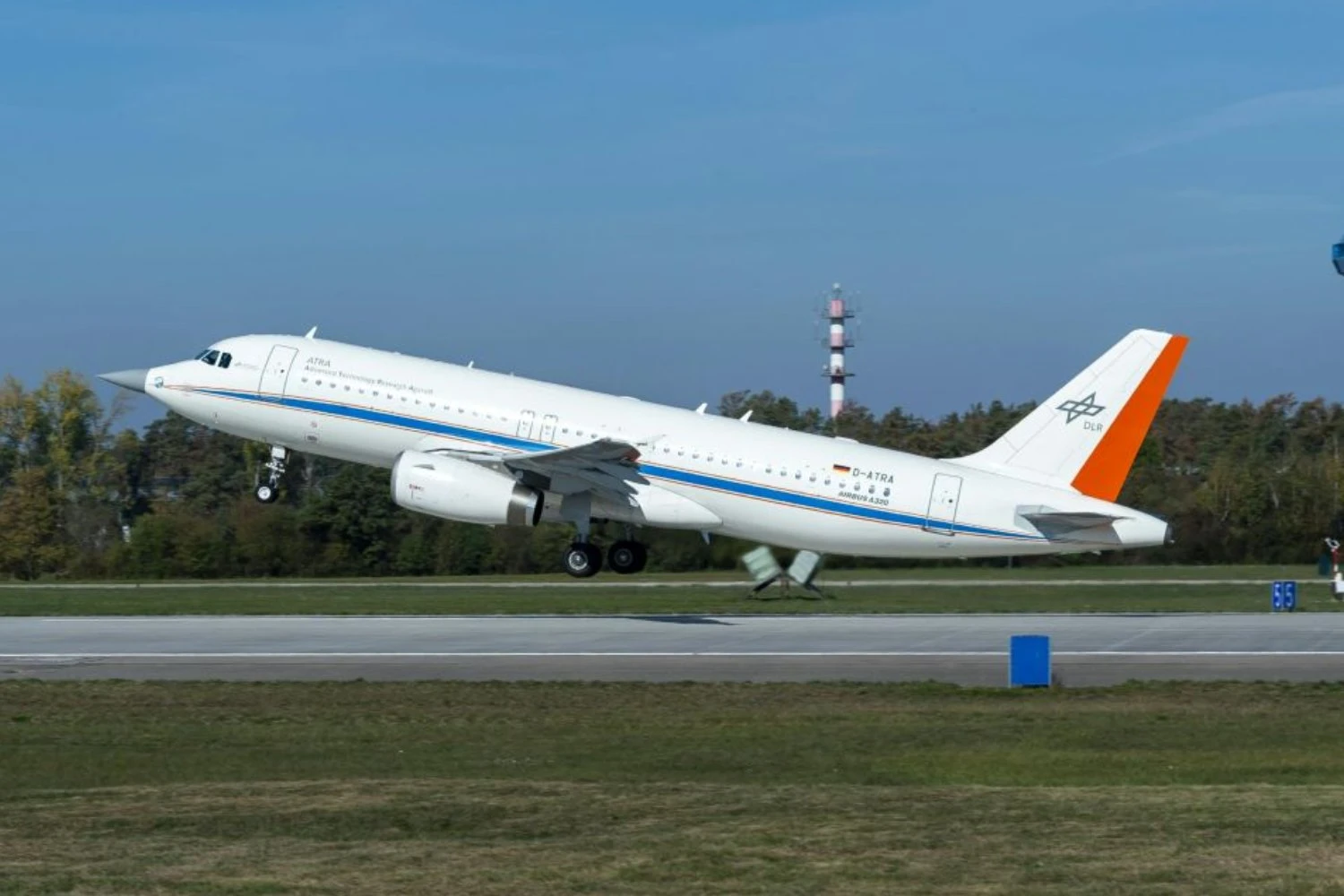
The aircraft, registered D-ATRA, belongs to the German Aerospace Center (DLR) and is being operated in cooperation with Airbus Defence and Space. Its unusual appearance comes from the Eurofighter radome installed in place of the A320's conventional rounded nose.
The modification allows engineers to test the Eurofighter Common Radar System Mk1 (ECRS Mk1) in flight without relying exclusively on the fighter itself. The new active electronically scanned array (AESA) radar is being developed for German and Spanish Typhoons, including aircraft ordered under the Quadriga, Tranche 5 and Halcón programs.
The A320 first flew with its modified nose on January 21, 2025, but the radar was not yet operating. Subsequent ground testing prepared the system for airborne trials, which have now confirmed that the radar and aircraft function together as intended.
Follow Air Data News: WhatsApp | Instagram | LinkedIn | Twitter | Facebook
According to Airbus, the latest flights at its Manching facility completed the validation process. The aircraft can now be used for further development of radar hardware, software and operating modes.
Why use an airliner to test a fighter radar?
The A320 offers several advantages over a combat aircraft for this type of work. It can remain airborne longer, provides space for engineers and test equipment, and allows changes to experimental systems without interfering with the operational requirements of a fighter fleet.
Airbus reinforced the forward fuselage to accommodate the Eurofighter's nose and installed hundreds of meters of data cables. The modification also required liquid and air-cooling systems to manage the radar's operating temperature.
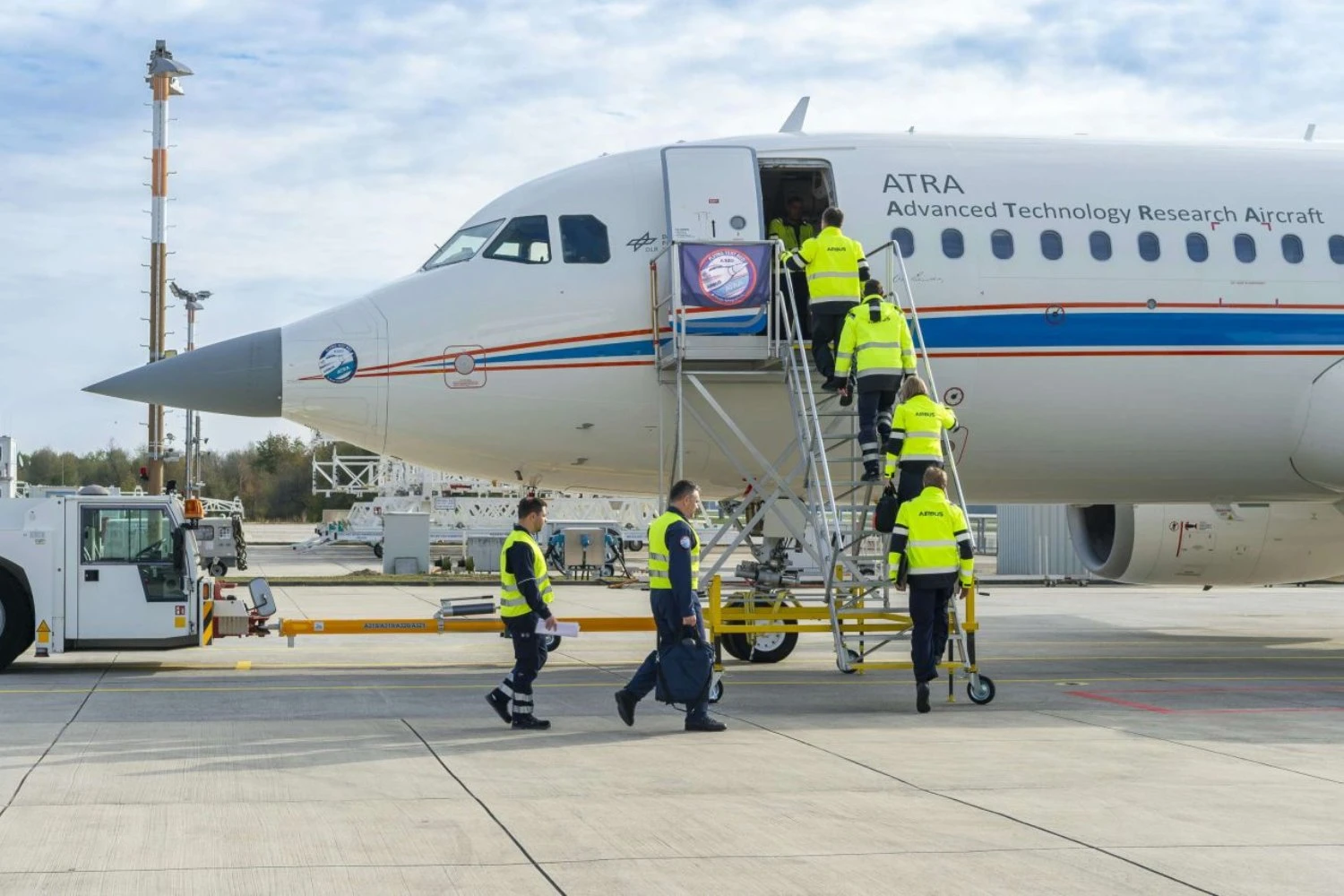
Inside the cabin, workstations allow engineers to monitor the radar's performance in real time. They can examine the information that would normally be presented to a fighter pilot while also observing the underlying hardware and software behavior.
The larger aircraft provides room for specialized instruments, additional electrical equipment and personnel who can analyze results during a flight. DLR also points to the separation between the A320's certified flight systems and the experimental equipment as an advantage.
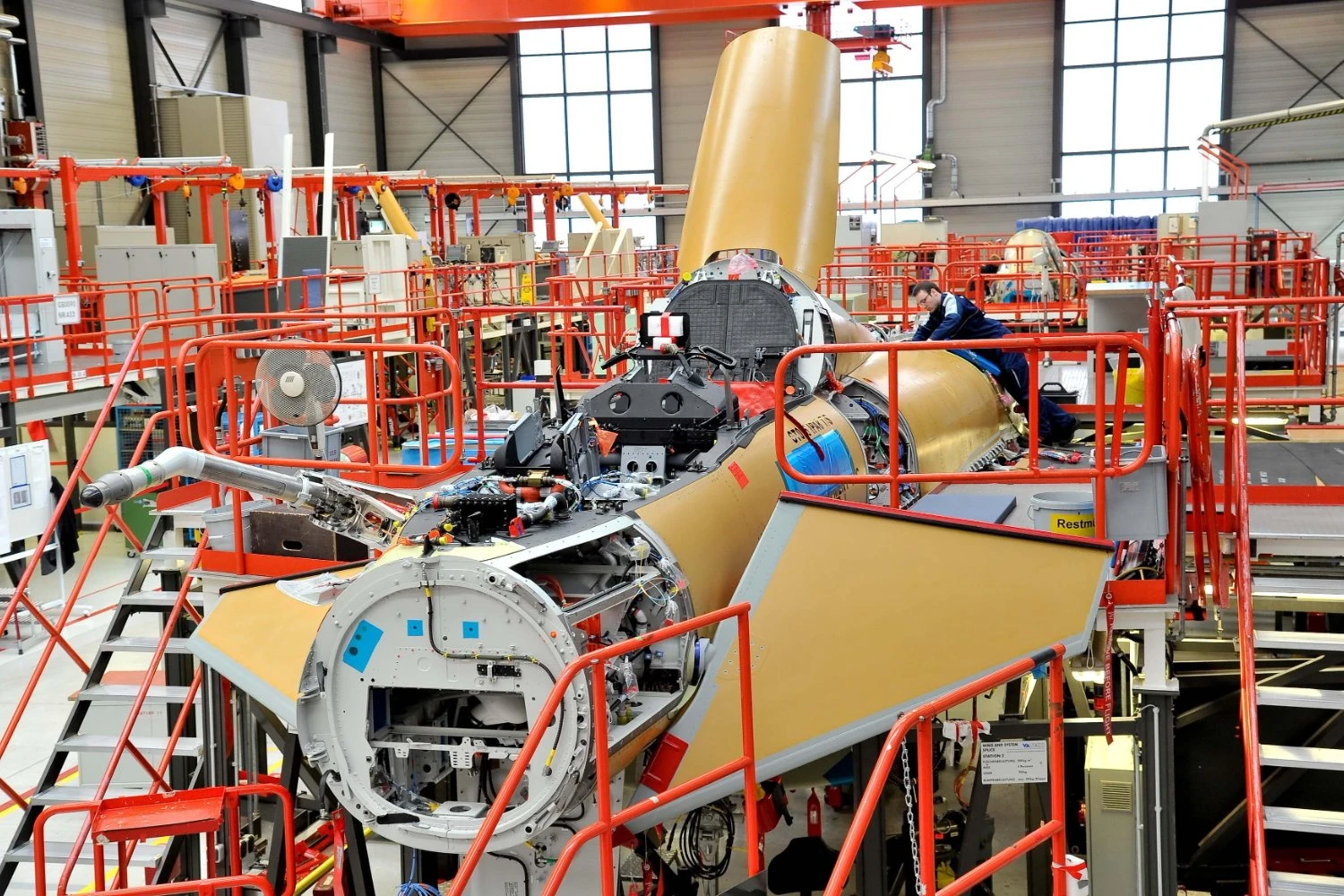
The ECRS Mk1 is intended to improve the Eurofighter's ability to detect and track targets in air-to-air and air-to-ground operations. The program is led by Airbus Defence and Space, with radar development involving Germany's Hensoldt and Spain's Indra.
Related news
November 07, 2026
November 06, 2026

The ECRS Mk1 is intended for Germany's Quadriga and Tranche 5 aircraft and Spain's Halcón fighters. Upgrades to Typhoons already in service are also envisaged.
The A320's history began almost three decades before its latest transformation.
From holiday flights to scientific research
Built in Toulouse as an A320-232 with manufacturer serial number 659, the aircraft made its first flight on January 24, 1997. It was delivered in March of that year to German leisure airline Aero Lloyd, where it operated under the registration D-ALAE.
The aircraft spent several years carrying passengers to vacation destinations. Its commercial career also included temporary leases to Ryan International Airlines before Aero Lloyd's collapse in 2003.
In 2004, it joined Austrian airline Niki, founded by former Formula One driver Niki Lauda. It initially retained its German registration before becoming OE-LOE.
DLR purchased the aircraft in 2006 from the leasing company GOAL and began converting it into a research platform. The transformation involved installing flight-test instrumentation, measurement systems, new antennas and equipment that could be adapted to different experiments.
The A320 entered regular DLR research service in late 2008 under the name ATRA, short for Advanced Technology Research Aircraft. Since September 2012, the German research organization has been fully responsible for its operation.
Over the years, D-ATRA has participated in studies involving aircraft noise, aerodynamics, alternative fuels, navigation systems and cockpit technologies. It has also been used to investigate wake turbulence, the invisible vortices generated behind aircraft that influence separation distances at airports.
Other experiments included testing fuel-cell technology and an electrically powered nose-wheel system designed to allow aircraft to taxi without using their main engines.
Recent news
November 07, 2026

The Eurofighter radar program represents a very different assignment for an aircraft that has spent most of its research career investigating civilian aviation technologies.

Boeing 757 performed a similar mission for the F-22
Boeing previously adapted a 757 to test the F-22 Raptor's avionics and radar systems, creating another unusual combination of an airliner and a fighter aircraft.
The American manufacturer used the very first Boeing 757, registered N757A, as a flying test bed for the F-22 Raptor program. Built in 1982, the aircraft had originally served as a prototype during development of the commercial twinjet.
Its later conversion involved installing the F-22's radar in the forward fuselage, giving the 757 a modified nose. An additional structure above the cockpit carried sensors arranged to reproduce aspects of the fighter's wing-mounted equipment.
The cabin was equipped with test stations and a simulated F-22 cockpit, allowing engineers to evaluate the fighter's integrated avionics while flying aboard the much larger Boeing.
Like the Airbus A320 now working on the Eurofighter program, the modified 757 provided a way to develop and troubleshoot military electronics without requiring every test to be conducted aboard the combat aircraft itself.
There is an important distinction between the two projects. Boeing's 757 was used extensively to develop and integrate the F-22's avionics architecture, including its sensors and mission systems. The Airbus A320 has a more specific assignment centered on the ECRS Mk1 radar.
Both aircraft illustrate how passenger jet designs can be repurposed as laboratories for technologies intended for aircraft with entirely different missions.